Author Archives: lilia
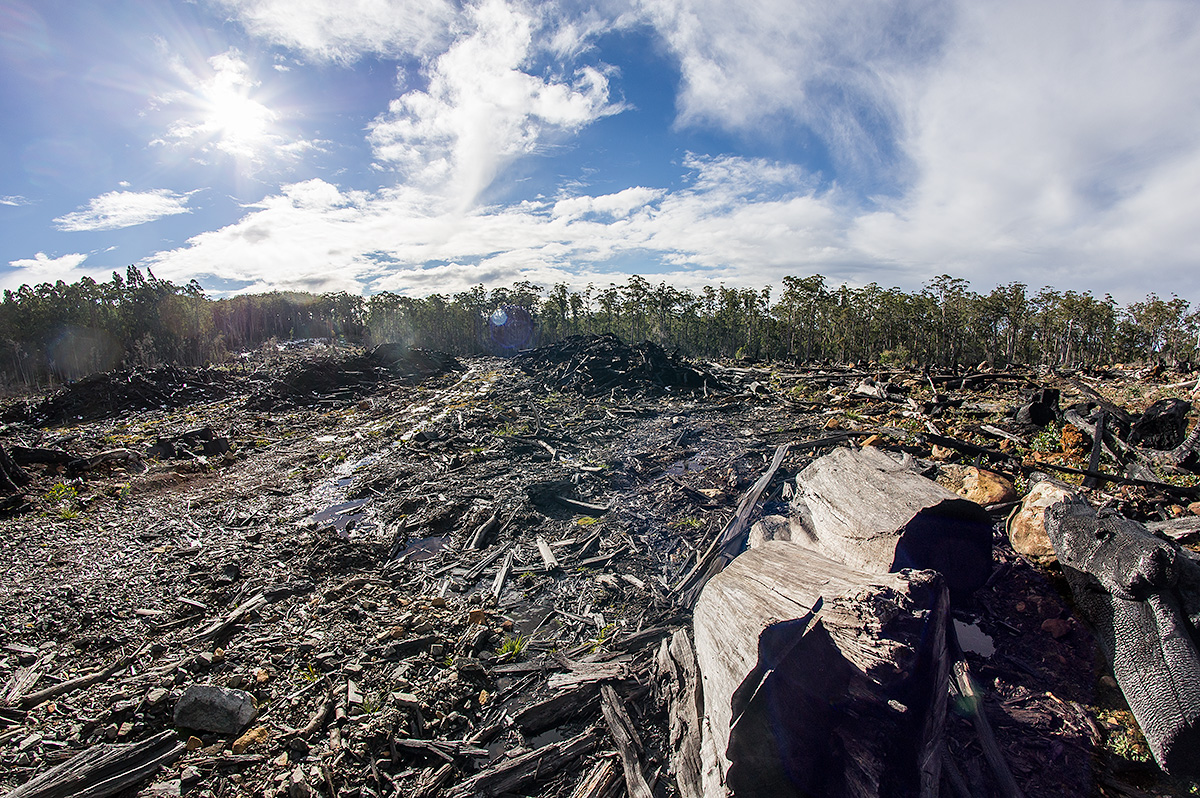
A forest a day! July 24: PC085A, Picton Valley

Image by Nishant Datt
Some areas of tall eucalypt and old growth forests in the Picton Valley have been intensively logged for many years. However, significant large tracts of these world heritage value forests remain, and their urgent protection from ongoing logging practices will ensure their globally unique values be spared from the chainsaw.
The tall eucalypt forests in the Weld, Picton and Middle Huon Valleys are collectively part of the largest single tract of tall eucalypt forest ecosystem extant in Tasmania.[i]
In the Picton Valley now, there is one area of verified high conservation value forest that is being logged, and three large areas of verified high conservation value forests that remain under imminent threat. All of these forests were left out of the promised conservation agreement that could have provided interim protection for these ecosystems.
One such area is logging coupe PC085A. Located on West Picton Rd, this old growth forest borders the Picton River. This forest has not had logging operations commence as yet, though logging is scheduled to start at any time. The company that is driving the logging of these forests is Ta Ann.[ii]

Image by Nishant Datt
This 62 hectare coupe is within the core range of the Tasmanian masked owl (Tyto novaehollandiae castanops) and contains significant habitat for this species.[iii] The Tasmanian masked owl is an endangered species[iv] dependent on hollows in mature eucalypt trees, and is endemic to Tasmania. The Tasmanian masked owl is the second largest nocturnal raptor in Australia.[v]
The Tasmanian masked owl has been listed as endangered in Tasmania since 1995.[vi] Threats to the masked owl include habitat clearing and fragmentation (including forestry activities). Between 1996 and 2009, approximately 142 000 hectares of native forest in Tasmania have been converted to monoculture plantation or agricultural land (FPA, 2009). This has resulted in the loss of nesting habitat (large tree hollows) and an increased level of threat to the endangered masked owl.[vii]
Reports to the Independent Verification Group recently stated that the availability of mature eucalypt habitat is important for a range of hollow-dwelling and hollow-dependent vertebrate species that rely on these features for facets of their life cycle.[viii] Loss of hollow bearing trees is widely recognised as a threat to the survival of a wide range of Australian vertebrate fauna, and has statutory recognition as a threatening process in New South Wales and Victoria. However, information on the specific habitat requirements for a large proportion of hollow dwelling species is lacking.[ix]
If protected, Tasmania’s southern forests, including the Picton Valley, will make a significant contribution to the additional protection of the ranges of hollow-using birds. Three hollow-using species of birds that are priority forest species have core range (swift parrot & masked owl) or known ranges (forty-spotted pardalote) that intersect with proposed ENGO proposed reserves.[x] Coupe PC085A is within the eastern breeding range of the swift parrot,[xi] also an endangered species, and supports high density nesting habitat for this species.[xii]
Preserving these old growth forests for the species that rely on them for habitat and life-cycles is critical. The protection of endangered species habitat outside the ENGOs’ proposed new reserves is also critical.
CLICK HERE to take action now for the magnificent forests of the Picton Valley and other crucial threatened species habitat across Tasmania.
For more information about the ‘A forest a day’ project, which is a collaboration between Huon Valley Environment Centre, Still Wild Still Threatened, The Last Stand, Markets for Change and Code Green, please click HERE.
[i] Hitchcock, P, (2012) Verification of the Heritage Value of the ENGO-Proposed Reserves, IVG Forest Conservation Report 5A. [ view online ] p. 77
[ii] Hoffmann, O. & Williams, D. Report Of Independent Expert Schedulers Appointed Under the Tasmanian Forests Intergovernmental Agreement, 12th October 2011
[iii] Forestry Tasmania, Forests Practices Plan, 23 February 2012
[iv] Department of Primary Industries, Parks, Water and Environment. Threatened Species List. http://www.dpipwe.tas.gov.au/inter.nsf/WebPages/SJON-58K8WK?open
[v] Tyto novaehollandiae castanops (Tasmanian population) — Masked Owl (Tasmanian), http://www.environment.gov.au/cgi-bin/sprat/public/publicspecies.pl?taxon_id=67051
[vi] Tyto novaehollandiae castanops (Tasmanian population) — Masked Owl (Tasmanian), http://www.environment.gov.au/cgi-bin/sprat/public/publicspecies.pl?taxon_id=67051
[vii] Tyto novaehollandiae castanops (Tasmanian population) — Masked Owl (Tasmanian), http://www.environment.gov.au/cgi-bin/sprat/public/publicspecies.pl?taxon_id=67051
[viii] Knight, R.I. & Cullen, P.J. (2012). Preliminary assessment of reliability indicators for predicting mature eucalypt habitat in Tasmania. Report to the Independent Verification Group for the Tasmanian Forests Intergovernmental Agreement, February 2012. Natural Resource Planning, Hobart. P 7.
[ix] Knight, R.I. & Cullen, P.J. (2012). Preliminary assessment of reliability indicators for predicting mature eucalypt habitat in Tasmania. Report to the Independent Verification Group for the Tasmanian Forests Intergovernmental Agreement, February 2012. Natural Resource Planning, Hobart. P 7.
[x] Independent Verification Group (2012) Validation of the ENGO proposed reserves for the conservation of priority fauna species on public forest. Unpublished report of the Independent Verification Group for the Tasmanian Forest Agreement, Hobart. P13.
[xi] Department of Primary Industries, Parks, Water and Environment. Threatened Species List. http://www.dpipwe.tas.gov.au/inter.nsf/WebPages/SJON-58K8WK?open
[xii] Forestry Tasmania, Forests Practices Plan PC085A, 23 February 2012

Media Release: Tree sitter renews commitment after visit from Bob Brown.
24- 07 -2012
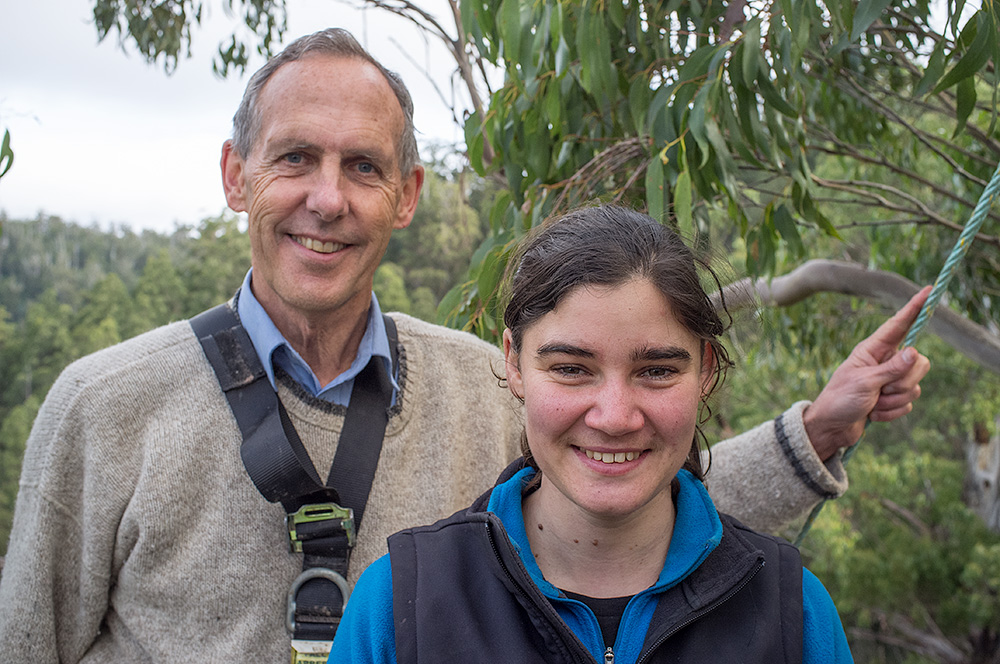
On the day that that IGA process was due to deliver an outcome for Tasmania’s forests, long time environmentalist and former federal senator, Dr. Bob Brown, visited Miranda Gibson’s tree-sit in the threatened Tyenna Valley. Dr. Brown made the 60 meter ascent to the reach the platform on which Ms Gibson has been living for the past seven months. The pair discussed the forests and the future of Tasmania, over a cup of teatop tea.
“Today I am making a renewed commitment to my stay in the Observer Tree. There was some hope that yesterday a deal would be reached between industry and environment groups that would bring an end to the logging of high conservation value forests. However, there has been no such agreement so far. This means that world heritage value forests are still under threat and subject to logging right now. I will therefore continue my treetop vigil to speak up for these forests and the species that call them home” said Ms Gibson.
“The visit from former senator Bob Brown has strengthened my resolve and commitment. He brought with him a message of support not only from himself, but from people all around Australia who want to see these forests protected. It was an inspirational visit and it has given me the courage to continue my efforts in the face of uncertainty about the progress of the forest talks” said Ms Gibson.
“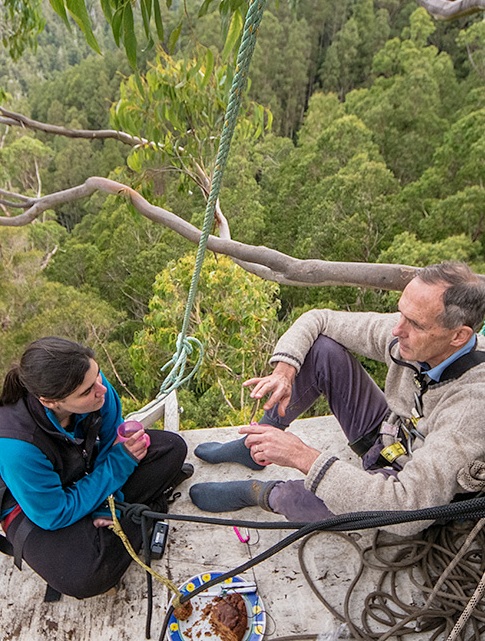 Meeting with Bob Brown reminded me of how many people have spent their lives tirelessly working towards the protection of these forest. Over the past decades Tasmania has lost significant tracts of forest and now it is time to ensure that our remaining high conservation value forests are protected” said Ms Gibson.
“Today I want to renew the vow I made seven months ago when I first climbed this tree. I want the world to know that I am not going anywhere until this forest is safely protected from logging” said Ms Gibson.
A forest a day! July 23: CM004C, Catamaran
A forest a day #22: Logging coupe CM004C, Catamaran

Image by Emma Capp
In far south Tasmania, a World Heritage bordering forest, known to Forestry Tasmania as logging coupe CM004C, was left out of the Conservation Agreement and subsequently logged.
This forest area was tall eucalyptus forest, core habitat for the grey goshawk, masked owl, spotted tailed quoll. The forest was potential habitat for cave dwelling invertebrates, as the logging site is a steep, high erodibility area, with a karst system down slope from the operation.[i] The Forest Practices Plan provided by Forestry Tasmania states that the new 1.4km road that was needed to access the 57 ha coupe is located in a karst catchment. Glacial deposits and possible fossils related to the Jurassic Basalt, which form the upper parts of the northern hill of the coupe, are major geomorphic considerations.[ii]
The key company driving the logging in these high conservation value forests was Ta Ann.[iii] Logging in this coupe commenced after Prime Minister Julia Gillard and Premier Lara Giddings announced that the Inter-Governmental Agreement in August 2011 would provide ‘immediate protection in informal reserves’ for forests such as these. CM004C is located within the 572 000ha of identified forests for legislated protection.
These world heritage value forests are located behind Recherche Bay and south of the D’Entrecasteaux River, this forested region is Australia’s southern most forested lands.

Image by Emma Capp
The eucalypt forests in the region south of the D’Entrecasteaux River to Cockle Creek include some of the most southerly tracts of eucalypt forest in Australia, indeed the world. The natural diversity of this small forest complex is at the southern latitudinal limits of the Australian eucalypt and rainforest flora and fauna. The globally significant eucalypts here can be expected to be of enduring scientific interest, especially given the historic research conducted by the French scientists in the 18th century. The eucalypt forests of the Recherche area would contribute to the ecological integrity of the adjoining Tasmanian Wilderness World Heritage Area (TWWHA) by preserving the natural vegetation sequence from sea level to tree limit on Mount La Perouse. This is particularly important for maintaining vegetation conditions conducive to natural fire interaction with the vegetation, especially on foothills and escarpment of the existing TWWHA. The eucalypt forests of this narrow lowland corridor are an integral part of a still existing natural connectivity of tall eucalypt communities, which extends up the eastern side (mostly outside) of the TWWHA, an important element in the long-term conservation of this ecosystem.[iv]
They remain unprotected, due to an “illogical and unsustainable boundary”.[v] The adjacent section of the TWWHA incorporates only a disjunct series of remnant tall eucalypt forest, the greater part of the otherwise continuous tract of tall eucalypt forest being located just outside the TWWHA boundary, an artifact of the drawing of the original protected area boundary which excluded the commercially important tall eucalypt forests. The ENGO-proposed reserves include the main corridor of tall eucalypt forest otherwise excluded from this section of the TWWHA. This corridor of tall eucalypt forest is relevant to the concept outlined elsewhere for protection—within the TWWHA—of a regional-scale tall eucalypt corridor from Cockle Creek to central Tasmania as a means of ensuring regional connectivity for the globally significant tall eucalypt ecosystems in Tasmania.[vi]
Recent reports that have verified the values of this forest region have stated that, “given the gross under representation of the ecological diversity of tall eucalypt forest in the Tasmanian Wilderness World Heritage Area, there is a clear case to remedy that situation. The tall eucalypt forests in the lowlands of the Recherche Bay–D’Entrecasteaux coast potentially represents a significant contribution to the ecological integrity of the TWWHA (southern limit, alpine summit to sea sequence on one slope—The ‘French transect’—Mount La Perouse to Recherche Bay]. This area provides the best opportunity to capture the full range of elevation values in the TWWHA—of significant benefit to the ecological function and integrity of the TWWHA and particularly important to assist adaptation to climate change. [vii]
Protection of this southern coastal precinct of Tasmania would link up the World Heritage Area, Southport Lagoon Conservation Area and the National Heritage listed Recherche Bay area. The cultural heritage value of the Recherche Bay area would make a significant contribution to the integrity of the TWWHA.[viii]
Notwithstanding a significant amount of past disturbance within the assessed area caused by coupe-based logging, the longer term view is that natural rehabilitation can be expected to progressively eliminate both the direct and indirect impacts of those logged coupes. The assessed area comprises mostly coastal lowland rising inland to foothills, and is predominantly
forested with significant areas of tall eucalypt forest. The Recherche Bay region has historic significance for the discovery and first formal description of the eucalypts of the world. The first eucalypts collected for science were from the region and the first eucalypt officially described also came from the region (Bruny Island).[ix]
Pro logging industry supporters and Ta Ann have, in the past months, tried to question the conservation values of CM004C. However the facts are that some minor disturbance occurred in the region in the start of last century. These disturbances however were negligible compared to the current forms of industrial scale clearfelling. The forests of CM004C were unroaded until 2011 and the verified values of the remaining threatened tall eucalypt forests in this region, that are part of a remote tract of wilderness area with world heritage values, require urgent protection from ongoing logging.
CLICK HERE to take action now for the magnificent forests of the Catamaran and other high conservation value forests across Tasmania.
For more information about the ‘A forest a day’ project, which is a collaboration between Huon Valley Environment Centre, Still Wild Still Threatened, The Last Stand, Markets for Change and Code Green, please click HERE.
[i] Forestry Tasmania Forest Practices Plan for CM004C 02/03/2011
[ii] ibid
[iii] Hoffmann, O. & Williams, D. Report Of Independent Expert Schedulers Appointed Under the Tasmanian Forests Intergovernmental Agreement, 12th October 2011
[iv] Hitchcock, P, (2012) Verification of the Heritage Value of the ENGO-Proposed Reserves, IVG Forest Conservation Report 5A. P58
[v] Ibid, P54
[vi] Ibid, P56
[vii] Ibid, P57
[viii] Ibid, P60
[ix] Ibid, P55

Miranda’s Daily Blog: Day 221
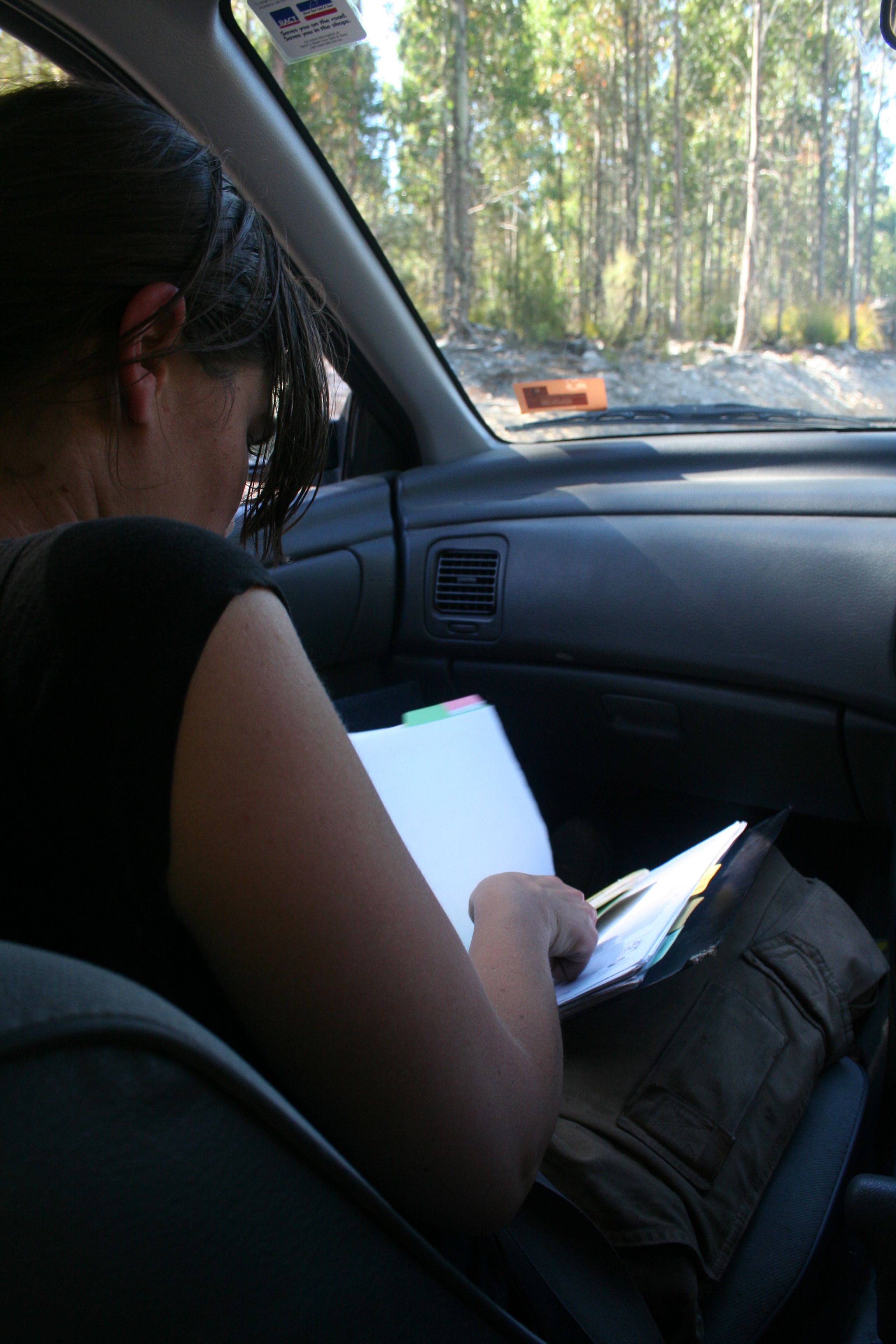

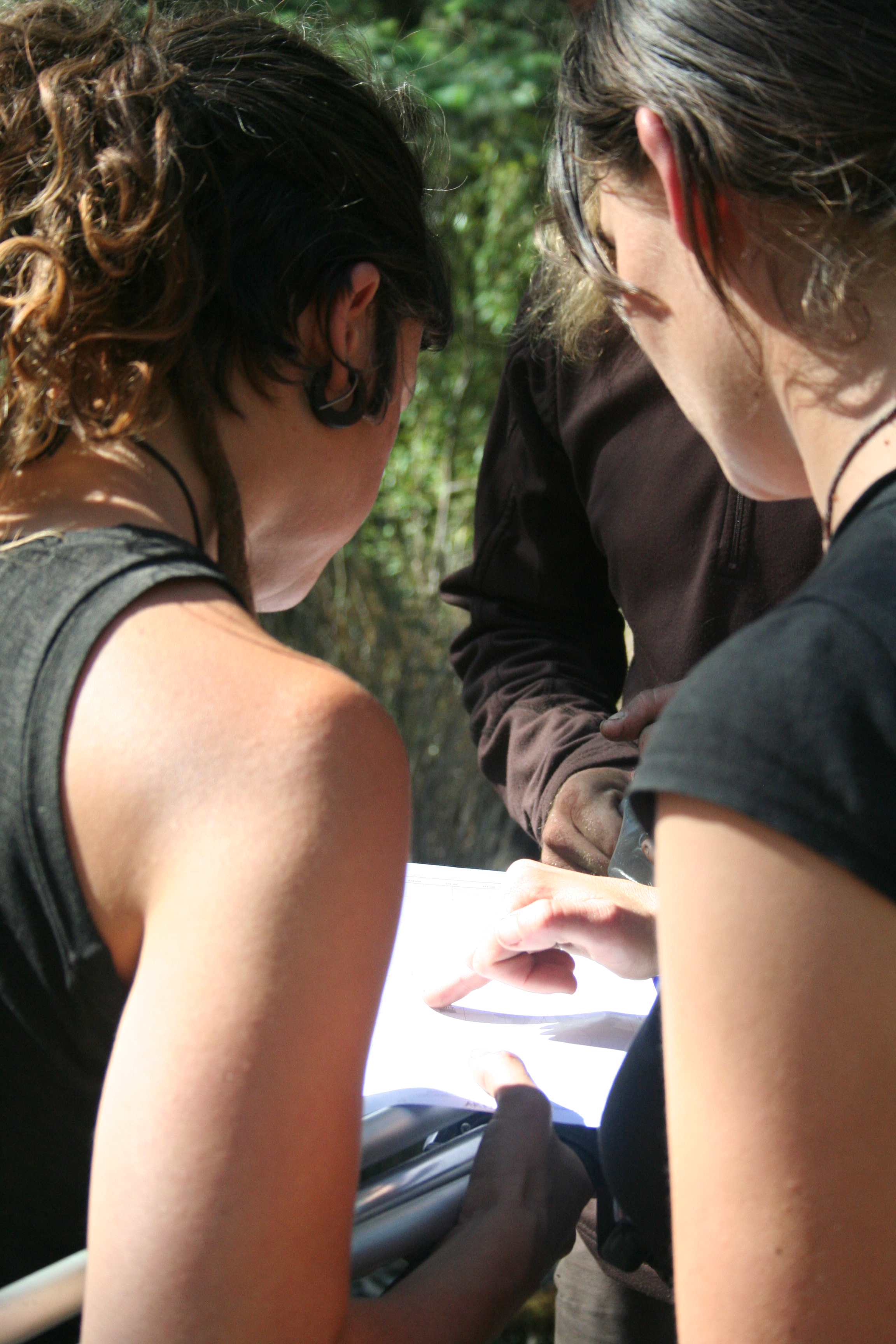
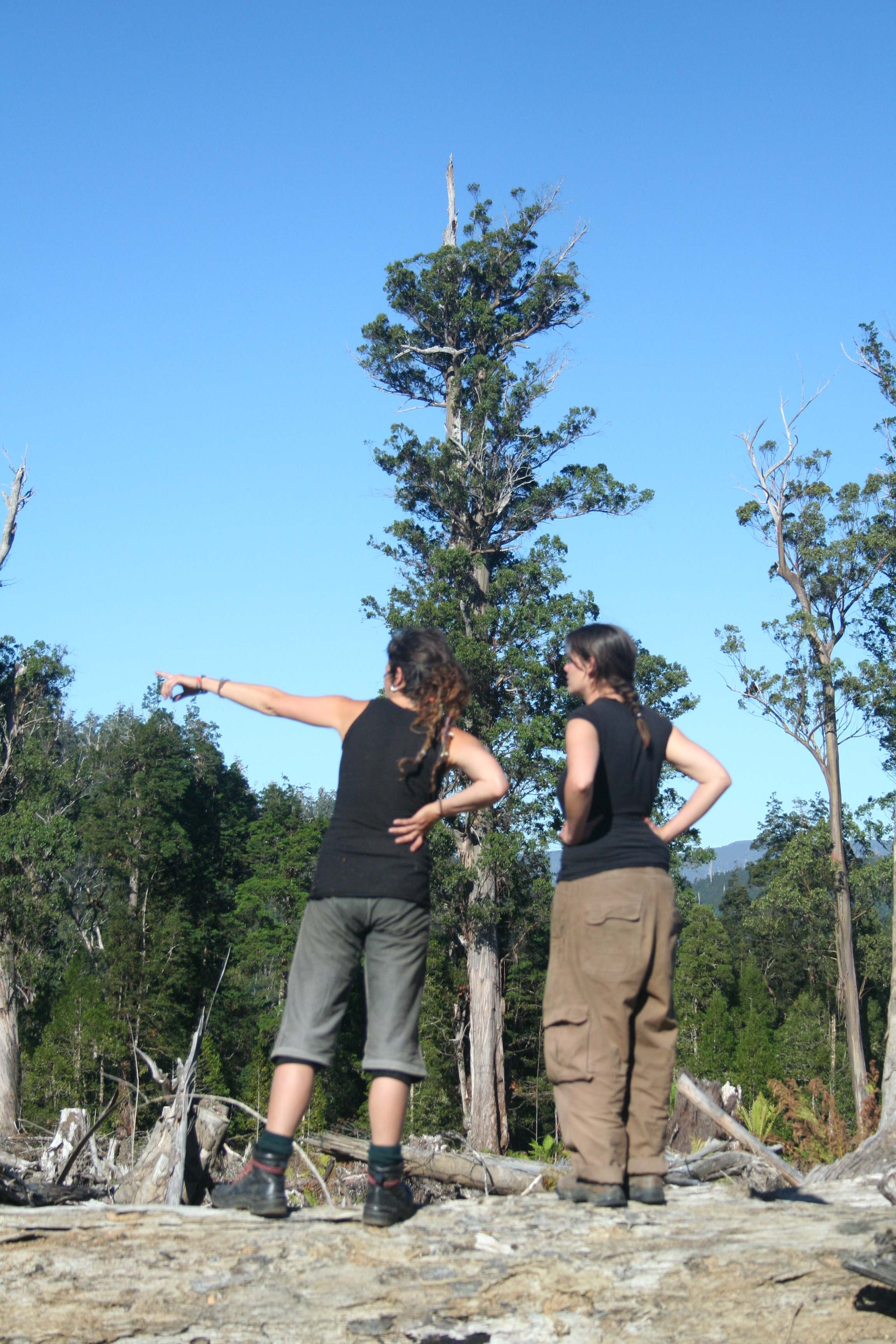
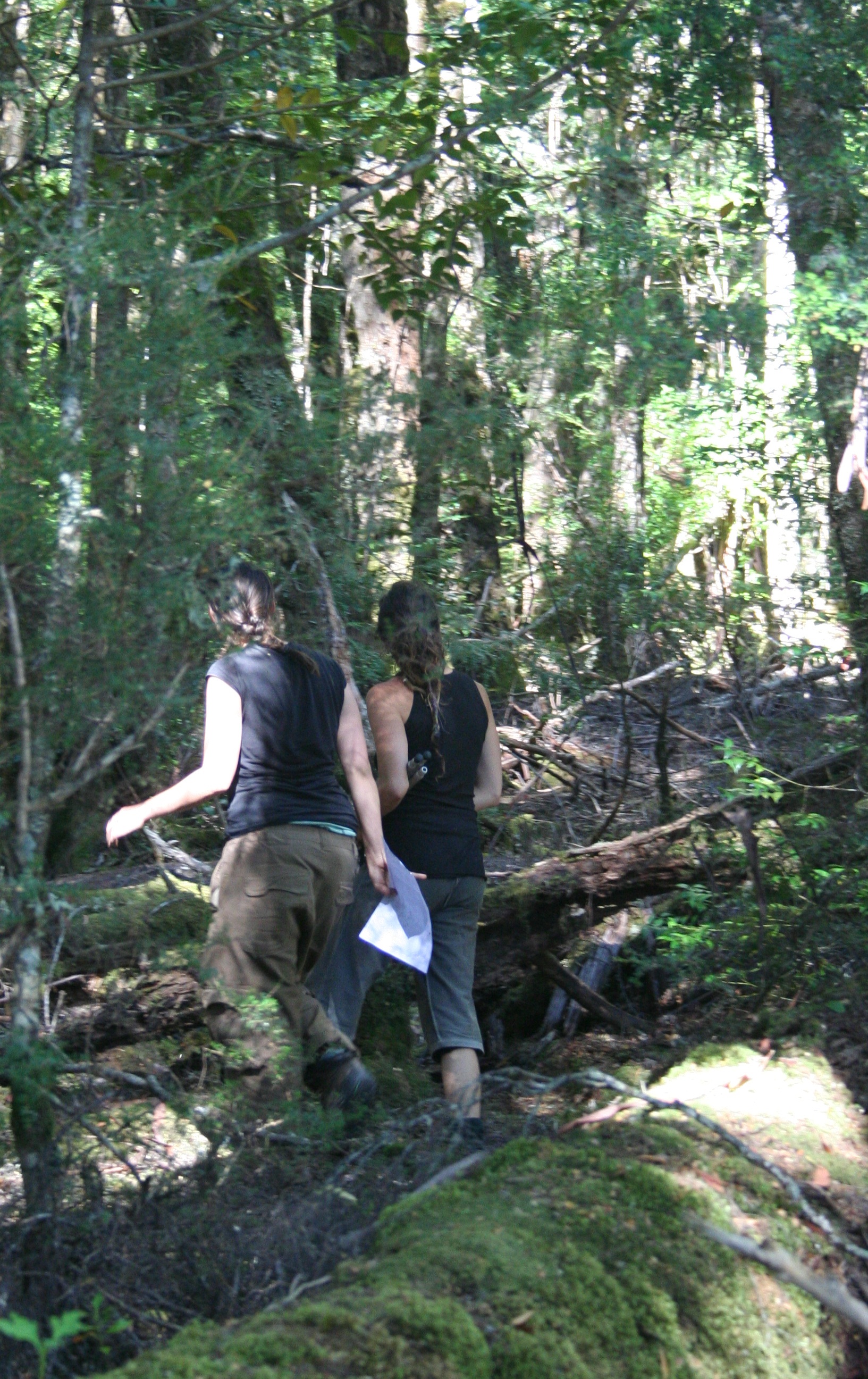
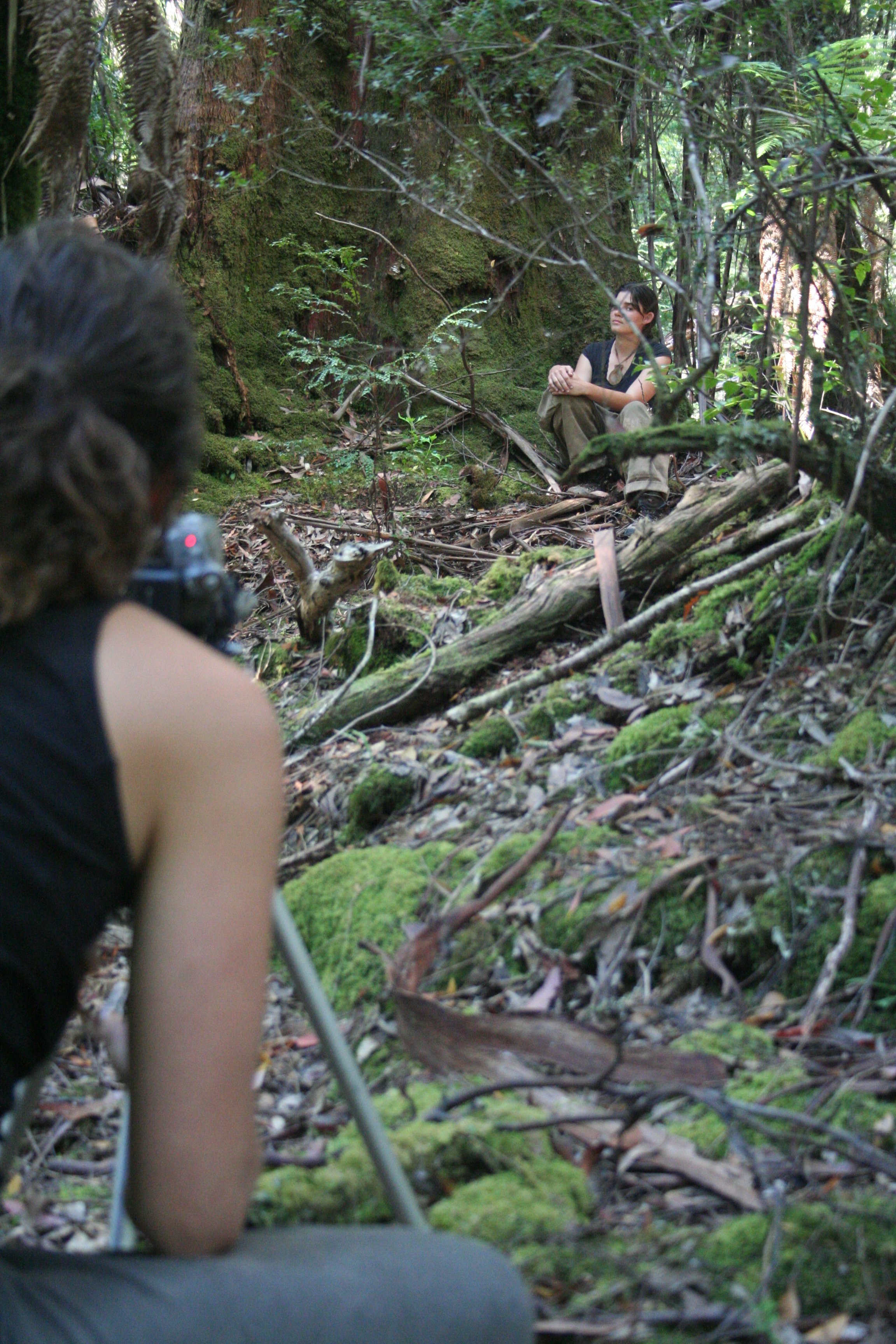
(Images: Forest monitoring and documentation, Still Wild Still Threatened 2010).
I have come to love and hate maps.
Over the past five or so years they have become a constant companion. Helping me to navigate my way through amazing tracts of forest, to find spectacular caves hidden deep in the Upper Florentine Valley, or giant trees in the Styx. They have guided me through the forest on dark nights, by head torch, to take action. They have helped me find the perfect spot to place wildlife cameras and helped me find my way back again to watch the footage of Tasmanian devils and spotted- tailed quolls. But maps have led me to places I wish I didn’t have to go. They have taken me on dark and raining nights through mazes of logging roads, to coupe after coupe of clearfelled forests.
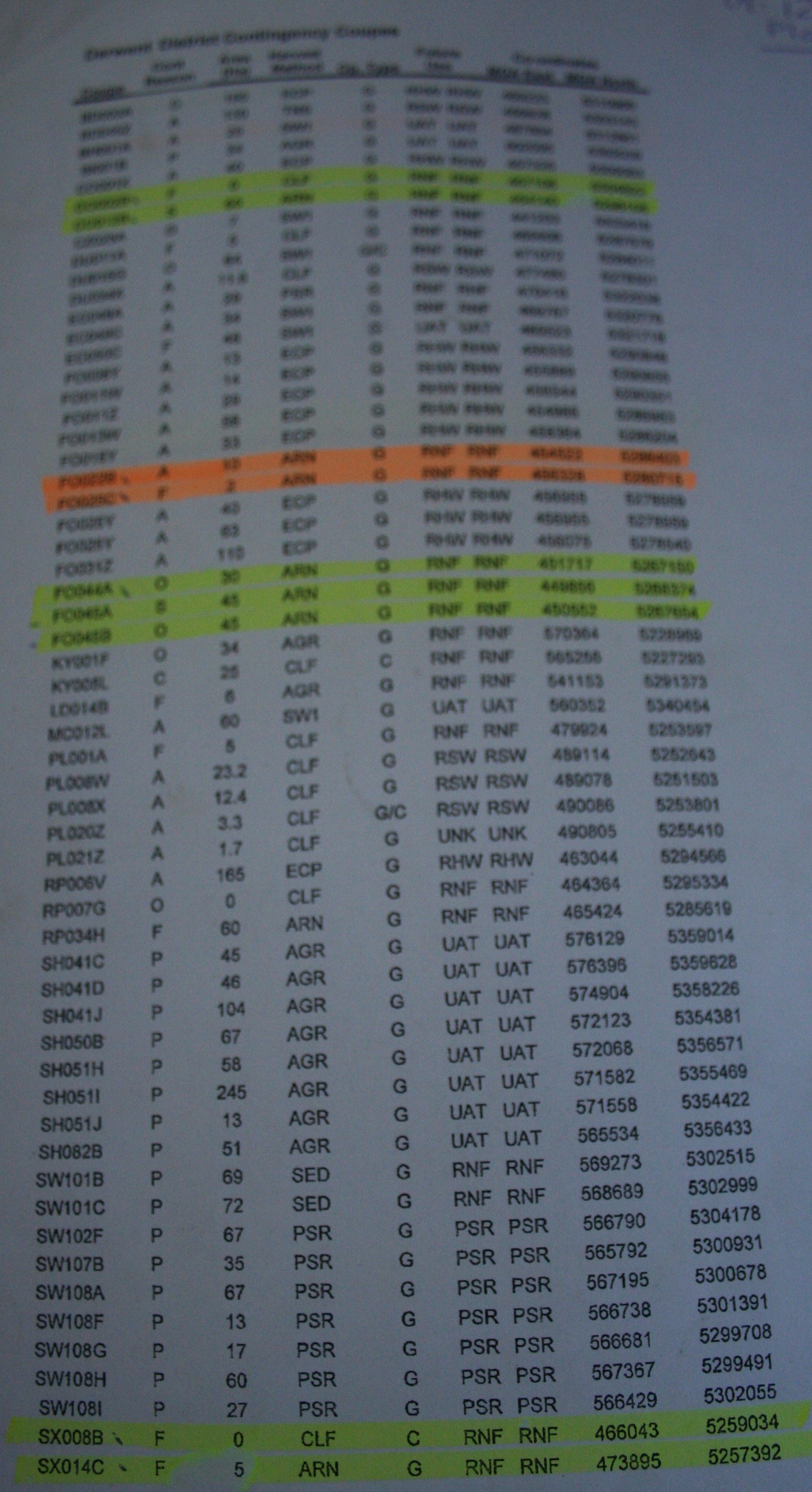 Each year Forestry Tasmania puts out a new wood production plan. It is one of my least favourite times of the year. it means trolling through list after list of coupe names. It is like a lottery draw, where if your number comes up you lose everything. As soon as it is released I am going through it with anticipation to see which of my favourite places will be taken this year. And then the sad task of drawing the lines of each coupe boundary onto my own maps. Each year our worn out 1:25,000 topographical maps are filling up more and more with the scrawl of coupe boundaries. In increasing numbers, the shaded-in ones; the ones that have already been lost, begin to take over the pages.
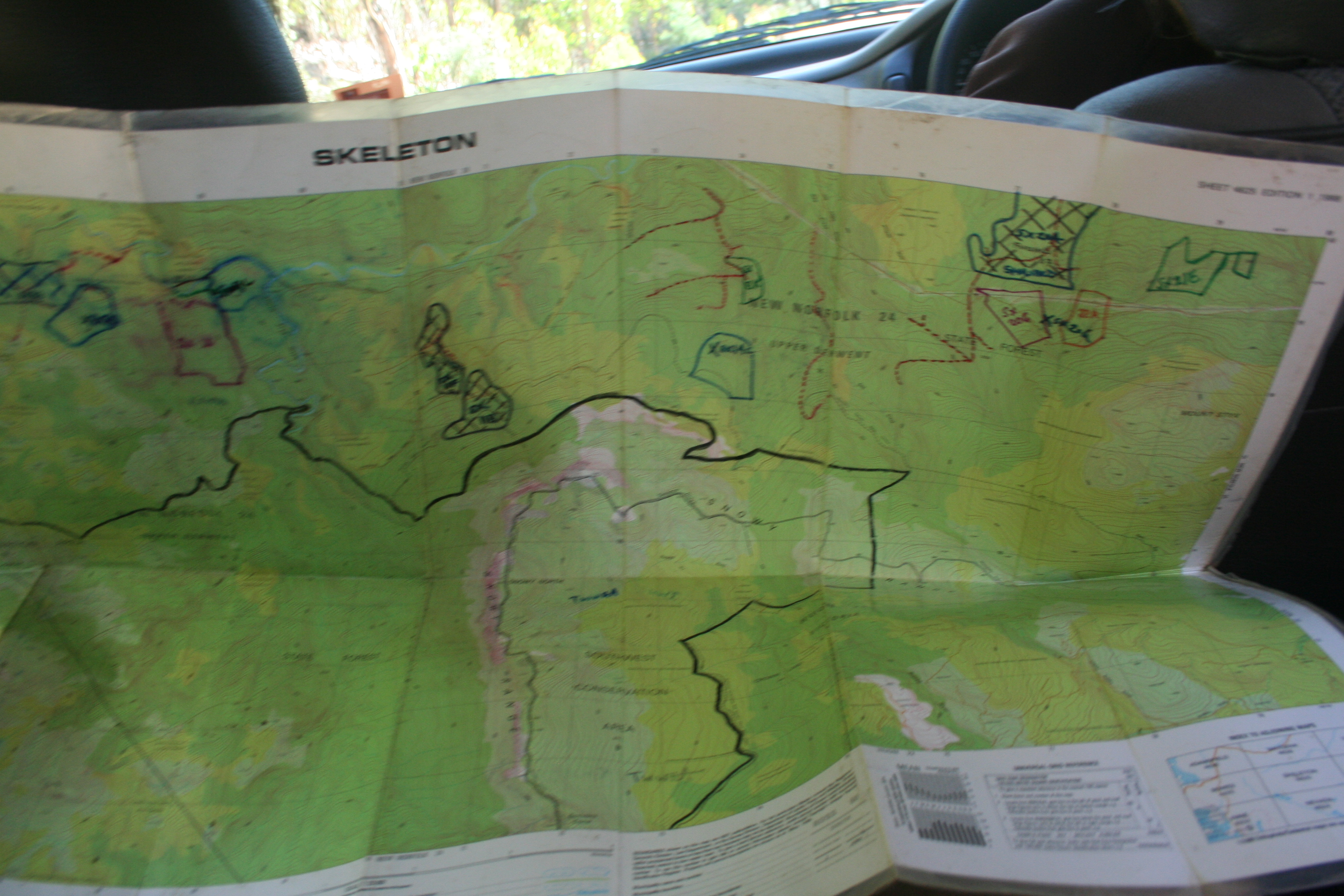
These past few weeks, as you will have noticed, I have been doing a daily post, with the help of crew from HVEC, Code Green, The Last Stand and Markets for Change, profiling a different forest everyday. Sadly many of these areas are clearfells. These are forests that should have been protected by a moratorium announced well over a year ago now. And then by the conservation agreement announced last August.
Tonight I feel a sense of loss for places I have known and loved and lost. And for other places that I will never have the chance to know. Tonight the maps tell a story, and it is one of devastation. The other day I wrote a coupe profile about what had been one of my favourite patches of forest. It’s called the Counsel forest. And it has the most spectacularly giant trees. I remember the first time I ever went there. I was amazed. There are some forests that have had such a high profile, like the Florentine and the Styx. And these are incredible forests that deserve to be known! But then it is interesting to stumble across areas that not many people know about or hear about. And to discover a whole new, equally amazing world in there!
What amazed me was the diversity of flora. When I first visited this area many years ago now, it was early on in my career as a “plant nerd.” I had been enthusiastically learning every single plant I could find in the Upper Florentine Valley. And I thought I had a good handle on this plant ID thing. Then I walked through the Counsel, and discovered I had no idea! There were so many new species for me to discover and learn, that were not commonly seen in the neighbouring valleys. The other thing I loved about the counsel when I first went there is its rocky disposition. The rocky outcrops, that look out over the valleys below. And of course, the tall trees!
I have found some amazing trees in that forest. One of my favourite trees in the Counsel was discovered in logging coupe CO002B. Every year SWST conduct a report for the IUCN and World Heritage Committee, to asses the level of damage done to the forests bordering the world heritage area. One of those areas was CO002B, the boundary of which runs right up to the world heritage border. On the day we went to document it for the 2009 report, we arrived to the devastating scene of logging machinery and fallen trees. I went for a walk and just up the hill, on the very edge of where the logging had gotten to that day, was a giant tree. It had a huge girth of 17.5 meters. It was a beautiful tree and I thought maybe we would have a chance to save it. Given that the Forest Practices Code says that trees above 14 meters girth would receive a buffer zone and remain standing until they were assessed for status as “giants.”
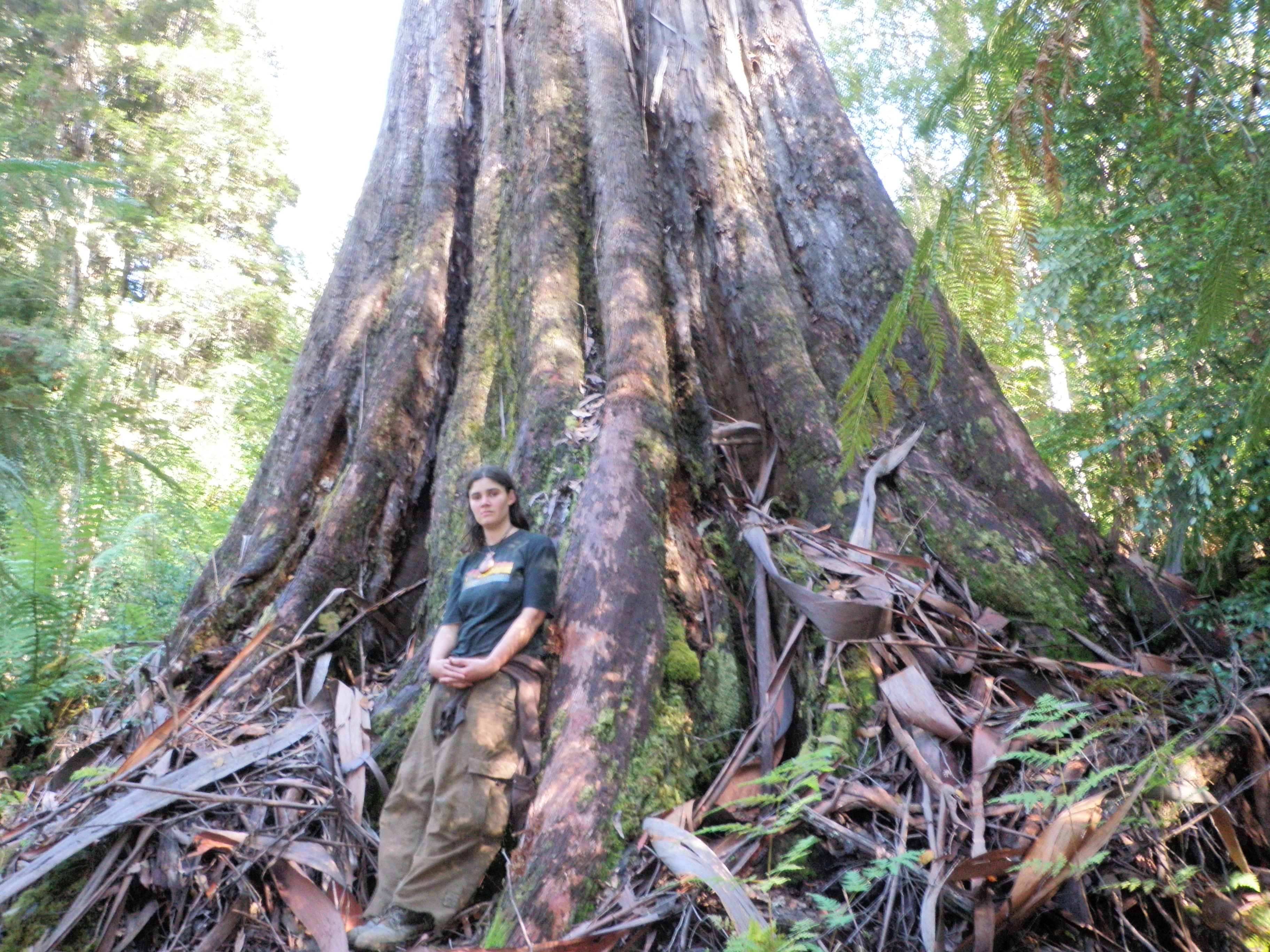
The following day we were standing amongst a very different “forest”, a garden of planted tree ferns in the atrium of Forestry Tasmania’s building. Handing in our paperwork to report the discovery of this amazingly wide tree. The next time I returned to the coupe, our tree was still standing but they had logged right up to it. Something I thought they were not supposed to do. We found out it had failed to be classified as a giant. The reason for this is that while tall trees are given giant status, if they are above 85 meters in height. But there is no protection for trees that are exceptionally wide. They have to meet a criteria based on volume. And so those old trees that have lost their crowns as they have aged, often fail to be classified. And unfortunately this one fell short. The next time I returned all that remained was a 17.5m round stump.
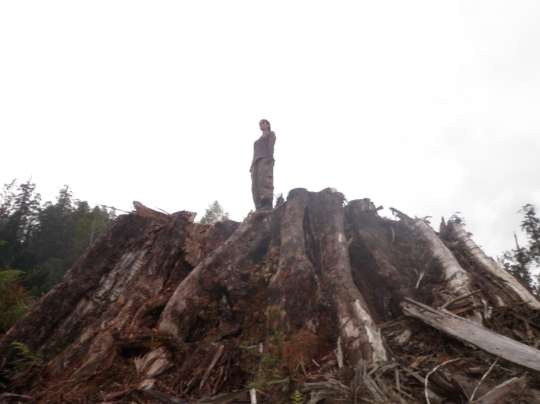
After the felling on CO002B came the felling of CO010B. This was particularly distressing, because it is right in the middle of a significant tract of intact old growth. This tract is bordered by the TWWHA on one side and an informal reserve running along a river on the other side. There were not even any roads encroaching into the forest. That was until CO010B. A road was pushed right through the informal reserve. And then logging started. This was at a time when Forestry Tasmania were meant to be rescheduling coupes in line with the Statement of Principles and the declared moratorium. This was the moment for me when warning bells started ringing about the whole process. Why was logging allowed to go ahead in a tract of intact old growth forest, bordering the Tasmanian Wilderness World Heritage Area, when it was meant to be on its way to be included into the reserve? It just didn’t make sense. There was already an argument out there being used to justify areas not being included in protected areas, based on the fact that they were fragmented by logging. Yet, here they were going ahead and fragmenting another area of forest, right before it was to be reserved. Now there is a scar in the landscape of the counsel forest. A sad reminder of the failure of the moratorium to do what it should have done, and that is to ensure that the areas on the table for new reserves did not suffer any further degradation or fragmentation.
CO0010B and C0002B should be restored and included into the TWWHA along with the surrounding forest, to ensure connectivity. The trees that once stood here have been forever lost. But it is not too late to protect the rest of the Counsel. And other high conservation value forests in Tasmania.
The maps hold a story, and it is part of my story. Because the scars that mark the maps have left their mark on me too. Places in the Styx, Tyenna, Wedge, Florentine, Plenty, Wentworth Hills. The places that I have visited, monitored, documented, photographed, set up fauna cameras in, climbed trees in, taken action in, written reports about, talked to the media about, and eventually bore witness to them being felled and burnt.
As much as the maps hold a story of devastation, they hold a story of hope. Because there are places on the map with little scribbley outlines of coupes that are not yet shaded in. These are the places we have not lost yet. Some of these are the coupes that we have been able to defend from logging. The Upper Florentine Valley is full of these. Proposed logging coupes, numbering 15, scatter across the 2000 hectare valley. The majority of these remain untouched, because the community has prevented logging in the valley since the logging schedule for the area was announced about five and a half years ago. The Upper Florentine could survive forever, if it is given the legislative protection that is needed, as part of 563,000 hectares of forest that is on the table for proposed reserves.
The map that outlines those 563,000 hectares tells a story of core habitat areas for Tasmanian devils, spotted tailed quolls, masked owls. A story of wedge–tailed eagle nesting sites and waterways that are home to hydrobiid snails and Galaxias johnstoni. Of sink holes, caves and karsts systems, of important Indigenous heritage sites. Of remnant rainforest patches, glacial lakes, giant eucalypts. Of a landscape that is unique to Tasmania. That map tells a story of a long battle to protect Tasmania’s forests, and the possibility that some of our most significant areas may finally be able to be safely guarded by the protection they should have had a long time ago. But this is a story that has not finished, an open ended story, and we are waiting to hear what the next page will hold.
And as I sit here on the eve of the day that the “deal” is due to be announced, I am looking at that map and holding onto the hope that sense and science prevail, that our unique fauna and flora is protected, Indigenous heritage sites are not lost any further and that we become a beacon of sustainable evolution instead of ecological devastation. And that those scars of clearfells in high conservation value forests will be the last of their kind.
The hope that tomorrow I will be erasing the lines of logging coupes from my maps, not adding them.
A forest a day! July 22: PC015B, Picton Valley

Logging coupe PC015B, located in the Picton Valley, southern Tasmania, is an area of forest that has been logged over the past few months. This forest, and the old growth ecosystems surrounding it, could have been protected under the promised moratorium and conservation agreement.
In June 2011, a new 2.6 km logging road was pushed into a remote tract of old growth forest, which enabled the logging industry access to this section of the Picton Valley throughout the duration of a promised moratorium.
In September 2011, logging commenced in these old growth Eucalyptus delegatensis forests, which are part of a large tract of remote wilderness forest contiguous with the Hartz Mountains National Park and the Tasmanian Wilderness World Heritage Area (TWWHA).
Tasmania’s Intergovernmental Agreement on Forests was signed on 7 August 2011, and one month later Forestry Tasmania continued to schedule logging in forests that were identified as being in need of protection. PC015B was primarily targeted by Forestry Tasmania to supply wood for Ta Ann.[i]
However, there is still time for the remaining forests in this area to be protected, as logging was suspended due to the logging road being too ‘green’, meaning it made it too difficult for the loggers and log trucks to access these forests.[ii]
Our organisations made public pleas for these forests to be protected as part of the ‘forests negotiation process’, as logging in this area had not commenced when Giddings and Gillard promised the immediate protection of these forests within the ENGO nominated 430 000ha.
The ecological consequences of the logging of these old growth forests are significant, contributing to a global loss of native forests, pushing wildlife to the brink of extinction and contributing to climate change.
The Picton Valley, along with the Weld and Huon Valleys, are considered to possess important natural and cultural heritage values that relate particularly to the World Heritage values of the adjoining Tasmanian Wilderness World Heritage Area. In particular, these lands contribute a new complementary ‘lowland’ or lower valley manifestation of attributes already within the TWWHA, for example glacial, karst, tall eucalypt forest and rainforest.[iii]
CLICK HERE to take action now for the magnificent forests of the Picton Valley and other high conservation value forests across Tasmania.
For more information about the ‘A forest a day’ project, which is a collaboration between Huon Valley Environment Centre, Still Wild Still Threatened, The Last Stand, Markets for Change and Code Green, please click HERE.
[i] Hoffmann, O. & Williams, D. Report Of Independent Expert Schedulers Appointed Under the Tasmanian Forests Intergovernmental Agreement, 12th October 2011
[ii] Hoffmann, O. & Williams, D. Report Of Independent Expert Schedulers Appointed Under the Tasmanian Forests Intergovernmental Agreement, 12th October 2011
[iii] Hitchcock, P, (2012) Verification of the Heritage Value of the ENGO-Proposed Reserves, IVG Forest Conservation Report 5A. P 87.
Miranda’s Daily Blog: Day 220
It was four in the afternoon when I got a call from the media asking what was happening out here. “Nothing unusual,” I said. “Are you sure? Take a look around.” I started to feel anxious, as I stepped out from under my tarp and peered over the edge, not knowing what I would find. All I could see was a bright red bag on the ground.
“People are putting up on Twitter that there are pro-logging demonstrators at the base of your tree. They are saying you’re not even in the tree.” Well, they hadn’t even called out to me, I thought. Or if they had tried I hadn’t heard it above the roar of the wind in the trees.
By now I was feeling a bit stressed, as I couldn’t even see anyone down there, but the Twitter reports sounded like it was going to be bad. My phone started ringing non-stop.
I took a moment to assess the situation.
“Co-eee” I called out. A man called back. I asked him what he was doing. He told me he had come to spend some time at the base of my tree. I then asked if he had been the one putting messages on Twitter about being at the bottom of my tree. Apparently not. “Do you know who has then?” He said no.
My phone was still running hot. People were calling me from everywhere; the media, concerned supporters, my family, as the rumors had began to spread that I was being surrounded by pro-logging demonstrators. I was still feeling very anxious. The media reports and Twitter messages seemed to contradict what I was observing. But I didn’t know what to believe. Was the tree suddenly about to be ambushed by a big mob?
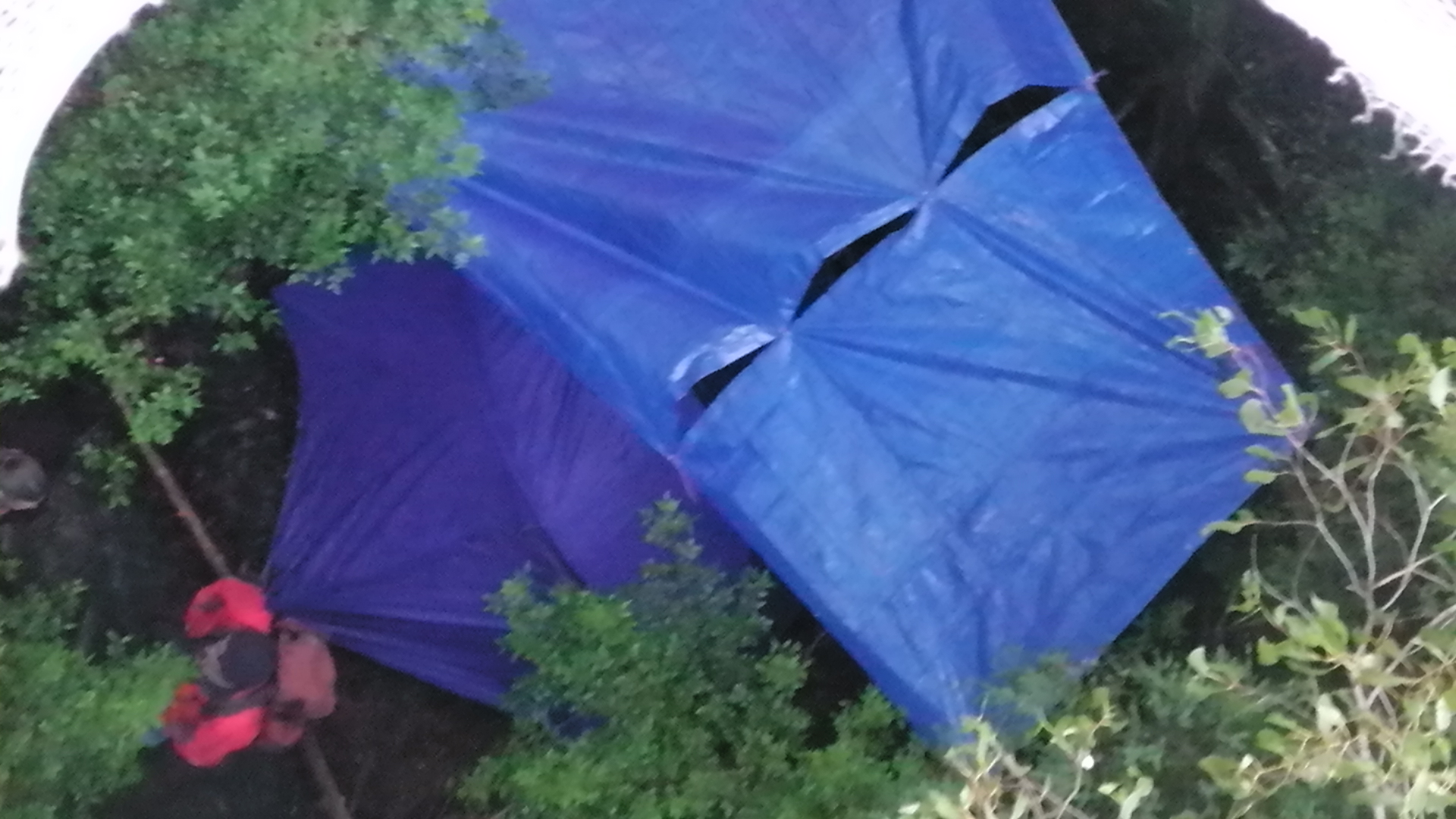 My one new neighbour made himself at home, setting up a tent near the base of the tree. I called out and asked him how long he was staying for. “A few days,” he replied. We had a short chat, trying to yell out above the sound of the wind whipping through the trees. I discovered that he intended to stay until Saturday and then be replaced by another person. Their intention was to raise their concerns about the IGA process.
This is an interesting situation. The media asked me, “How does it feel to be a protester and now have someone protesting you?”. But it doesn’t really seem like that. Because he isn’t really here to protest against me. In some ways you could even say that he is here to protest with me. We both have concerns about the direction of the forest industry, albeit from very different perspectives. And we both have concerns about what the IGA may or may not deliver. And so it seems, in a very unlikely situation, that in my struggle to protect Tasmania I have been joined by a pro-logging farmer!
Once I had reassured family, friends, supporters and the media that I was okay and it was just one person having a cup of tea at the bottom of the tree, the frenzy began to die down. However, one thing that those few hours really showed me was how much support and concern there is out there for me. The amount of messages I instantly received via facebook, email and phone was overwhelming. It really showed me that the whole world is watching and that so many people care about me and support what I am doing. Thank you to everyone who contacted me.
That night rain beat down on my tarp and I thought about my new ground dweller. I wondered how he was feeling about his first night in this forest. I wondered if it was as cold and wet and windy down there in the tent as it was up here. How would the experience of this few days beneath my tree might influence his perspective of me and of this forest?
And so it has been two days now that I have had a new neighbouring protestor. He has left today and been replaced by someone else. I’m not sure how long they intend to stay for, but it seems like they are not going to be here quiet as long as me! My support team on the ground have been engaged in friendly discussions with them, listening to their points of view and sharing their own.
A few journalists asked me if I felt angry or worried about the situation. The truth is that it doesn’t bother me that he was there. I think he has every right to have his point of view, to make a stand for what he believes in, just as I do. This is a critical time for Tasmania and many people have concerns about the state of the forestry industry. And I think that we might even find that we have things in common. Because I have concerns about the future of communities and workers too.
And this is why I believe that change is critical in the forestry industry. The deeper the industry entrenches itself in the controversial destruction of high conservation value forests, then the greater the problems, not only for the environment but for the industry itself. There is no economic stability in the global market place for an industry that is built on the lies of Ta Ann and the destruction of forests. I truly believe that there is a solution to the current crisis, a solution that will protect Tasmania’s environment and provide support for communities and workers in a sustainable industry. This is not only possible, but absolutely necessary. As the industry cannot continue as it is today.
There cannot be a solution to the crisis that doesn’t involve forest protection because the destruction of forests and the resulting controversial wood supply is at the heart of the issue.
I am more than willing to discuss ideas about the future of the forest industry and consider a range of opinions from different sides. I think it is so important to be open to a diversity of ideas, to take time to listen and consider all points of view. I have always taken this very seriously. After all the discussions I have ever had about this issue, however, one thing always remains, the fact that these forests are critically important for the future of endangered species, water quality, air quality, climate and ecological diversity and hence our quality of life. These forests need protection.
And I am staying up here until that happens.
A forest a day! July 21: RU043H, West Wellington

A significant area of forest that was left out of the Conservation Agreement, and which failed to receive promised protection as part of the Intergovernmental Agreement, was logged in the West Wellington region. West Wellington is a sub-alpine region of native forests that adjoins the Mt Wellington reserve in southern Tasmania.
West Wellington is a very significant are of largely intact tall eucalyptus forest (Hitchcock, 2012: 104). The tall eucalypts occupy high elevations in some parts of the West Wellington region.
The eastern-most larger block of around 5,000 ha of diverse forest, including extensive regrowth tall eucalypt forest, is largely intact and is of obvious potential interest for conservation as surrounding lands are increasingly developed (Hitchcock, 2012: 105). The immediately adjoining Wellington Park greatly enhances the conservation potential of the area (Hitchcock, 2012: 105).
The tall eucalypt forests, which form a near intact continuous corridor connecting from Mount Wellington west to the Snowy Range, and hence the Tasmanian Wilderness World Heritage Area, were assessed as being of considerable natural heritage significance (Hitchcock, 2012: 105).
The native forests of West Wellington are the water catchments for communities of Crabtree, Lucaston and Judbury.
RU043H is an area of forest that has been logged in the past twelve months. The area of forest was a mixed forest of regrowth forest after some fire disturbance and mature old-growth forest (HVEC, 2011: 25).
These forests were targeted by Forestry Tasmania for wood supply to Ta Ann (Independent Schedulers Report Oct 2011). In 2010 a moratorium on logging in the ENGOs’ identified high conservation value forests was due to be in place in December. The so-called ‘moratorium’ failed these forests in West Wellington, like so many others across the state.
CLICK HERE to take action now for the forests of West Wellington and other high conservation value forests across Tasmania.
For more information about the ‘A forest a day’ project, which is a collaboration between Huon Valley Environment Centre, Still Wild Still Threatened, The Last Stand, Markets for Change and Code Green, please click HERE.
Photographed in September 2011.
For more information and to see more pictures click HERE
References
Hitchcock, P, (2012) Verification of the Heritage Value of the ENGO-Proposed Reserves, IVG Forest Conservation Report 5A. [ view online ]
Hoffmann, O. & Williams, D. Report Of Independent Expert Schedulers Appointed Under the Tasmanian Forests Intergovernmental Agreement, 12th October 2011
Huon Valley Environment Centre, 2011, Behind the Veneer: Forest Destruction and Ta Ann Tasmania’s Lies. [ view online ]

A forest a day! July 20: RP034A, Repulse Forest
This massive 137 hectare logging coupe is near Misery Road in the Repulse River catchment, central Tasmania. This forest is part of the core area of 430,000 hectares that was promised protection as part of the Intergovernmental Agreement. Yet, like many other high conservation value forests across the state, it has been subject to logging since the signing of that agreement.
The coupe has been completed in sections, with some areas already burnt. The final section was logged within the past few months. The creek that runs through the area, which was given only a small buffer zone, was badly damaged by the high intensity burn and then further degraded as the vegetation has suffered from edge effects, that come with the sudden exposure to wind and sunlight.
This logging coupe is within an area that has been recommended for protection by the independent verification assessment. Its close proximity to Mount Field National Park is of particular significance. The current boundary of the park is inadequate and the inclusion of this area to the north of the current park would greatly enhance the value of the reserve. It has been recommended by Hitchcock that the Mount Field National Park along with the Repulse forests and other surrounding areas should be incorporated into the Tasmanian Wilderness World Heritage Area (Hitchcock 2012: 132).
CLICK HERE to take action now for Tasmania’s forests.
For more information about the ‘A forest a day’ project, which is a collaboration between Huon Valley Environment Centre, Still Wild Still Threatened, The Last Stand, Markets for Change and Code Green, please click HERE

A forest a day! July 19: CZ006C

Image by Rob Blakers
Surrounded on three sides by the Tasmanian Wilderness World Heritage Area, an section of state forest creates a hole in the protected area. Located near Lake Saint Claire, this enclave contains logging coupe CZ006C, which is scheduled for logging this year. The coupe and the area surrounding it are “naturally vegetated by a mosaic of eucalypt forest, leptospermum woodland and treeless moorland” (Hitchcock 2012: 153). Despite some logging in the vicinity the overall condition “is one of a natural landscape with natural vegetation”
One of the critical issues for this region is the presence of Clarence Lagoon, located just inside the boundary of the TWWHA, but with its catchment area extended into the unprotected state forest. This is a critical habitat site for the endangered Clarence galaxias (Glaxias johnstoni) (Hitchcock 2012: 153). This is an endemic freshwater fish species that is found in the lagoon and downstream in the Clarence River, which is located within the area proposed by environment groups to be included in the reserve. The only other known habitat sites are 5-6 small lagoons (Hitchcock 2012: 153). The Threatened Species Listing Statement declares that “all populations of Clarence glaxias are essential to the species’ long-term viability and require protection and management” (DPWI). This region surrounding Clarence Lagoon has therefore been recommended by Hitchcock to be included in the TWWHA (Hitchcock 2012: 154).
For more information about the ‘A forest a day’ project, which is a collaboration between Huon Valley Environment Centre, Still Wild Still Threatened, The Last Stand, Markets for Change and Code Green, please click HERE.
References:
DPWI Threatened Species Listing Statement Galaxias johnstoni [view online]
Hitchcock, P. (2012), IVG Report 5A: Verification of the Heritage Value of ENGO proposed Reserves [view online]
Media Release: Tree sitter Miranda Gibson remains committed to staying in the Observer Tree
19 July 2012
Australian tree-sit record holder Miranda Gibson has been maintaining a peaceful vigil over the threatened forests of Tasmania’s south-west for the past seven months, perched over 60 metres up a 300-year-old eucalypt in a forest at the centre of the current forest talks.
She has been sending her message about Tasmania’s forests to the world via her blog at http://observertree.org/.
Despite the presence of a pro-logging protester who has set up camp at the base of the tree, Miranda has no intentions of coming down.
‘I’m here to provide a voice for Tasmania’s threatened forests and wildlife, and plan to remain in the Observer Tree until these forests receive the protection they deserve” said Miranda Gibson.
“I have been at the top of this tree for over seven months now. Any claims to the effect that I have left the ObserverTree are just plain wrong,” Ms Gibson said.
‘I remain committed to staying in this tree, standing up for these globally significant forests and the endangered species that rely on them for survival” said Ms Gibson.


 T h e O b s e r v e r T r e e