Author Archives: lilia
Miranda’s Daily Blog: Day 203
Who can complain about a day in the office with a view like this? What an amazing place to spend time writing about the forests, while looking out across snow-covered mountains! I must admit, I did get a little distracted taking all these photos instead of doing work on the computer! I hope you enjoy the slide show:
Miranda’s Daily Blog: Day 202
Sometimes life up here feels full of good-byes. Maybe that is how life goes, hey?
I stood looking down through the trapdoor in my platform. I watch as one of my best friends disappeared down the rope, getting and smaller and smaller. I step away and when I look back the rope dangles lifelessly towards an empty patch of mud beneath the tree. He is gone. Another good-bye.
I guess if I wasn’t in this tree I’d still have to say goodbye. I’d still have friends that decide to move away from this island. But some how it seems harder up here, because every good-bye is followed by isolation. It’s just the forest and me, quietly contemplating solitude.
It’s interesting how the solitude of this experience has at times been one of the hardest things and at other times one of the most incredible aspects of life up here. I have had more time to myself then I ever have and probably ever will. It’s been plenty of time to reflect on life. There is something special about the feeling of it just being me and the forest here. No one else in sight for kilometers. To be here in the peacefulness of the forest, listening to the birds, and coming to understand the forest in away that can only be done quietly and over time. The Observer Tree has turned out to be a personal journey for me as much as a public campaign.
On the flip side is the challenge of loneliness. I miss being around people, laughing with old friends and making new ones, being part of a community. I have learnt to enjoy my own company, but as you can imagine, it’s not always enough. And I guess the hard thing is that visits from friends (and recently my Mum!) always feel too brief. They are here and then they are gone. It feels strange to watch them go and know I can’t leave.
The friends that have supported me over these past six months have meant so much to me. It sure would have been a lot harder to do this without their visits, phone calls and letters. Although there have been many incredible things about being up here, it isn’t always easy. And I want to take this opportunity to say thank you to the people in my life who have been there to listen or cheer me up when I have felt a bit overwhelmed by it all. Although I maintain hope and inspiration that we are going to protect this forests, it is still hard not to feel a bit scared sometimes, overwhelmed by the possibility that the industry may continue to destroy these forests into the future. It’s even more overwhelming when I am here looking out over this forest and wanting to do everything possible to ensure its survival, but not always knowing how or if I even can. And on those days it’s good to have someone to chat to who knows that feeling – the delicate balance between hope for the future of the forest and the sadness of witnessing their destruction.
To my friends who share the same histories, the same stories… who share my love for these trees, these places that I hold to dear to my heart. My friends who have fought alongside me in this seemingly never-ending battle to end the destruction. Those who have seen what I have seen, who’ve stood beside me and watched our favourite trees taken down by chain-saws. Who have stood with me in peaceful protest while we have faced violence against us. My friends who help carry the burden that comes with knowing the devastating reality of forest destruction. My friends who constantly inspire me. All of the crew whose determination and committment is constantly put to the test by the challenges of trying to protect Tasmania’s’ unique environment. To my friends who inspire me because of their love for the forest: Thank you! And I have felt so honoured when friends have said I am an inspiration to them too.
I hope that we can continue to inspire each other. Just as I hope that I can inspire all those who read my blog. Just as I am constantly inspired by all the people out there who have come on board, have read my blog and written comments, who have taken action and who have come to love this forest even though they may never see it.
Thank you.

A forest a day! July 3: BT009D
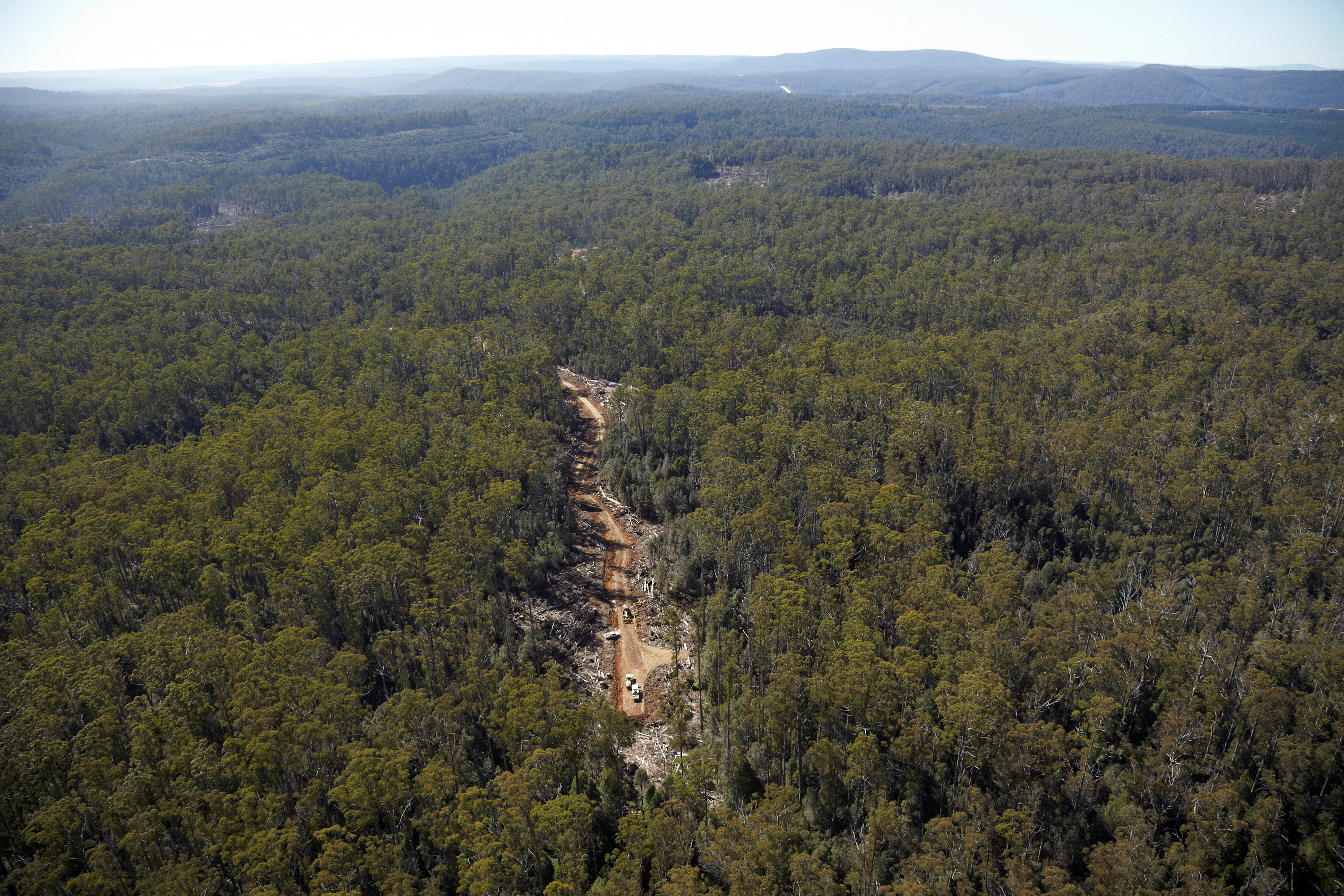
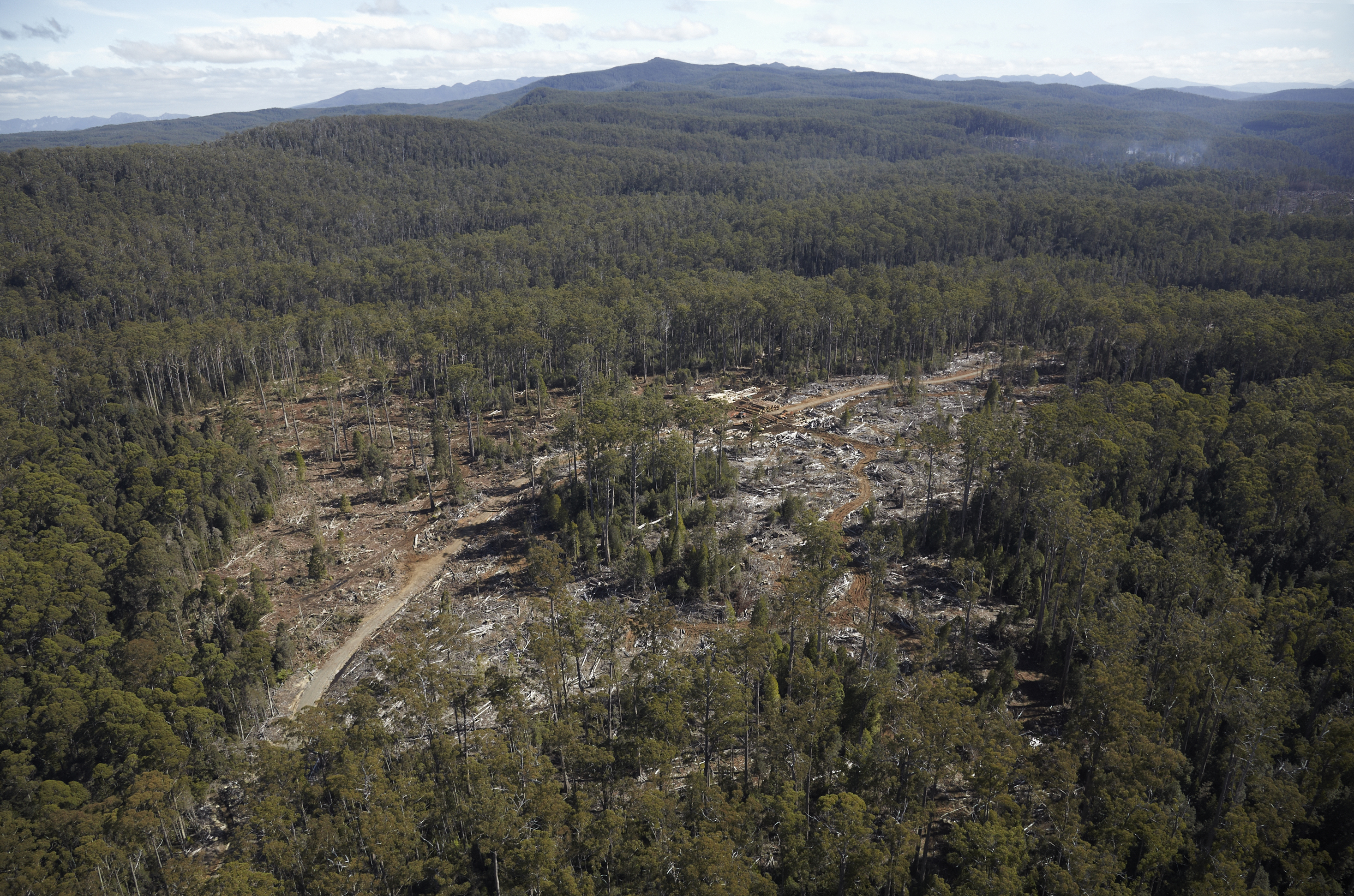
BT009D is located about 3 km to the west of BT013A (featured yesterday) and within 300m of the World Heritage Area. This 72 hectare coupe is also within the 430,000 hectares that should have been under a conservation agreement since August 2011. Yet sadly, like 42 other logging coupes, it was excluded. Logging continues right now in BT009D.
This forest is a prime example of natural ecological processes and the transition of different types of vegetation over the landscape. This area shows signs of a wildfire having come through possibly 100 years ago. These natural fire events play an important ecological role in this type of forest, opening up opportunities for young eucalypts to grow. These young trees are standing side by side with a few very tall and old Eucalpytus delegatensis, growing twisted and gnarly, their crowns turning grey. Leafless branches stretch out from their trunks, featuring numerous hollows that provide perfect habitat for many species. Although the area is dominated by E. delegatensis, there is also a significant presence of Eucalpytus subcrenulata growing in some areas of this coupe.
The understorey boasts plenty of rainforest species, including a signficant amount of leatherwood. The area also features an incredible tree-species commonly known as horizontal, due to its habit of having branches bend over and grow horizontally. They can end up as a dense mass of intertwined horizontal branches, often to the dismay of bushwalkers who can find it difficult to navigate through. Despite this, it is an impressive species. scrambling through, over, under and around a thick cobweb of moss-covered branches can feel like being a kid in a big playground. Especially when you are crawling along the branches and suddenly notice, looking through the gaps beneath you, that you have climbed meters above the ground without realising it!
In some parts of this coupe, rainforest species give way to tea tree in wet swampy sections, and then up on the hills the forest becomes very dry. There is lots of variety in the understorey as it changes throughout the landscape. This is a particularly significant reason why Butlers Gorge has been identified by the recent verification (IVG) report as being an important addition to the current Tasmanian Wilderness World Heritage Area. The TWWHA is listed against Criterion (ix) which relates to “outstanding examples of significant on-going ecological and biological processes.” Butlers Gorge shows the progression from mixed species eucalypt forests in the south transitioning to pure Eucaplyptus delegatensis stands as the elevation increases and the climatic conditions become colder. The IVG report concludes that ensuring these forests remain in “as close to a wilderness condition as possible” is the best way to ensure that such ecological processes are maintained (Hitchcock 2012: 146)
Below is an aerial photo of BT009D taken by photographer Rob Blakers in April this year. This photo shows the scar of logging encroaching on the otherwise pristine wilderness of Butlers Gorge.
Please CLICK HERE to take a moment to sign the cyber action and help stop logging in BT009D and other high conservation value forests in Tasmania.

A forest a day! July 2: BT013A
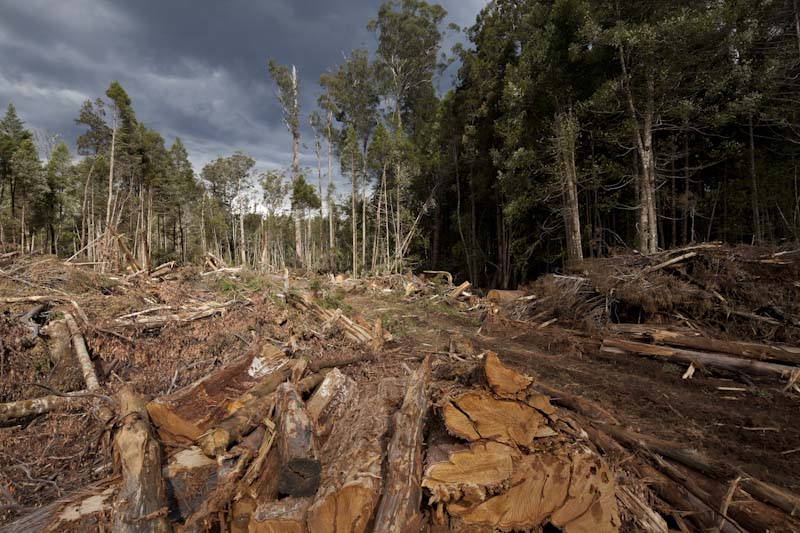
Right now one of Tasmania’s most significant tracts of tall eucaplyt forest is being torn apart by logging machinery. Known as BT013A, this logging coupe in Butlers Gorge, Central Tasmania, was once a part of a pristine and untouched wilderness area. For months now, machinery and chainsaws have relentlessly devastated this forest and logging continues. This is despite the fact that Butlers Gorge has been identified by the government-endorsed team of independent scientific experts as being one of, if not the most, ecologically important tracts of tall eucalpyt forest in Tasmania. Due to be protected by the conservation agreement, which was a critical part of the Intergovernmental Agreement signed in August last year, this area remained excluded from any protection and its values have been systematically degraded since then, along with another coupe and two brand new roads which have been pushed into the pristine forests of Butlers Gorge.
This area of forest has been verified as having world heritage value and is a critical part of the proposed new reserves. We are calling for an immediate cessation of logging, and rehabilitation of this coupe. Despite the devastating impact of logging, it is not too late to protect Butlers Gorge. An extension to the current Tasmanian Wilderness World Heritage Area (only 1km from BT013A) to include all of Butlers Gorge would make a significant ecological contribution to the reserve and preserve this magnificent tract of tall eucalypt forest.
Please CLICK HERE and take a moment to help defend Butlers Gorge and other high conservation value forests across Tasmania.
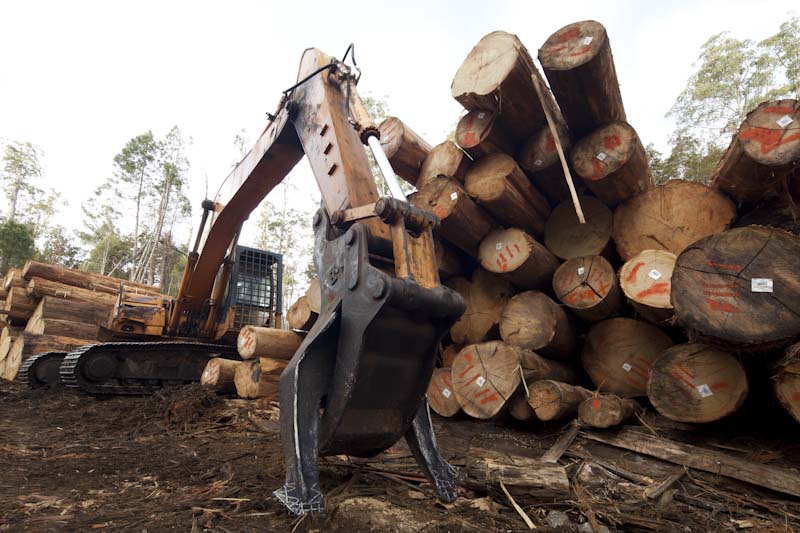
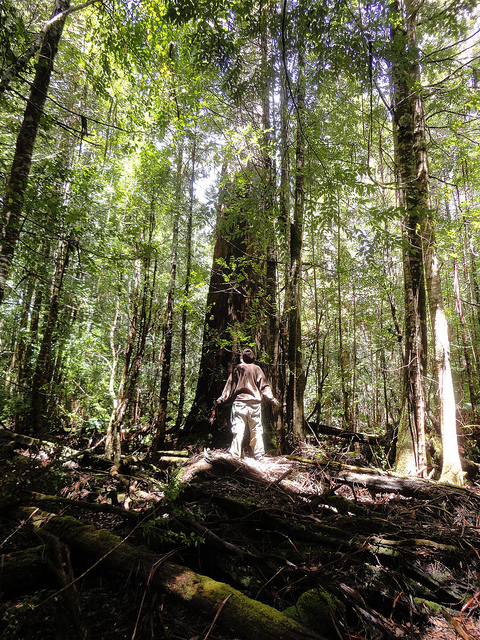
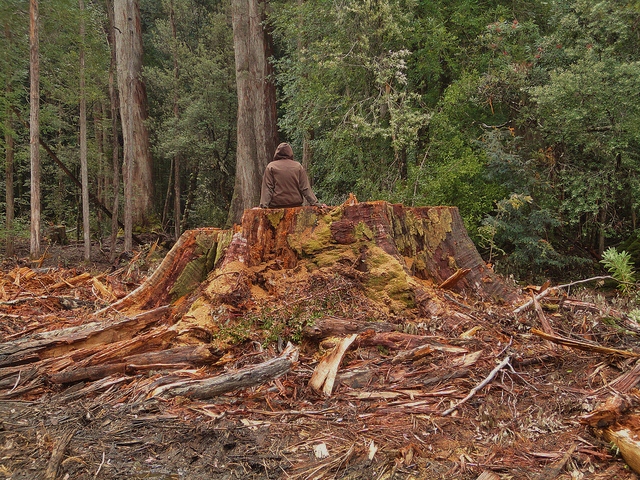
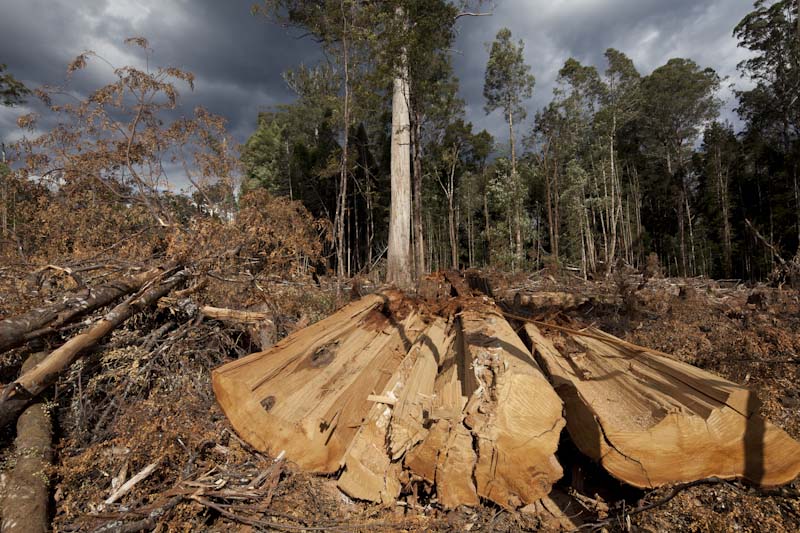

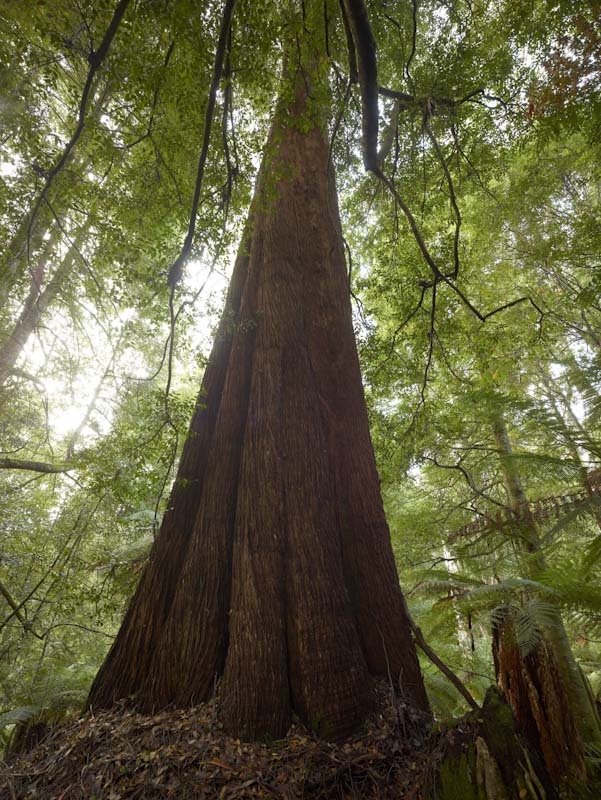
A Forest A Day!
Last night at midnight the current so-called “conservation agreement” was set to expire. This agreement had been intended to preserve 430,000 hectares of high conservation value forests from logging while talks continued about its future status. Yet, the agreement never lived up to it’s name and failed to provide conservation of the full area. In fact 43 logging coupes that Forestry Tasmania wanted to log, in most cases to supply wood to Ta Ann, were excluded. Our on-the-ground surveys have shown that about half of those coupes have already been subject to logging and roading operations now.
Last nights lapse of the agreement was an opportunity for the government to make a new conservation agreement that would protect the full area of forest that is currently being negotiated over. 563,000 hectares has been verified by independent scientists as being of significant national and world heritage value. However, the government choose to instead renew the same incomplete conservation agreement, extending the deadline until the end of August.
What we have seen in Tasmania’s forests over the past six months is continuous destruction in areas that are ear-marked for protection.
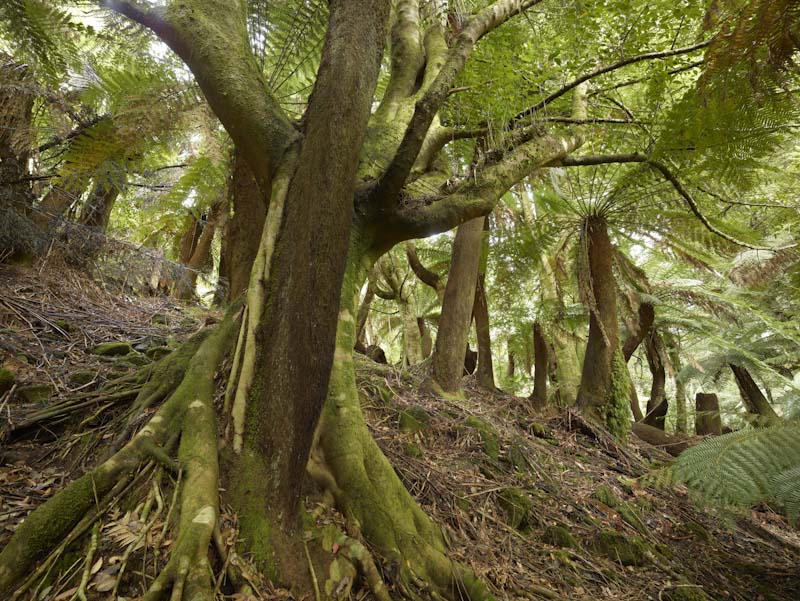
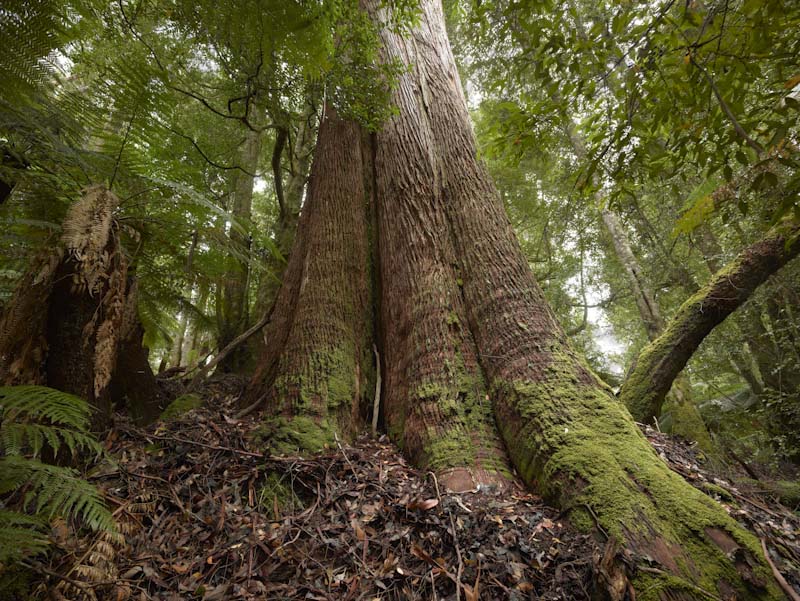
Today we are launching a new project called “A Forest A Day” in order to highlight this ongoing destruction and the values of those forests that are being lost with every new logging operation. This project will also show case some of Tasmania’s most unique and significant ecosystems including areas that remain intact, yet that remain under threat due to continued exclusion from the conservation agreement.
We hope that this project will show the world the value of these magnificent forests and inspire you to get on board and help to protect these areas. Please take a moment to sign the cyber action, sending a message to the corporate customers of Ta Ann.
Every day in July we will profile a new area of forest or logging coupe that is under threat or that has been logged in the period of time when it should have been under a moratorium.
We will kick of tomorrow by featuring one of Tasmania’s most significant tracts of tall eucalypt forest and wilderness areas; Butlers Gorge. Watch this space for your daily forest information and spread the word! It’s time for the world to know the truth about Tasmania’s forests.
This project is a collaboration with Still Wild Still Threatened, Huon Valley Environment Centre, Markets for Change, The Last Stand, Code Green and other grassroots forest campaigners in Tasmania.
Media Release: Expiration of forests moratorium gives opportunity for more comprehensive interim protection of Tasmania’s forgotten forests
The imminent expiry on June 30th of the current ‘Conservation Agreement’ that applied a limited moratorium on logging high conservation value forests means that a new, more comprehensive Conservation Agreement is urgently needed that covers all Tasmania’s high conservation value forests.
Markets for Change, The Last Stand, Huon Valley Environment Centre and Still Wild Still Threatened are calling on the Federal Government to adhere to the precautionary principle and implement an immediate moratorium on the full 563,000 ha of forests that have been verified as having high conservation values in Tasmania since the original, limited agreement was applied. The opportunity should be taken to ensure that values are not lost to ongoing logging and road-building operations in forests that are currently the subject of negotiations for their permanent protection.
There have always been two problems with the incomplete nature of the current logging moratorium, which prompted international markets action:
- The IGA only ever proposed that 430,000ha of the ENGOs conservation claim of 572,000ha be subject to a moratorium, leaving 142,000ha of equally important forests to bear the brunt of destruction by ongoing forestry operations. Independent Verification Reports have now confirmed that “The majority of ENGO proposed reserves meet one or more National or World Heritage criteria” and “the ENGO proposed reserves represent the last chance to address and protect many natural heritage values on forested public land.”*
- The Conservation Agreement imposed on January 13th didn’t even cover the 430,000 hectares in its entirety as promised in the IGA, instead allowing logging and road-building in 43 coupes of high conservation value.
“The Federal Government should act to provide for new and improved protection measures over Tasmania’s forests when the current Conservation Agreement expires at midnight on 30th June. We are advocating for a better conservation agreement so that forests under negotiation for protection are not destroyed now whilst their potential reservation is being discussed,” The Last Stand’s Campaign Manager Ula Majewski said.
“The failure to properly impose interim protection on vital areas of forest was directly due to Ta Ann’s wood supply requirements, according to official documents, and so we ramped up our international markets campaign in an effort to get the company to source its wood outside these places,” Markets for Change spokesperson Peg Putt said. “Here is the opportunity to get it right.”
“World heritage value forests in Butlers Gorge, the Picton Valley and elsewhere have been lost during the period of the last Conservation Agreement due to ongoing logging destruction, even though the IGA promised they would be off limits. Across Tasmania there are also important forest ecosystems that can still be protected from logging, which were left out of the previously inadequate Conservation Agreement and are still intact. Sadly these forests remain imminently under threat from proposed logging. These verified forests should now all be off limits whilst future reserves are finalised in the negotiations,” Huon Valley Environment Centre’s Jenny Weber said.
“Our scouting shows that approximately half of the 43 coupes exempted to allow logging inside the moratorium area have been subject to forestry operations, but the rest remain intact. Logging operations need to be kept out of all the critical forests. We are going to continue to fight for these forests’ protection. If a comprehensive Conservation Agreement is not implemented the forest I have been living in for over 6 months will remain under the threat of imminent destruction,” Still Wild Still Threatened spokesperson Miranda Gibson said from the Observer Tree, which is located in one of the 43 exempt logging coupes that was targeted to supply Ta Ann.
Miranda’s Daily Blog: Day 193
Winter has arrived in all it’s glory! It sure has been cold the last few days. And it has absolutely beautiful up here too. The other day I watched the most magical sunrise I have ever seen. The entire Tyenna Valley was a glowing with a soft golden light. The distant hills and mountains outlined in pink. And snow was falling, soft and fluffy flakes of snow gently drifting down from the sky. Shining white against the golden backdrop. I watched in awe and was reminded more than ever of what an incredible experience it is to live up here.
One afternoon I was sitting enjoying the last of the day’s sun, on a rather warm winter day, when three yellow tailed black cockatoos flew by. Hmmm…. I thought… looks like it’s going to rain. Though, it seemed unlikely given how sunny it was. But what do you know…. Next moment clouds had gathered across the sky and it began raining. I had never been totally convinced on the truth behind the theory that seeing precisely three black cockatoos flying in a group means rain is coming. I thought it must surely be a myth. But I have found up here that it is true every time. I don’t understand why, but it is. If there is one cockatoo, or five cockatoos then it doesn’t mean rain. But three…. it always rains. Next thing you know it had gone from a sunny day to a hectic storm. All night the wind lashed against the tarp and the water gathered and pooled in puddles, precariously above my head, so that I had to keep getting up in the middle of the night to tip them out, lest they collapse the tarp. By the morning it was so cold my fingers felt like ice-blocks and the snow had joined the rain to make an icy slosh in the puddles.
The following morning, there was no snow but there was a thick layer of frost, so that when I pulled my tarp open it didn’t make its usual crinkling sound, but instead came the sound of cracking ice. Outside on the deck I had to step very tentatively and carefully, as the platform was coated in ice and very slippery.
But in between the snow and ice there has been moments of sunshine. It is amazing how different the winter sunshine compared to summer. I love the way the air seems so crisp and fresh. And the colours seem so radiant in the forest. I was enjoying taking some photos of a little bird who was also taking advantage of the winter sunshine. I went inside to put the camera away, leaving the tarp open. I turned around and thought to myself…. what on earth is all that white fluff on my blanket? I stepped in for a closer look and suddenly I was covered in it too…. ah yes… it was snow and it has snuck in silently and quickly to cover my blanket within a minute!
If Thursday and friday were the days of snow. Then yesterday’s special feature would have to be the rainbow. I think I saw at least ten different rainbows throughout the day. Most were specatacularly vivid and bright.
I must apologise for not blogging lately. Although I have been having a great time enjoying the weather, I have also been having a very frustrating time dealing with technology and power. Oh, how easy it used to be in the city; anytime you want to charge something up all you have to do is go to the wall and plug it in. Oh, the joys of unlimited energy! Up here it is never quiet so simple. And the last few days have been some of the most challenging on this side of things. Every time I went to charge my computer there would be a horrible loud ‘beeeep’ emitted from the inverter. Usually an indication that the battery it is plugged into isn’t charged enough. So a very loyal supporter walked an hour in to see me carrying a very heaving car battery. Finally I have that all set up and am very excited to get the computer going again and get stuck into work. You would not believe how much I was longing to do some work. I was starting to feel jealous of all those people working in offices…. oh to be able to work and work and work on the computer, what a luxury! I sat down at my new desk, thinking about what I was going to write for my blog. And then all of a sudden….’beeep’….. Oh no! The new battery wasn’t working either. So that very same dedicated and loyal supporter came back the next day, an hour in and an hour out, to deliver me a new inverter. I said, I better test this while your still here, to make sure that it is all working. Yep, all good. Soon as he was gone, what do you know? The terrible ‘beeep’ was back. A new inverter and a new battery… what could possibly be the problem now? I wondered if it might be the cold affecting everything? prehaps. For the third time my loyal supporter walked in again, this time to deliver a different battery and inverter. Thank goodness it has worked and I am finally back online!
It’s funny how the last few days have felt harder than most. I started to wonder: what on earth am I doing up here? Can I really keep going and for how long? I felt frustrated and agitated. I tried to keep myself entertained, but I got bored quickly. I have become so dependent on my computer in order to feel productive, I guess. When I can write my blog, communicate with supporters around the world, spread the word about the forests, keep up to date with what is happening for the forests politically and keep on top of other tasks, then I feel positive about being up here. But it is easy to start to feel ineffective when those lines of communication are taken away. I guess that really is the amazing thing about the Observer Tree. The fact that I can be in this tree in the middle of the forest in Tasmania and be communicating to people across the globe about what is happening here. And hopefully all the people who have found out about these forests and about the destruction that continues to occur, have gone on to be inspired to take action. When I’m sitting up here on nights like tonight, where my fingers ache as I type because the air is so cold, I think about that and I know that it is worth it.
Well, I must say a big thank you to my support crew for their dedication and hard work in carrying batteries and inverters back and forth through the forest in order to keep me online. And thank you to all of you for your patience with the lack of blog entries. And especially a very big thank you to every one who is reading my blog, taking action and supporting forest protection – you are my inspiration to keep going up here!
Miranda

Miranda’s Daily Blog: Day 187
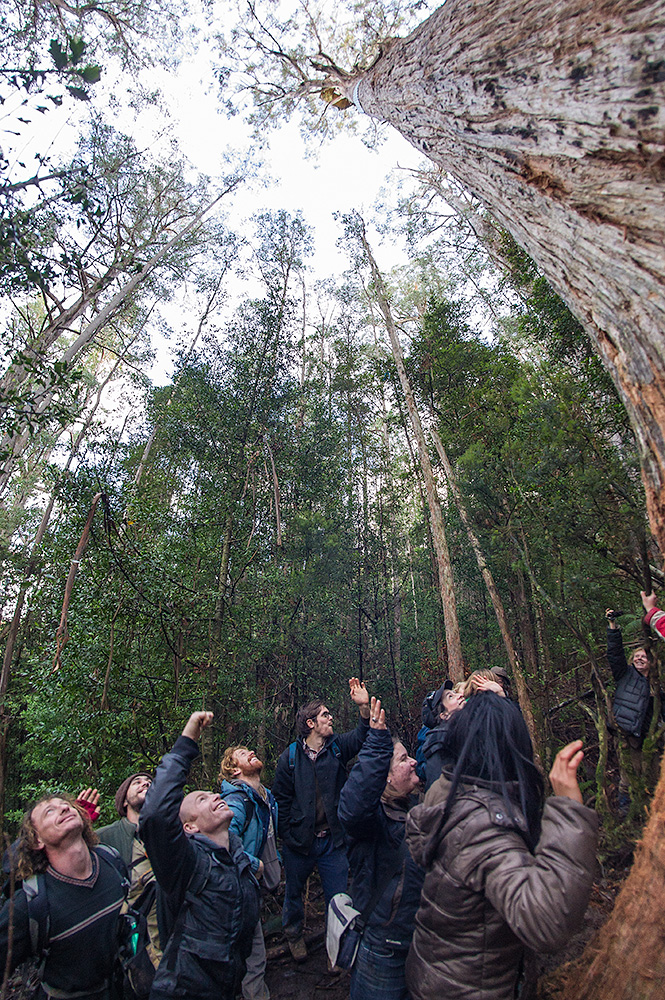 What a great weekend! Thank you to all the people who came out to visit me on Saturday as part of the community walk. It was such an inspirational day to receive so much support. I can’t express how much it means to me to have you all come and visit my tree! And even though I obviously can’t talk to you face-to-face, it was an incredible experience to chat on the walkie-talkie to so many people.
I hope you enjoy this little video I made about the day:
And check out these photos by Alan Lesheim:
Miranda’s Daily Blog: Day 185
Thursday marked exactly six months that I have been at the top of this tree.
It’s hard to believe that I have been in this tree for half a year! I think if someone had come up to me in the past and said that I would spend more than six months in a tree I wouldn’t have believed I ever could. But somehow the days turn into weeks and those weeks turn into months. And before long I have been in the tree for six months. It is amazing how adaptable humans can be. How I have just become so used to being up here that it feels normal now. Less and less often I find myself missing things about life on the ground. I just accept each day as it is, another day in a beautiful tree. Having said that, there is of course the other side to it, the knowledge as every day passes that this forest is still under threat. And that forests around Tasmania that have been verified as world heritage and national heritage value continue to be destroyed. I am reminded of this constantly as I look out across a landscape scarred by logging. And most importantly, over areas of pristine forest whose future is on the table.
Everyday the birds do their rounds. They come before sunset. It used to be around 6pm. Then it was more like 5, then 4. Now it is not long after 3. First the spotted pardelote comes. Then the groups of black headed and strong billed honey eaters. Often joined by one solitary yellow throat. There is one pair of black headed honey eaters that are always together, darting about each other. For a moment each day it is busy with the chaos of bird chatter and then they are gone. They move on to the tree with the hollow that looks like an owl and from there they make their way up the ridge. Though, it is of course weather dependent and on some days they don’t come. On the days when I want to stay wrapped up in a blanket, perhaps they want to do the same!
I had never been aware of how much a routine the birds have until this experience. I wondered what the birds would do if this forest ever gets logged. What would happen to their routine? And then it makes me wonder about all of the wildlife in this forest. I mean we pay so much attention to devils and quolls, because they are so significant due to being endangered. But there are also so many other creatures that live here. I can only imagine the disruption caused to all these species when their habitat is clearfelled and burnt. When you walk through a forest like this you hear so many birds singing and fluttering about. But sitting in the tree over such a long time, I feel like I have come to know these birds personally, as they visit my tree daily. And I begin to feel a sense of responsiblity for them. I sit and watch them and sometimes they watch me with a curious eye, head cocked to the side. They don’t seem scared of me anymore. But I feel like a traitor, because if only they knew that it is my species that has destroyed the homes of their friends and family in nearby forest. It is my species that may come in here one day soon and destroy their homes too.
It could have been midnight for all I knew when I woke up this morning. The stars were glowing in the sky. The moon, now a sliver of light hung above the tree tops. The valley below like a white lake, its forest hidden beneath a thick layer of fog that glowed silver in the moonlight. I checked the time – 6am. It’s amazing how it can be morning and still feel like night, now that we are in the middle of winter. I sat and watched the landscape change as the pre-dawn light slowly began to creep across the sky. When the glow of sunrise came, it brought with it brilliant pinks, oranges and reds that swept across the clouds above Mount Field. I thought to myself how lucky I am. It is something I am reminded of so often up here. How many people in the world get to see such a spectacular view every day?
As the final colours were fading from the clouds and the sun was at last showing it’s face above the mountain ridges, a hear a familiar whoosh whoosh whoosh of wings flapping – the distinct sound of carrawong wings. It must be Carra, the friendly Carrawong. And before long there she was on the branch near my tree that she always perches on. Looking at me with that gleaming eye, head tilted to the side. With a little jump she’s on the platform and hoping around, pecking at the floor in the hope of finding some tiny morsel of scraps. There isnt’ really anything for her to eat here, but she is hopeful anyway. She looks up at me again and we watch each other, still and silent. Again I think to myself, how lucky I am.
Yes, six months is a long time. Longer than I ever imagined I would stay in a tree. And there are of course things I dearly miss about life on the land! But I also know that this experience has been a life changing one. A chance to get to know a tree, a forest, a landscape and the creatures that are a part of this land. And now that I know it, my resolve has deepened even more. I will never be able to stand back and let the chain saws wipe this place from the face of the earth. I never want to stand in a burnt out and empty clearfell of a land I once knew. I never want to see a lost pardelote looking for its favorate tree, or hear the sad call of a carrawong flying through the haze of smoke.
This is just one tree in the forest. One group of honey eaters and one lone spotted pardelote. There are many more, right across Tasmania. That are just as important, only no one has had the chance to get to know them. So right now they fall in silence. Well, the sound is deafening to the devils hiding in their den. And the crash of trees falling is terrifying to the birds that fly away in a frantic uproar. But to the people of the world… it is completely silent. Because if no one is watching, no one is seeing, no one knows.
There are different ways of knowing. I know these forests in one way, the way of the observer. But there are some people who know these forests in a different capacity. The independent team of experts and scientists who have verified these forests know them in terms of their national and world heritage values, their carbon storage capacity, their important tracts of endangered species habitat and their water catchments. And through this knowledge they have declared this forest worthy of world heritage status. Over 560,000 hectares of forest in Tasmania has been declared to be of significant and in need of protection. We can not continue to go on not seeing the destruction, because we know now the importance of what it is we are losing. The forests cannot continue to fall in silence. But it is up to us to break that silence. It is up to us to speak up and speak out for these forests, because the honey eaters and pardelotes cannot. That is why I will continue to spread this message across the world. But I need help. Please take a minute to stand up for these forests.
Click here to take action.
Thank you,
Miranda
Tasmania’s forests still falling: watch the brand new film!
Tasmania’s magnificent forests are still falling every single day as Japanese companies continue buying product sourced from the ongoing destruction.
From the frontline, where the forests are being logged and supplied to Ta Ann’s mill, we have filmed the cycle of forest destruction that is occurring right now in Tasmania’s wild forests. Watch it below, and share it with your friends! The film is also available with Japanese commentary and can be viewed HERE.
572,000 hectares of forest in Tasmania are proposed for protection and have been independently assessed by a team of experts. They found that the majority of the proposed reserves “meet one or more National or World Heritage criteria” and “represent the last chance to address and protect many natural heritage values on forested public land”.*
Negotiations are underway to provide protection for these unique forests and a transition to genuine sustainability for Tasmania’s crisis-ridden native forest industry. Meanwhile, the very forests being discussed for reservation are still being destroyed. Disgracefully, a promised moratorium on logging has never been properly implemented.
We have updated our cyber action, so that you can tell Ta Ann’s customers about new evidence of road-making and logging in the pristine forests followed by massive deliberately lit fires.
Take a few minutes to take action for Tasmania’s forests, and then make it doubly effective by sharing the action and our new film with your friends and family and asking them to also send a message.
For more information go to www.taann.net
* Mackey, Brendan (2012). ‘Tasmanian Forest Agreement – Summary Report of Conservation Values.’ Prepared for the Independent Verification Group of the Tasmanian Forest Agreement. March 2012, p. 9.


 T h e O b s e r v e r T r e e