Category Archives: Daily Blog

Miranda’s Daily Blog: Day 46
I was beaming! Beaming with excitement and beaming across the net, past these mountains and forests and straight into Parliament lawns in Hobart. What a fantastic experience to be one of the key speakers at the Picnic in the Park event and have the opportunity to tell the crowd of people gathered today all about this area of forest I’m living in. And to encourage everyone to get on board and get active (with a special reminder to people about the upcoming global 24 hours of action coming up on February 15).
The day was a great success with a good turn out and all the technology running smoothly too! I really enjoyed Senator Christine Milne’s speech, in which she raised some questions we should all be asking Forestry Tasmania and the government , in relation to Ta Ann’s wood contract. For example, does Ta Ann only have to pay for the wood that leaves Tasmania on their ships as veneer? This means that all the wood that goes through their gates but which they reject, all the wood that becomes waste product during their processing, all the wood that they do not eventually ship overseas, is never paid for. And why are the details of the contract censored on Forestry Tasmania’s website, when it is a contract that concerns all Tasmanians?
Christine’s media release today requests answers from Forestry to the following list of questions:
” 1.How is it that after Forestry Tasmania lost two thirds of its contracts with the demise of Gunns, that it has to log inside the 430,000 hectares of HCV forests to meet one third of its contracts?
2.Has Forestry Tasmania over allocated the forests?
3.Has Forestry Tasmania massively over cut the forests over a long period of time and would not have been able to meet both Gunns and Ta Ann’s contracts if both were still in business?
4.Does the TA Ann contract only require Ta Ann to pay for the volumes that leave the wharf and not for the logs that are delivered to its plant?
5.Where do the unpaid for rejected logs and waste go?
6.When the Commonwealth gave Ta Ann $10 million to set up in Tasmania , it was to process lesser quality logs hence not from HCV areas, how is it that Ta Ann is now demanding logs from HCV areas?
7.Who changed the specifications of the original contract?”
The speeches were followed by a more informal discussion, giving people from the audience a chance to ask questions. After this I was moved to a new location, a tent where people could come and chat to me individually. It was so wonderful to talk to people about what I’m doing up here, to share ideas, hear people’s thoughts and opinions and to receive message of support. Thanks to everyone that came along today I hope you were inspired by the day as I was!
Here are a few photos from today taken by photographer Alan Lesheim.

Facepainting

Sara Maynard - Tasmanian Aboriginal Council

Senator Chirstine Milne

Vica introduces me to the audience
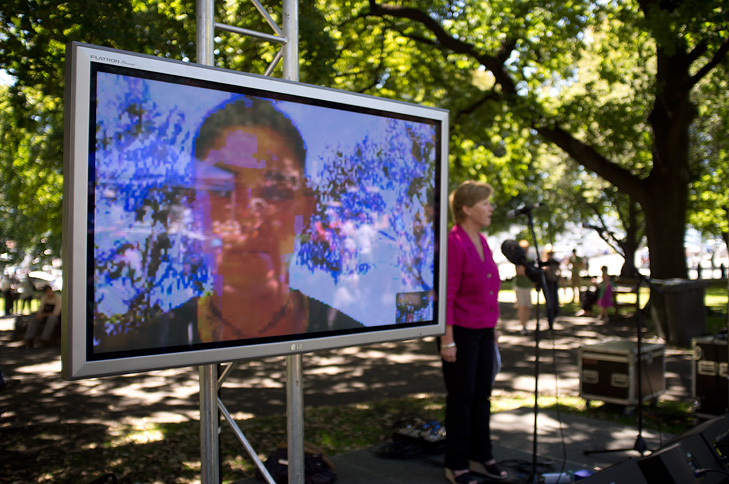
My moment on the big screen!

Jenny Weber - Huon Valley Environment Centre

Taking part in discussion group

Discussion group audience

And talking on the small screen
For those not in Hobart, sorry that you missed out. But there is always the option of organising something in your local town!

Miranda’s Daily Blog: Day 42 & 43

Logging coupe in Tasmania's north west where today's action took place
Ta Ann Tasmania has been put in the spotlight over these past few days, for the role in the continued destruction of Tasmania’s high conservation value forests. Yesterday 25 conservationists entered the Ta Ann veneer mill in the Huon Valley, halting operations and drawing attention to the ancient forest destruction that is occurring to supply wood to this company. Jenny Weber, from the Huon Valley Environment Centre was the spokesperson for the action and stated that “The Tasmanian Government’s own reports show Ta Ann is the major driver for logging in old-growth and HCV forests,”
The concern around Ta Ann’s practises is growing, with more actions occurring today. In Tasmania’s south and also in the north west, actions took place in logging coupes that should have been protected by the Intergovernmental Agreement, yet are now being felled to feed Ta Ann’s mills.
‘The forests we are protesting in today are key targets for Ta Ann’s wood supply. Ta Ann is misleading Japanese customers and the public by peddling misinformation that they receive timber from regrowth and plantation areas in Tasmania only. The Southern protest in the Picton Valley forest is within 2km of a cave system that has indigenous and environmental values of international significance. These forests have never been logged before and conservationists have identified celery top pines that were 150 years old that have been felled,’ Jenny Weber said.
‘The conservation agreement signed on the 13th of January by the State and Federal governments does absolutely nothing to protect Tasmania’s globally unique forests including areas such as these in the North West of the state. It is still business as usual in the forests, with old growth and high conservation value forests tracts still being lost despite being promised protection by the Federal Government in August last year.” said spokesperson for Code Green Jared Irwin. ‘Code Green are committed to ongoing action until Tasmania’s irreplaceable wild forests receive true protection.’

Tasmania devil seen in the area that is now being logged to supply wood to Ta Ann
In addition, Ta Ann was the focus today for environmental NGO Markets For Change (MFC), who publically released a letter they sent to Forestry Tasmania, calling for an admission that Ta Ann is in fact receiving timber from high conservation native forests, contrary to the misleading claims currently being made by Ta Ann. MFC noted that in the annual report of Ta Ann Holding it is cited that Ta Ann Tasmania uses ‘plantation eucalypt.” This is also reiterated on the website of Ta Ann shareholder company Sumisho & Mitsuibussan Kenzai Co Ltd (SMKC) on a page devoted to their Tasmanian product, which states that “We produce there veneer from high-quality eucalyptus plantations…” (http://www.smkc.co.jp/eco/participation.html). Yet this is simply incorrect, as MFC pointed out Ta Ann Tasmania itself admitted that it requires native forest timber, in their submission to a House of Representatives Committee and in evidence under oath to a Legislative Council Committee.
Markets For Change have called on Forestry Tasmania to make a public statement clarifying the fact that Ta Ann is receiving wood from native forests. The letter states
“While the content of its Annual Report it is obviously the responsibility of TAHB, we believe that it is the responsibility of Forestry Tasmania, as the principal supplier of wood to TAT, to be clear and explicit with respect to the source of such wood so that TAHB can be confident of the veracity of statements it makes to shareholders, regulatory authorities, customers and the general public.”
“In the context of current forest conservation debate, the distinction between planted forest (plantation) and naturally regenerated forest (native forest) is highly significant. We believe that TAHB have made a mistake in how they have characterised sources of wood used by TAT mills in Tasmania and that this mistake may have significant market implications.”
It does indeed have market implications. Consumers are likely to believe the product is sustainable if it is labeled “eco” and claimed to be from plantations. Yet, here I am at the top of a tree that is centuries old, in the middle of a spectacular ancient forest that is due to be logged in order to supply Ta Ann with this so called “eco ply.” It is an absolute disgrace that they can place the word “eco” in front of a product that is driving the ongoing destruction of endangered species habitat! These past few days have been inspiring with so many conservationists speaking out against Ta Ann. Please help out by adding your voice at our upcoming Global 24 hours of action on Feb 14-15.

Miranda’s Daily Blog: Day 40 & 41
I tried to block out the thought as soon as it entered my mind. I didn’t want to think about it. But it kept creeping back to me. I imagined that one day someone else would be sleeping in this tree. Not like I have been every night for the past six weeks, looking out across the mist covered mountains and the Tyenna Valley. No, not out here in the middle of this forest. But in this tree non-the-less; after it has been hacked into pieces, shipped across the world to China and back, sold at a Harvey Norman store as a “Tasmanian Oak” bed, finally ending up in the bedroom of someone out there who lays down to sleep, perhaps unknowingly, in The Observer Tree. No, I don’t want to think about that, it is too horrible.
I remember when I first walked into a Harvey Norman store with new eyes, full of a new found awareness of where each table, chair and bedframe had come from. In July 2011 Markets for Change (MFC) released a report entitled No Harvey No. It mapped out the chain of custody of native forests logged in Tasmania, Victoria and WA, as it is shipped to China, made into furniture and shipped back to Australia. It took a year for MFC to track the complicated journey that the timber takes once it is taken from our forests. For example, one chain of custody involves Chinese company E-JEYIK which buys the wood from Auswest, Britton Timber, and Gunns Ltd, turns it into furniture sends it to wholesaler Dixie Cummings, who then sells it on to Harvey Norman.
“Many of these retailers like Harvey Norman have very large advertising budgets. Every time their advertising lead to the sale of a timber product from a native forest it directly contributes to the logging of these forests. Yet many companies such as Harvey Norman, have no publicly available procurement policies” It states in the MFC report.
This is why I was walking through a Harvey Norman store, looking in detail at each label. No, I wasn’t looking to buy a new bed; I just wanted to see for myself. And there it was “Tasmanian Oak” written on labels on beds, tables, cabinets. I ran my hand along the top of a table. Taking in each grove, each marking in the wood. It suddenly occurred to me that anyone of these could be Front Sit. In the past I had imagined trees I’d come to love, being split into a million pieces, turned into woodchips, spread in a million directs, lost amongst tiny pieces of other trees, other forests. Finally ending up scattered across the globe, as tiny specs in a piece of paper in America, a tissue in Japan, cardboard packaging in France, some toilet paper in China. It was almost like scattering the ashes of a loved one into the wind, watching them blow away. But as I stood in front of this solid table, it somehow made the heart ache feel more real. The reality that an Australian family out there somewhere might be eating their dinner off the corpse of Front Sit tonight. I gently touched each table, each bed, the back of each chair. “Victorian Ash,” “wormy chestnut” and “Tasmanian oak” – imagining the trees, the forests from which they had come. Taking a moment to honour the life that they had been, because I figured that whoever bought them would never know the truth.
The sadness I felt inside the store gave way to other emotions. For the first time in a long time I felt a renewed sense of enthusiasm and excitement for the forest campaign. I had just about had it with the forest negotiations going nowhere and the government bowing down to companies instead of listening to its constituency. I just didn’t know what to do or how to change things. I really wanted to see these forests saved but I was out of ideas and I just felt like we were getting nowhere. And then it happened. If this was a cartoon the No Harvey No report would be like a light bulb suddenly appearing above my head! Armed with the new realisation that the government was not the only ones that controlled the fate of the forests and not the only ones who could change it, I couldn’t wait to start putting the heat on Harvey Norman, and seeing if we could get Gerry to change their procurement policy. If Harvey Norman stopped sourcing wood from Tasmania and other native forests, then that would have a major impact on the industry. Adding the extra pressure needed to force the whole forest industry to change.
Like MFC said in their report: “As Australia’s largest retailer of furniture and electronics in Australia, Harvey Norman, its management and its shareholders have a special responsibility to source products in an environmentally responsible way.”
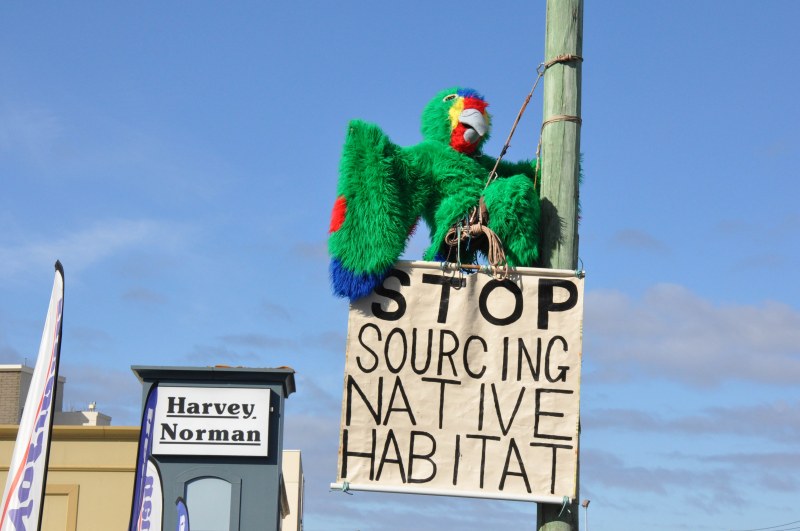 Since the campaign was launched less than a year ago, there have been loads of actions right across the country and even across the world, targeting Harvey. Yet, the company hasn’t changed their policies. I guess we have to keep at it!! Every time someone walks into a Harvey Norman store and asks about the policies, every time their company name is mentioned in the media in relation to forest destruction, every banner drop, every poster, every e-petition: they add up and bit by bit they no doubt worry Gerry Harvey, that his brand name is being damaged. His brand name is now associated with forest destruction. And eventually, if we keep this pressure up, he will have no choice but to listen to the people and change his policies.
Recently Get Up! had a campaign where everyone could take a copy of the petition that was signed by nearly 50,000 people, and hand it directly to the manager or franchisee at your local store. I went along with my Mum to her local store in Capalaba, Queensland. As soon as we took out the petition the manager saw it out of the corner of her eye and she knew what it was straight away…it was quiet clear that she had been waiting and expecting this moment. Possibly we weren’t the only ones dropping the message into that store. The fact that she knew all about it was an inspiring sign. It shows that the company is definitely feeling the pressure.
I’d like to say to Gerry Harvey: Despite what the Tasmanian Government may have tried to tell you, the forest issue in Tasmania is not ‘getting sorted.’ Logging of high conservation value forests continues as rapidly as ever, fueled by companies like yours. So long as Ta Ann and you, Mr Harvey, continue to buy and sell these products made from our native forests, there will be no “peace in the forests.” And there will be no peace in the show rooms either, because more and more people are realising where these products come from. And how many people really want to sleep a bed made from the corpse of a 400 year old tree?
Check out the films below of actions targeting Harvey Norman.There’s lots of great ones choose from, so I’ve just picked a couple. I hope it inspires you to get out there or get online and take action!
Miranda’s Daily Blog: Day 38 & 39
“You must be really getting to know this forest by now” My friend said to me the other day, after she climbed up to see me and we sat looking out over the tree-lined ridges that have become my daily view. “I look at that patch every day and wonder what it’s like to walk to through there.” I say, pointing to the place where the colour and shape of the trees change, “I always wonder what is happening over there, why there are no eucalypts in the patch, as the forest gives way to a small area of sassafras and other rainforest species.” My friend has just arrived for a visit. We are looking out across the view, as she recovers from the 60 meter climb “you must be really getting to know this forest by now” she says.
It feels strange to think of ‘knowing’ that forest, when I have never set foot on that patch of ground. In a way, I wish I had the chance to get to know it better. Walking along these ridges, getting to know the twisted sassafras trees, the stands of celery top pine, the creeks and gullies. But instead, I feel stuck up here, watching from a distance. But in some ways, my friend is right. I am getting to know this forest, from a different perspective than usual. I’m getting to know it the way birds probably know it, looking out over the tree tops.
My friend tells me the story of a plane crash 70 or so years ago, near where she lives… A plane went down in dense forest. Incorrect sightings lead the search party to look in the wrong place. There was a man who lived in an area overlooking the forest. He knew the forest so well that he could tell in the distance that a few trees were missing in a particular patch. So, on a hunch that the plane might be there, he headed off on a two day hike through the bush. He was able to locate the plane, managing to save the two survivors left there. “It’s funny,” my friend says “lots of people look back to those days and think that the people weren’t as environmentally conscious as today, that all they saw in the forest was timber to utilise. But this story shows that people living on the land have a connection to the land. They knew it like the close companion”
The story fascinated me. I wondered, looking out across the forest, if I would notice a few trees missing in the distance? I wondered if I could know my way walking through that forest, just from watching it day in and day out from this perspective. I eagerly researched the plane crash that night on the internet. It’s a very interesting story. I couldn’t find evidence of the fact that noticing missing trees in the distance was the catalyst for the hero of the story, Bernard O’Reilly, to look for the plane. But, either way, that seems to be the story that has lived on through word of mouth. In his evidence to the inquiry about the crash, O’Reilly says that when he was looking for the plane, he figured that it would have burnt as it crashed. He notices flowering trees that were slightly cream, instead of the usual white and headed in that direction, thinking it may be evidence of fire, eventually finding the plane in that direction.
His daughter explained his humble attitude, he didn’t consider himself a hero; he just did what needed to be done. She said “He thought that if there were people who needed saving and it was fate or whatever you like to call it, needed them saved, they wouldn’t necessarily send miraculous means, but his thought was that they would give the idea to someone who had the knowledge to carry it through” [http://australianetwork.com/nexus/stories/s1878075.htm]
I admire his humble approach and his idea that ‘fate’ wouldn’t fix things miraculously, but give people the idea to do it. I wonder if this is how things are with the forest too. That there is no miraculous thing that will save the forest from destruction. Maybe ‘fate’ will just place the idea into people’s heads that it needs to be done. The question is then, if people will act on that? As O’Reilly acted on his thought back in 1937 to search for that plane.
Someone who has been following my blog sent me an email the other day about an elderly person at the checkout. The young cashier critical because they didn’t have a green bag, implying the older generation were less ‘green.’ The response being a list of all the things people used to do in the past (walking instead of taking the car, doing things by hand, reusing things etc).
It makes me think of conversations had around the fire at Camp Floz on those nights that we were visited by a couple of ex-loggers. They certainly wouldn’t call themselves ‘greenies.’ But they were critical of today’s logging industry… Back in the day, they said, it took all day to fell a giant tree and then even longer to get it out of the forest. Logging this way, they reckon, gave them a different respect for each tree. They compared this to the smash and grab of modern logging, machines wiping out hectares and hectares in barely no time at all. 400 year old trees felled in 15 minutes. In combination also with new processing methods plus the rise of the demand internationally, these old tree-fellers were gravely concerned with the rate of destruction occurring. It’s being logged too quickly, we are losing too much forest, they’d say.
In some ways there seems to be an ever increasing awareness of the need to protect the environment. The world seems to be becoming increasingly ‘green’ but this seems to be matched with an increase in destruction, in production and consumption, and the technology to destroy the environment at an ever increasingly rapid rate.
In another 70 years, when they look back on our stories, what will they say about us, about how we treated the land? I hope that future generations can look back at this time, in 2012, when the international community stopped sourcing wood products made from old growth and primary forests. I hope that one day people will be celebrating the protection of the world’s forests.

Miranda’s Daily Blog: Day 37
Life in the tree sit: A photo story.
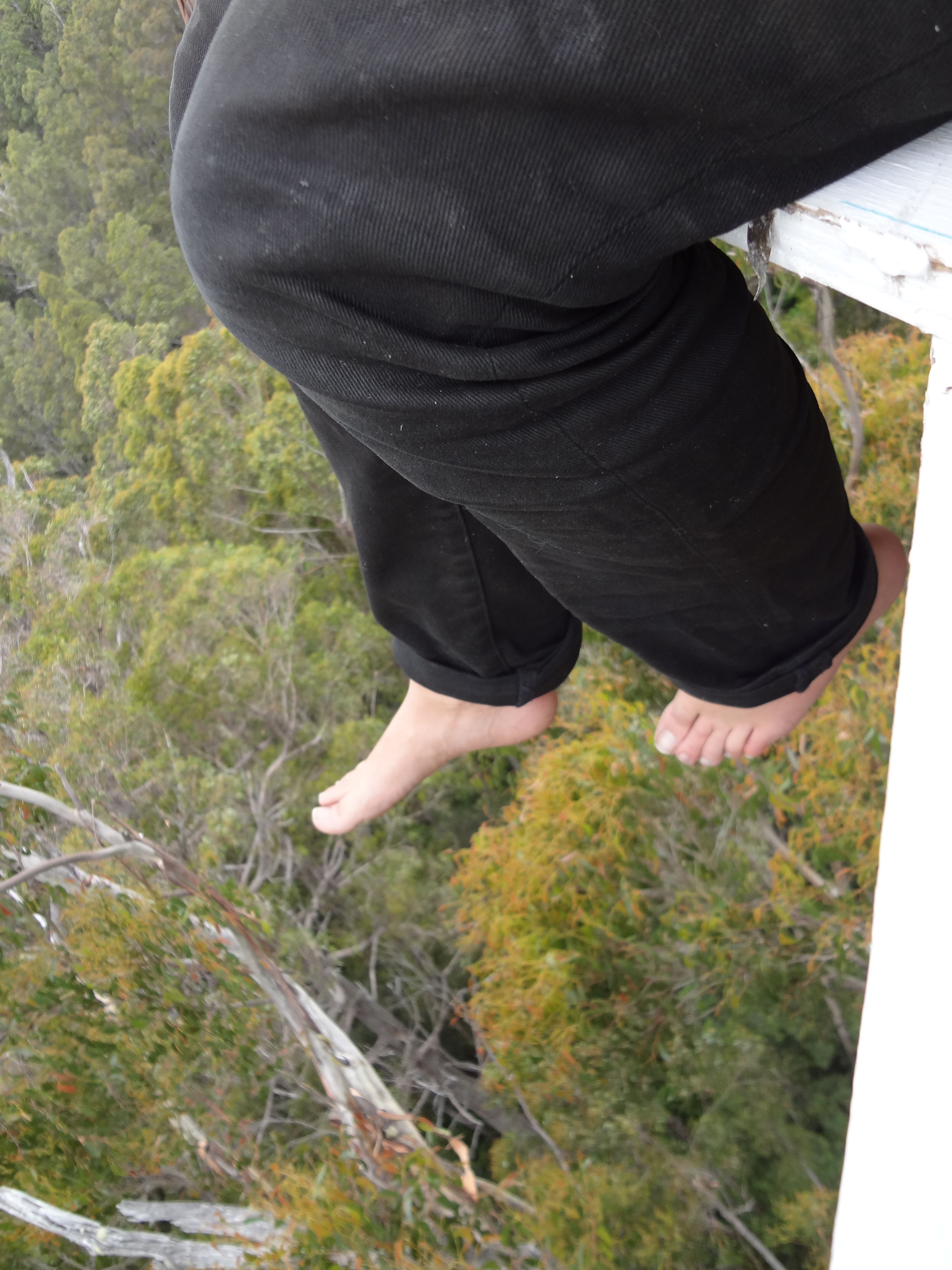
Sitting on the edge
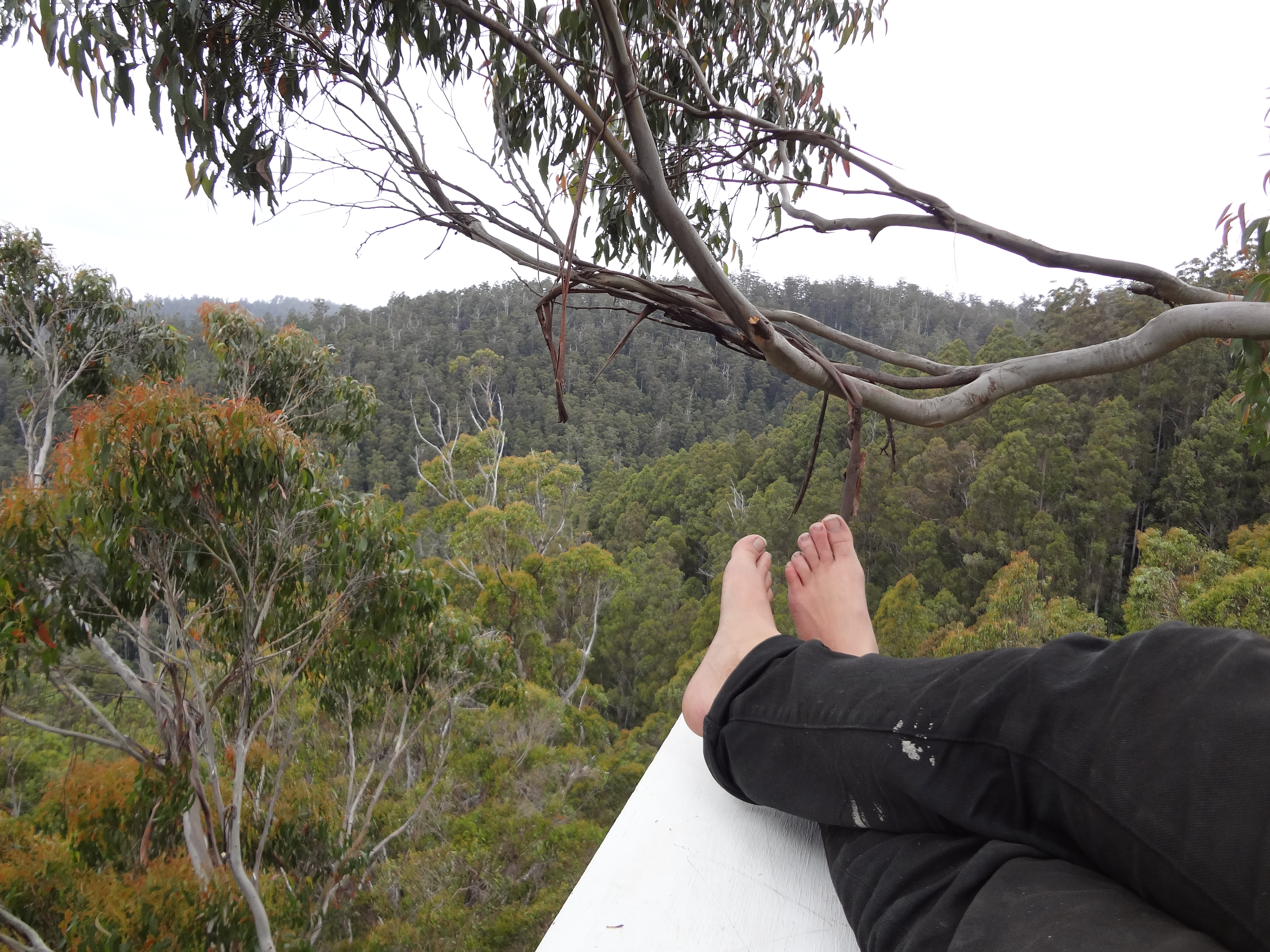
Kickin' back and relaxing
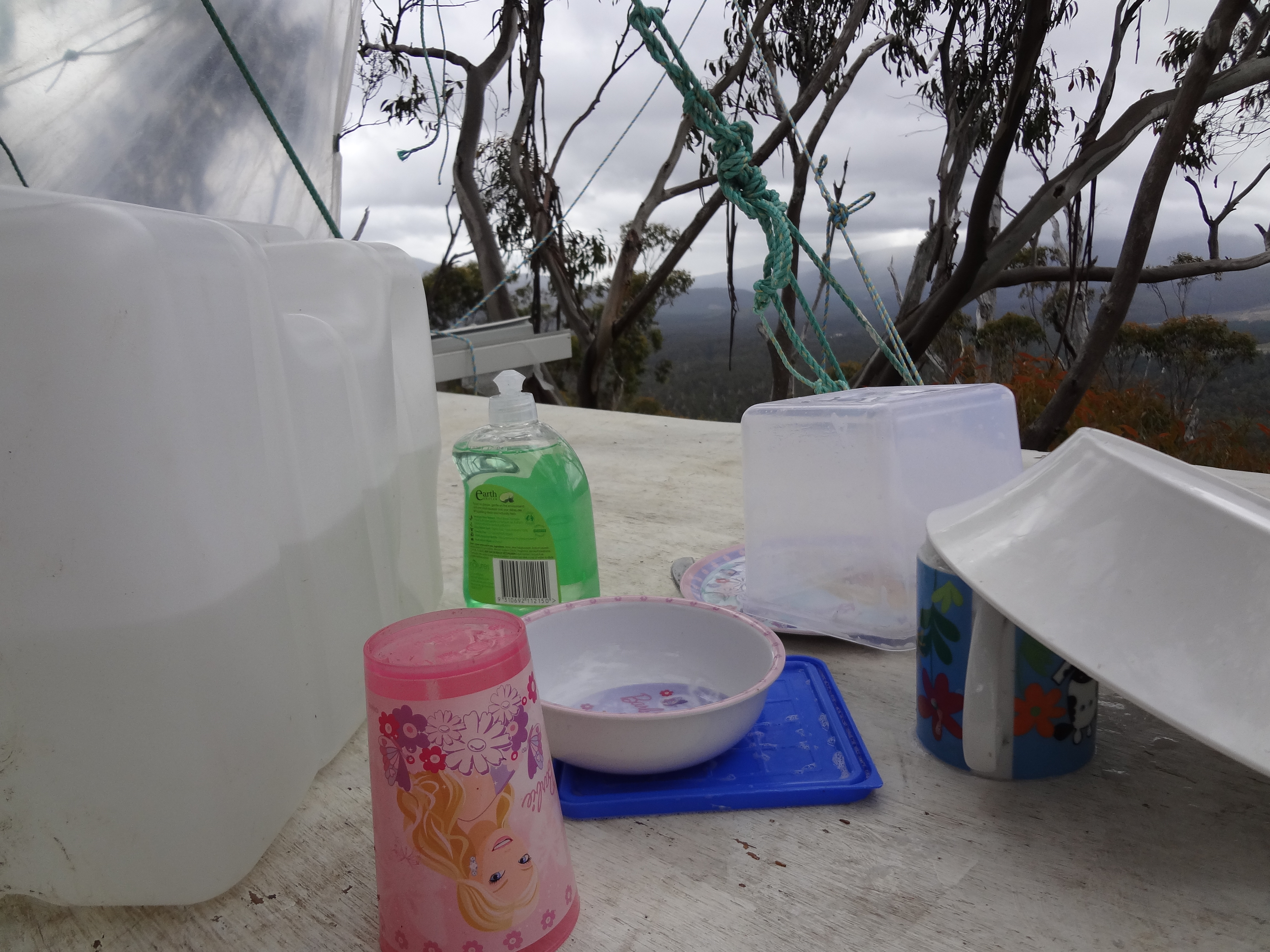
Got everything up here except the kitchen sink!
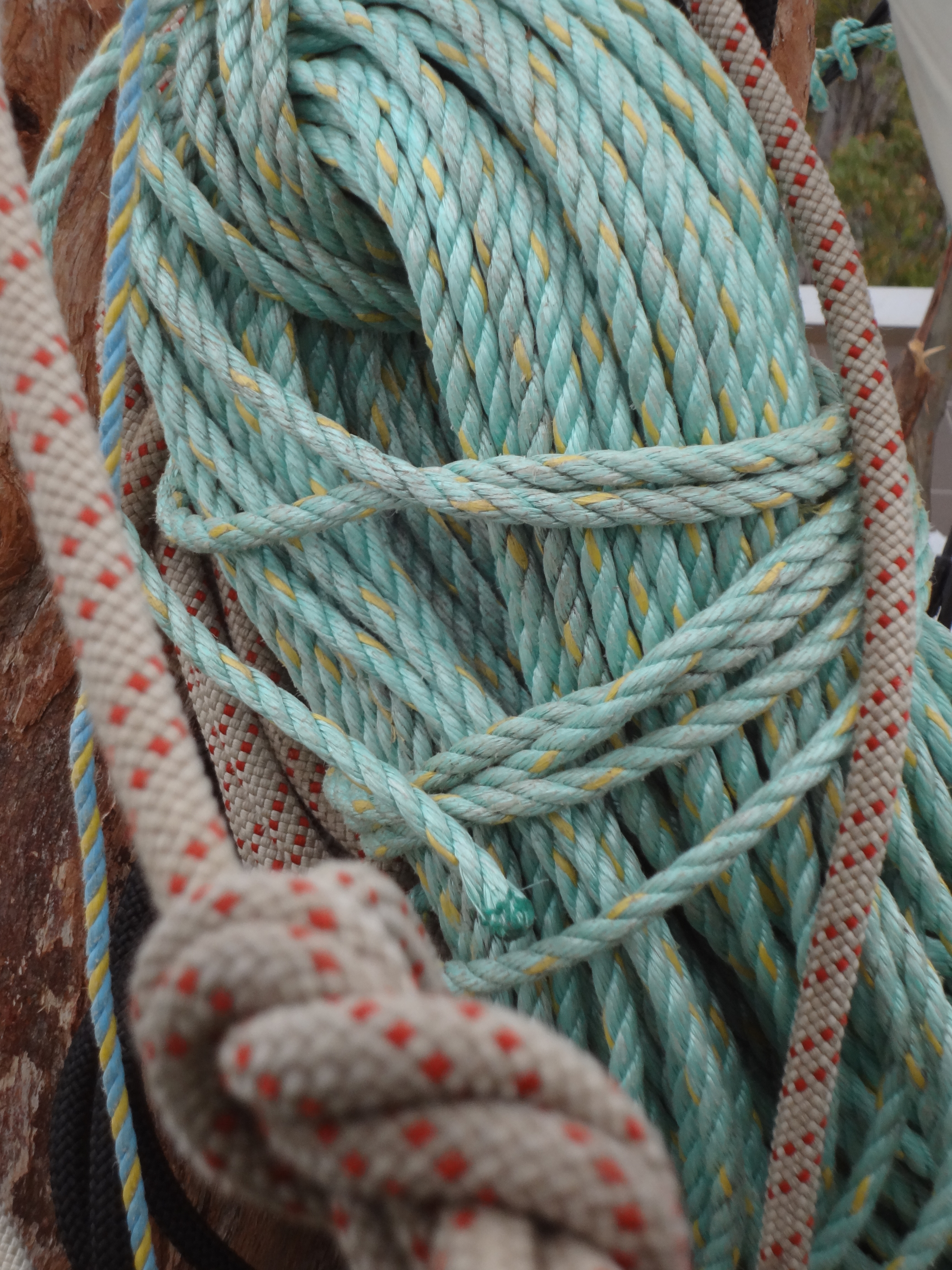
Tree sitter's best friend: rope, lots of rope!

The kitchen pantry
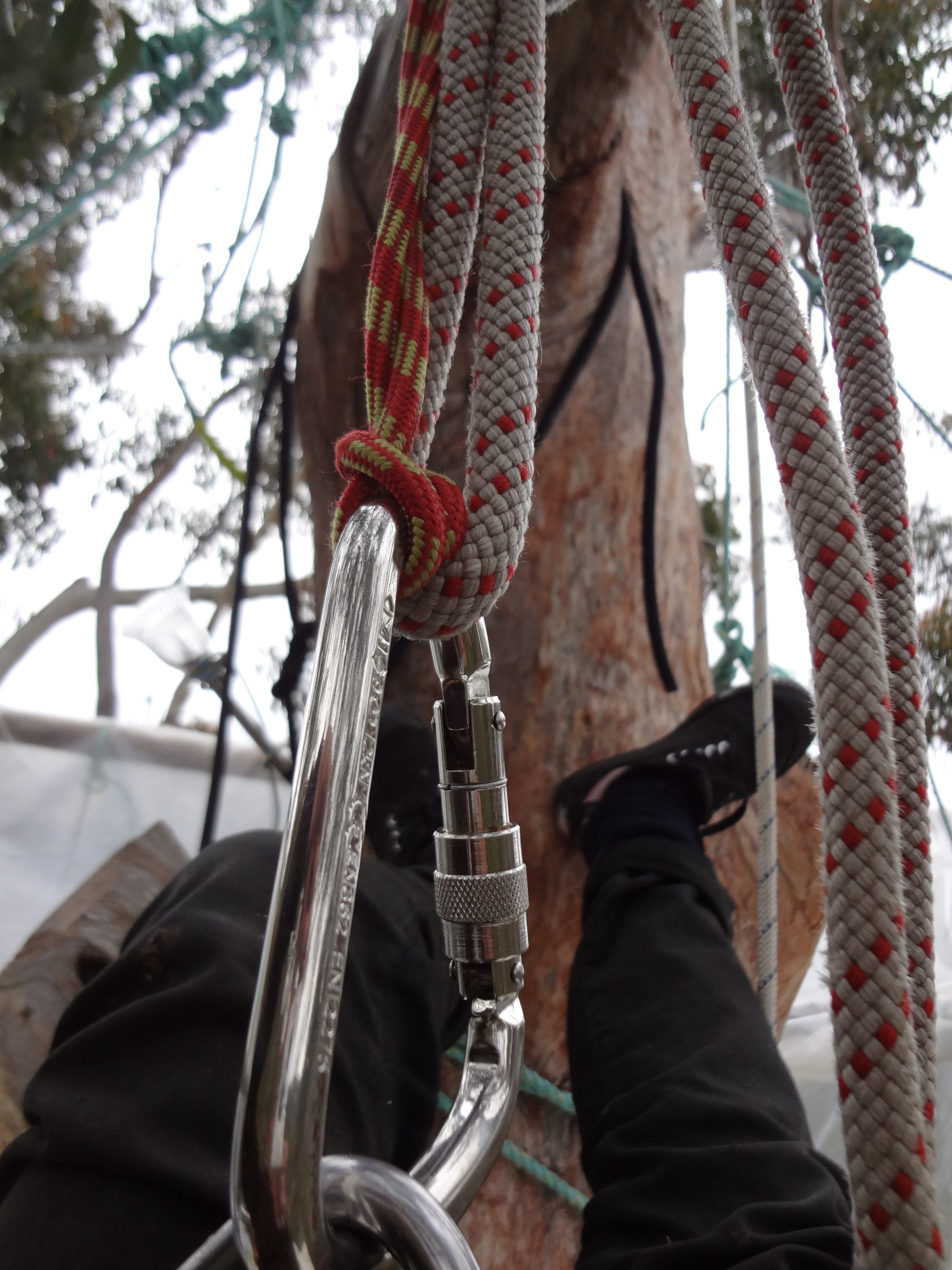
Just hanging around!
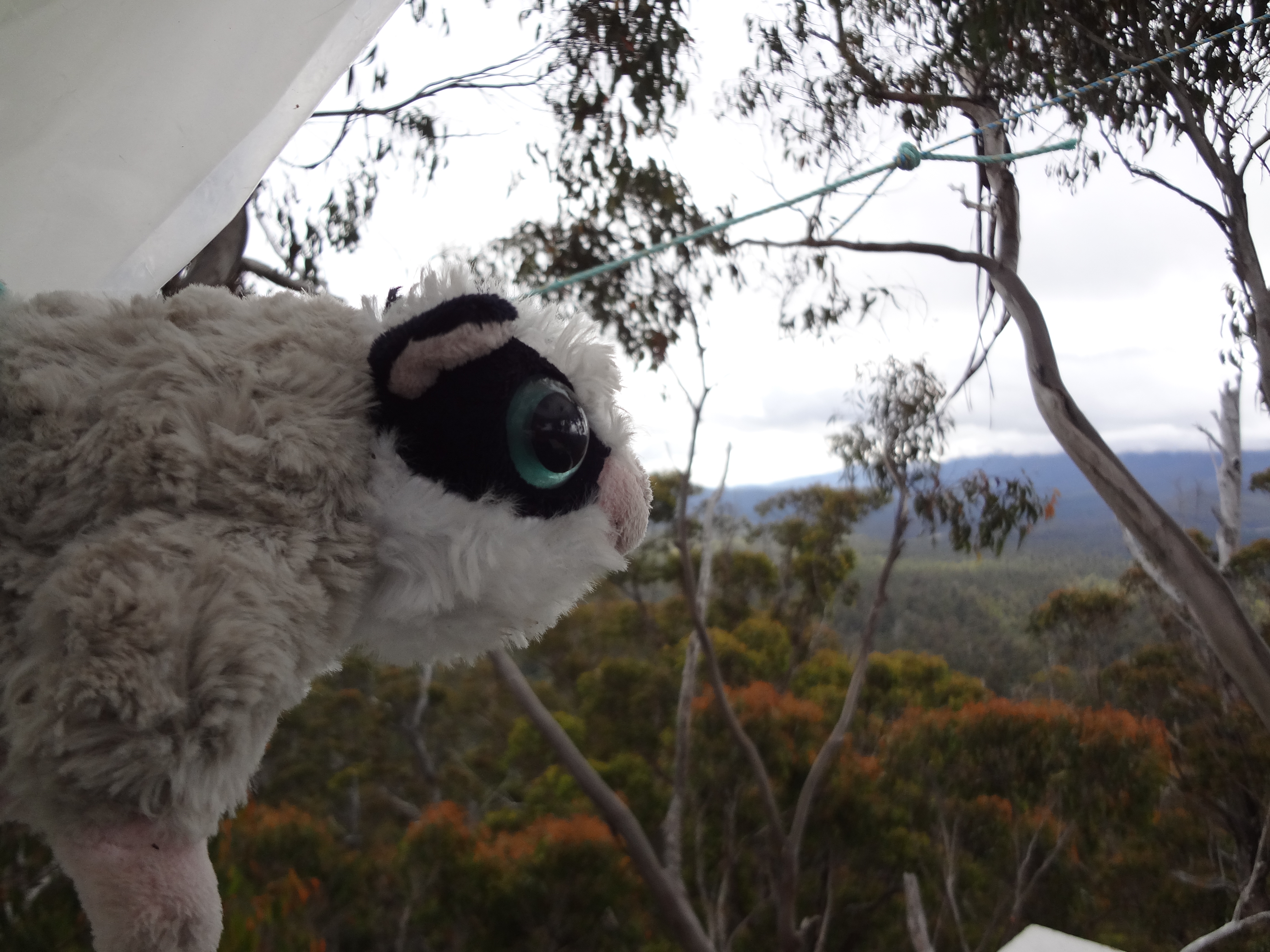
"Glidey" the Greater Glider enjoys the view.
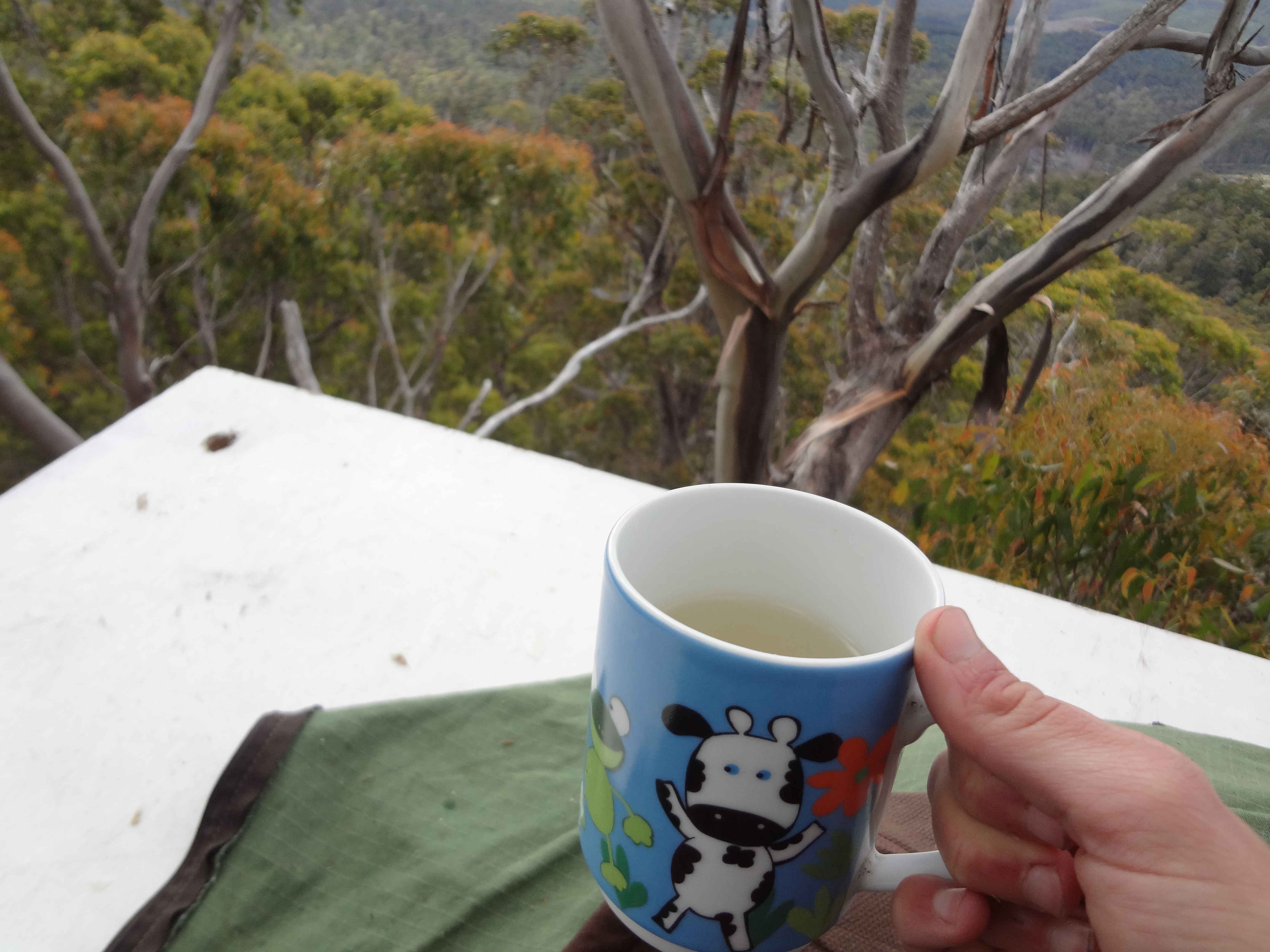
Tree top cuppa.
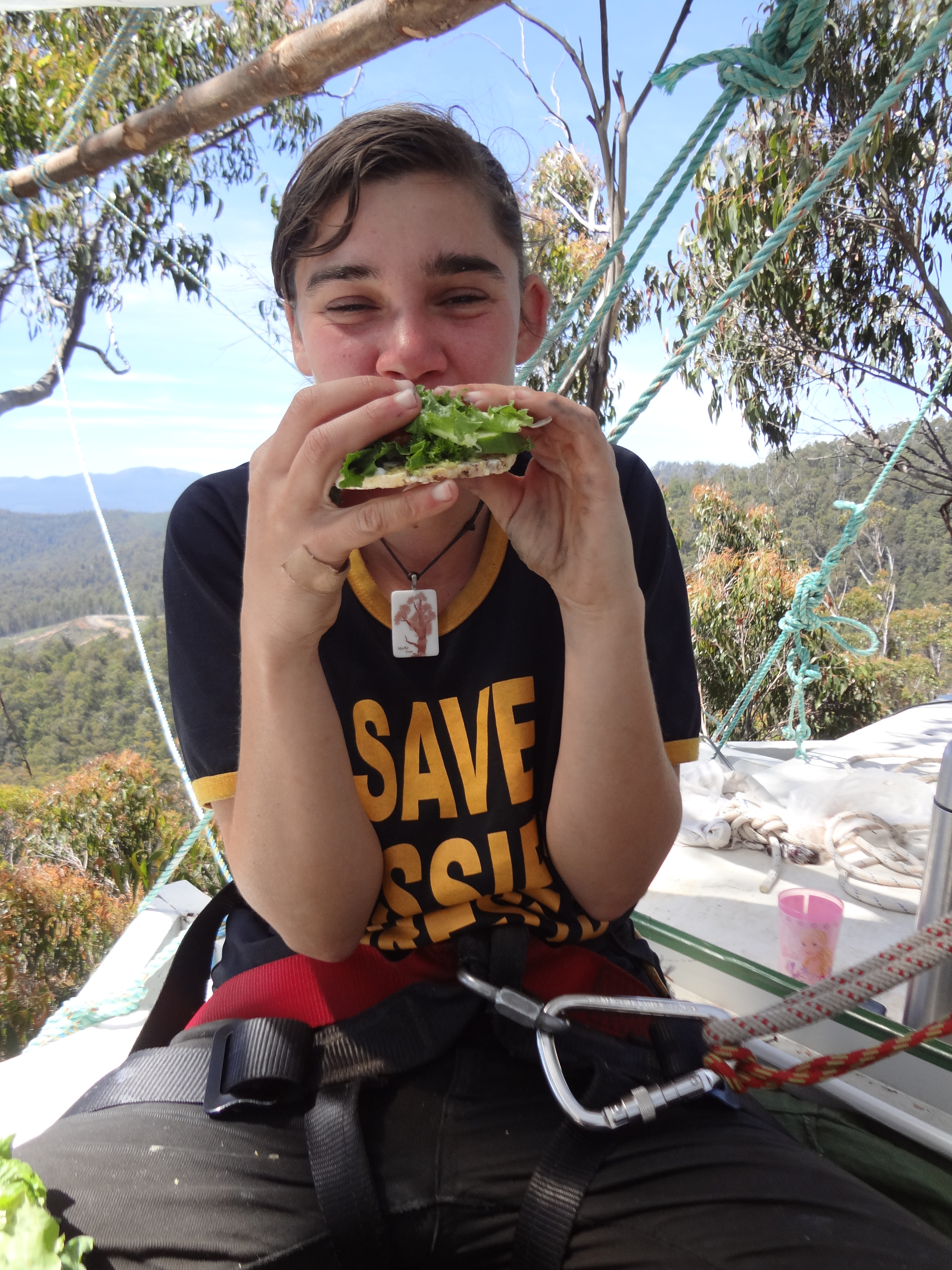
Straight from the garden to my tree: fresh home-grown salad delivery... yum!

Talking on the phone.
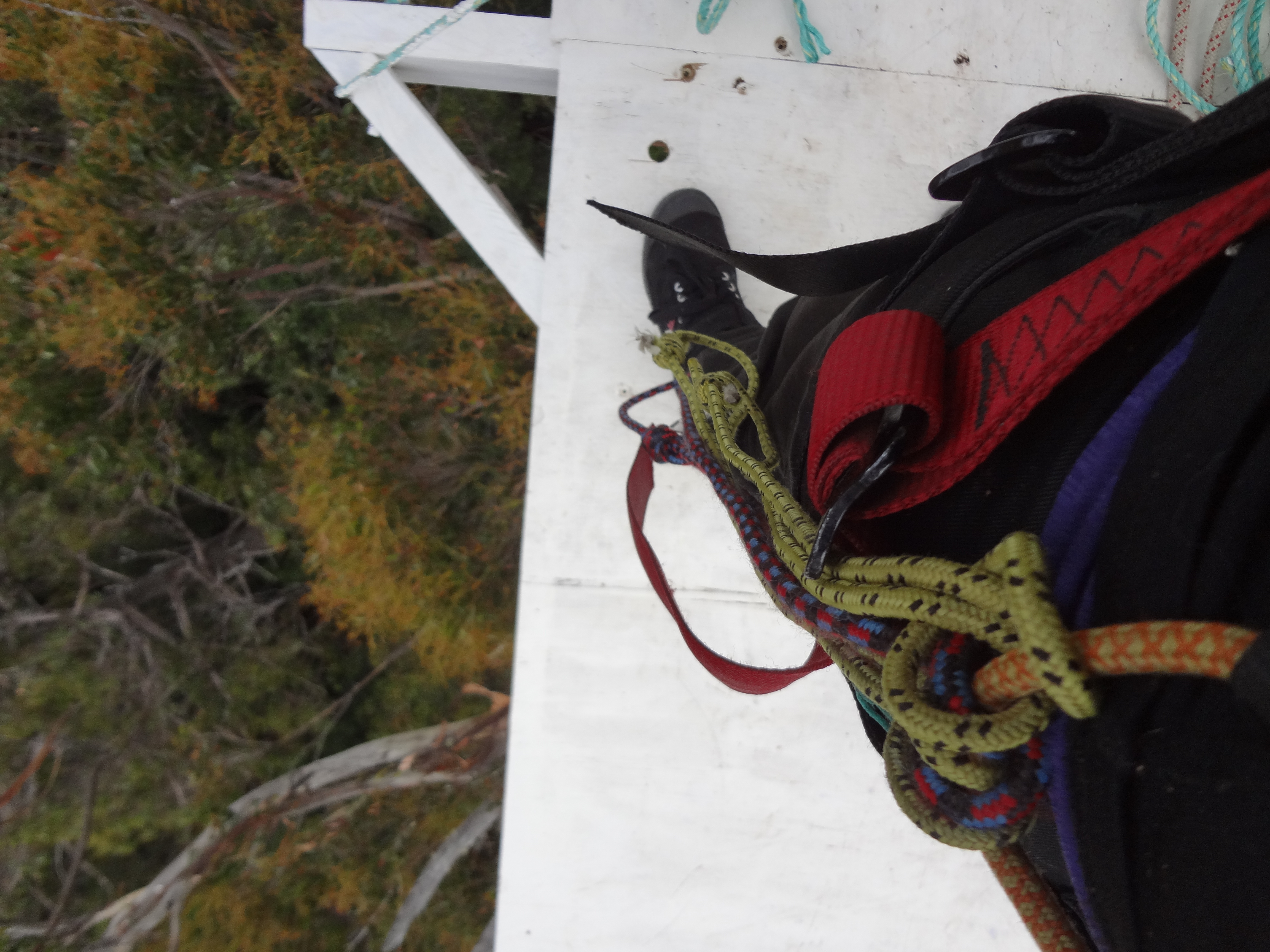
Looking down.

My front door.
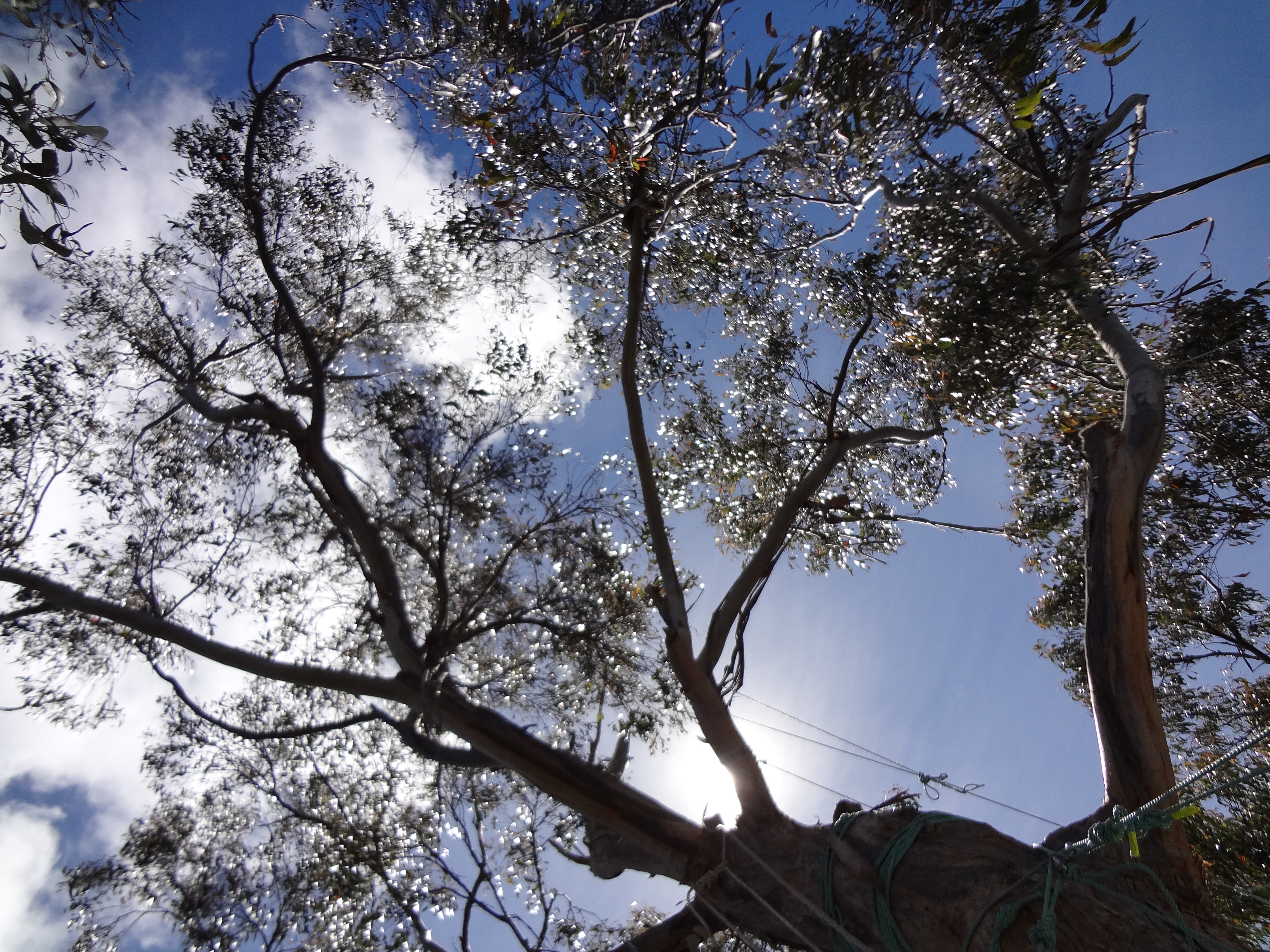
The top of my tree
Miranda’s Daily Blog: Day 35 & 36
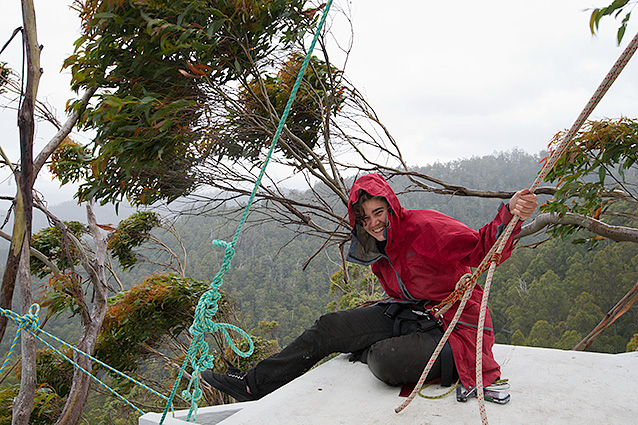
Batten down the hatches!
I felt like I’d landed in a movie, you know the ones where they’re on a ship in the middle of the sea and a massive storm hits. The boat is swaying as waves crash against its sides, the people battling against the wind to stand upright, frantically trying to tie things down, the rain battering them as it pelts down hard, and gushing in sideways. That was what it was like in my tree sit last night! As I rushed to tie down tarps that had ripped free from their bindings and secure every item safely to the sit, the rain bucketed down. Lightning lit up the sky in grand flashes. Each time I’m anxiously counting the seconds between lightning and the boom of the thunder. Trying to judge how far away those bolts of electricity are from me. Fully aware that I’m at the top of something very tall. If they come any closer I’ll have to get down. The ethical dilemma! I promised I wouldn’t get down until the forest is saved! Oh no. But of course, safety is more important than anything and I’d never do anything that would compromise on safety. So I kept counting the seconds between flash and boom, praying that they wouldn’t get any closer! Out on the deck in the pelting rain I fastened the ridge poles with extra rope to ensure they wouldn’t fall under the relentless pressure of the wind. My shoes like lead weights, heavy with water, my jeans sticking to my skin, my hands growing numb.
When the lightening was finally only a glimmer in the distance, I settled down under the tarp, to the eerie stillness of the wind and the now faint pitter patter of rain, and fell asleep.
Today it was like last night could have been a dream! The sky was blue, the air still. The sun shining as I washed my rain drenched clothes and hung them out to dry.
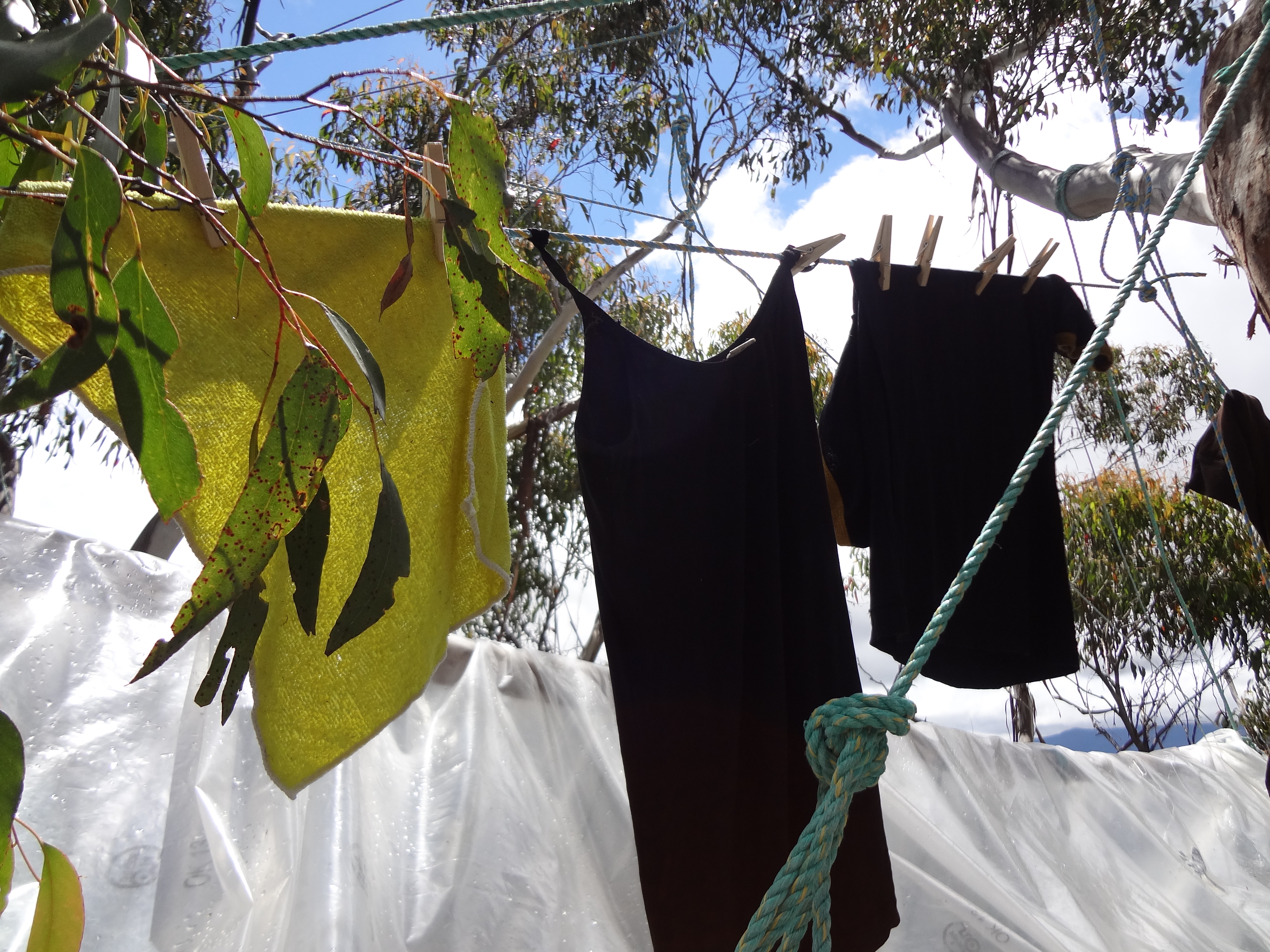
Inspiring moments of the past few days.
1). I received a visit from a group of people from the Czech Republic. The documentary makers walked for hours through the forest to visit the base of my tree and call out their support. They couldn’t come up and of course I couldn’t go down, so we conducted an interview via walkie-talkie. I told them all about the forest here and they told me about the similar issues that exist in their home country too. They did some filming of this beautiful forest and hopefully it will help spread the word about these world class forests all the way to the Czech Republic!
2).I also had a visit from some other wonderful people who sent me up bags and bags of goodies! My arms sure were tired after hauling it all up 60 meters, but it was well worth it! Lots of snacks, some remedies from the naturopath in case I get sick, some books to read and some home-made jam!
3).And then, today’s moment of inspiration and excitement occurred just now when I checked the statistics for our website and saw that it was our busiest day on the site so far, with 2, 884 clicks! It’s great to see so many people looking at the site. We’ve had almost 30,000 views since launching. But of course, we need to spread the word even further. It’s been great to see lots of people getting on board with the postering extravaganza week. Thanks for all your efforts. If you haven’t had a chance yet- check out the take action page for details and downloadable fliers and posters. The color posters are ready tomorrow – so if you want any posted to you just let me know and I’ll get the crew in Hobart to send you some.
Logging Update
On Monday January 16th I woke early anxiously waiting… expecting logging to begin again in the forest that I’m in. I hear the trucks early in the morning. But they sounded further away and I couldn’t see them. It’s hard to tell sometimes, because of the way sound travels in the valley. The people on the ground went to investigate. After a difficult mission walking through an old burnt out clear fell and a vicious patch of dense cutting grass that left them with lots of little gashes on their arms and legs … they finally found the logging operations. The loggers seem to have gone down the road to anther logging coupe nearby, known to Forestry Tasmania as TN42A. This area was in the original 572,000 hectares that was promised a moratorium by March 15th 2011. But then, reneging on their promise (seems like a pattern is developing!) the government never implemented the moratorium. By the next agreement suddenly the government wasn’t talking about 572,000 hectares anymore, it was 430,000. What happened to those 140,000 hectares of high conservation value forest that had been promised a moratorium? Well, the answer lies in the machines and trucks I can hear. TN42A is in those 140,000 hectares. Looks like that patch of forest down the road will never get the chance of formal protection, or if it does it will be too late. How many more hectares will be lost before it’s too late?
Miranda’s Daily Blog: Day 34
| RS117C | TN046A | FL105C |
| TY030G | PC070B | BT007A |
| BT009D | PC085A | DU021B |
| BT013A | BV011B | RP034A |
| PC015B | PC024B | TN012C |
| RU043H | MD102B | DU022C |
| CM004C | CF043C | HA019C |
| BS115H | BB021E | PC072B |
| MO109A | RU047E | RU032B |
| SA044B | BT011C | WR008A |
| DU020C | BT012D | BO093A |
| TA013A | SX020G | MB011D |
| TN044B | BS101D | NH010A |
| TY032A | CF027A |
You might be wondering: what do all these letters and numbers mean? Let me explain.
Every single one of these represents an area of forest, like the one I am sitting in right now. A home to animals like Davina the devil, quolls, wedge-tail eagles, pademelons, wombats, echidnas….
Every one represents an area promised protection in August 2011 by Prime Minister Julia Gillard.
Every single one represents a logging coupe that will be logged and fire-bombed, due to the new “conservation agreement” signed last Friday by the State and Federal governments.
Every one of these forests will be turned into veneer by Malaysian company Ta Ann and sold as so-called “eco-ply” around the world.
This is the list of “excluded” coupes in the conservation agreement. This is the death row register for our forests. This is Julia’s legacy.
If you look down the list you will see TN44B – the name that Forestry Tasmania give to this remarkable patch of forest that has been my home for the past month.
There has been a lot of confusion these past few days about the announcement of the conservation agreement. The government has certainly attempted to make it seem like they are protecting the forest. But when you take a look at the facts the answers are clear. What would forest protection look like? Well, you would think it would mean a reduction in logging of high conservation value areas, for a start. Has these “conservation agreement” done this? No. This agreement puts forward a plan to log every coupe that Forestry Tasmania wants to log, to give Ta Ann access to thousands of hectares of high conservation value forest that was meant to be protected.
There has been no change in the rate at which old growth and high conservation value forest is falling in Tasmania. If anything, there has been an increase.
It’s funny how after a while all these numbers being to fill your mind…. 44a, 9b, 45b, 10f, 42e, 48a…. Perhaps a meaningless list of random numbers and letters. But for some reading this one or more of those combinations will jump out at them, touch their hearts. Perhaps with fond memories, perhaps with that pang of sadness, a quick flash across your mind of burning stumps and the sound of chainsaws. It’s funny how these numbers stay with me. Like scars I carry, reminding me of places loved and lost. Sometime they stop me in my tracks as I walk past that house with the letter box marked 44a, or when the bus drives past on route 42e…
I wonder what it is like for those who work at 79 Melville St, Hobart; HQ for Forestry Tasmania. As they flick through pages and pages of numbers and letters, do they ever see anything beyond those codes? And then I wonder what it meant to Federal Environment Minister Tony Burke and Tasmanian State Environment Minister Bryan Green on Friday as they put their signatures to this list. As their hands reached down to sign the page did they notice those little numbers tn44b – did they see the big old Eucalypts, the fern gullies, the wedge tail eagle, Davina or those baby devils hiding in their den? Or did it slide past their eyes… tn44b… as meaningless as a language they don’t understand?
I invite all you reading this blog, and you Tony Burke, Bryan Green, Julia Gillard… I invite you the Japanese companies buying this wood from Ta Ann…. take the time to get to know these forests. They deserve to be more than a number on a logging schedule. They are amazing places, all the unique in their own way. All of them irreplaceable. And all of them urgently needing protection – needing your help.
On a final note I’d just like to say a big thank you to all the people that stood up for these forests today. With the Prime Minister in town it was a great opportunity for people in Hobart to let her know what we all think of her broken promises and the so-called “conservation agreement.” I think my favourite quote from Julia Gillard’s response today has to be this (reported in the herald sun) “I do expect people who have been in that process every step of the way to hold to the process they agreed to.” Hmm…. This is a very good idea, Julia, I must say.
Till tomorrow,
Miranda
P.S: My sincere apologies for not blogging on the weekend. I had a power shortage. Many thanks to the people who offered their time and equipment to help me sort it out. And the brand new set up with extra solar panel and a great little wind generator for those inevitable rainy times will keep me back online.

Banner from today's action

Miranda’s Daily Blog: Day 30 & 31
Shame Julia Gillard Shame!
I cannot believe that the Australian government has put its name to a document (that it has the gall to call a “conservation” agreement) which will see more and more of our precious forests devastated. This document is in direct contradiction to the promise that was made by the government when Julia and Lara signed the Intergovernmental Agreement five months ago.
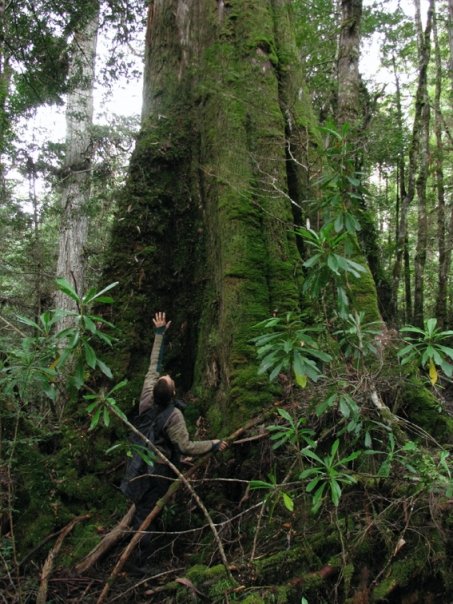
This World Heritage Area bordering forest in the Weld Valley is already gone, are we about to lose more just like it?
The most horrific part of it all is that while this conservation agreement condemns 40 coupes to be logged, Tony Burke has called it a “landmark conservation agreement signed to protect Tasmania’s native forests.” It is amazing how they can spin the truth and turn it into lies! He claims that the agreement protects 99.5% of the area. With “a small number of coupes” to still be logged.
Firstly, I don’t know how Davina the devil or any other animals living in the 2000 hectares to be felled would feel about their forest being trivialized in such away. Secondly considering the little amount of old growth actually left I think 2000 hectares is a very significant amount. Thirdly, it is directly going against the promise that was made that all of the 430,000 hectares would be protected by the conservation agreement.
Tony Burke stated: “In accordance with the requirements of the Intergovernmental Agreement, which commits to honouring all existing wood supply contracts, these coupes have been excluded from the Conservation Agreement:”
The excuse of contracts for wood supply (to Ta Ann) is really getting a bit old now – how many times do we need to keep reminding them that clause 27 states clearly that any contracts that can’t be met outside the 430,000 would be honored by way of compensation – not access to the forests for logging.
It is misleading to claim that 99.5% is now protected. The fact is that 100% of what was threatened by logging is still going to be logged. Basically what they have done is a tricky maneuver. Everything that wasn’t scheduled for logging is protected by the conservation agreement (i.e.: they are not going to be logging the areas they had not intended to log) and everything that was scheduled for logging, plus even a little bit more, is excluded from the agreement (i.e.: they are going to log what they had always intended to log). Not one single hectare of forest that was scheduled for logging has been protected. So what has this agreement done for the forests? Nothing, except to take away the fast-fading hope that Julia Gillard would actually live up to her word.
This “conservation agreement” (it just feels so wrong to call it that) will see this coupe here Tn44B logged. Pristine areas of forest in the Weld, Butlers Gorge, Styx, Picton…. all have been put on death row by this agreement. Today’s announcement is a bitter blow to all of those who care about these forests. It is even more a bitter blow to the credibility of Prime Minister Julia Gillard.
I do not think that the general public will fall for the green-washing that is occurring here. No matter how many words like “conservation” they want to throw into the agreement, the evidence will speak for itself. This very Monday when logging resumes again here and in coupes all around the state, the evidence will speak for itself.
It is like I said in an earlier blog – it is ridiculous to log the forest prior to reserving it. It is like smashing something before buying it. This is exactly what they seem hell bent on doing. Fragmenting and damaging the area ear-marked for protection.
The government must be held accountable to the Australian public, and to the promises they have made to us. Yet the only ones they seem to be listening to are Ta Ann. All of these logging coupes excluded from the conservation agreement are to feed Ta Ann’s insatiable appetite for Tasmania’s native forest.
Yesterday morning at 6am I woke up to see a media release by the Huon Valley Environment Centre. Conservationists were conducting a peaceful demonstration at the Hobart wharf, where a Ta Ann ship was loading veneer made from Tasmania’s native forests. ‘Conservationists are today protesting about the ongoing logging in Tasmania’s high conservation value forests for Ta Ann, a Malaysian logging company. Ta Ann is receiving timber from old growth and high conservation value forests and they are exporting these forests to Japan to be sold under the false brand of eco-friendly flooring,’ Huon Valley Environment Centre’s Jenny Weber said, spokesperson at yesterday’s action.
Unfortunately the government don’t seem to be listening to the Australian public and today’s announcement is a clear demonstration that their loyalties lie with the profits of Ta Ann over and above the promises made to the Australian community.
As Peg Putt (Markets for Change) said today “It’s a black Friday for Tasmania’s forests, and one of severe disappointment to those who hoped for a breakthrough for conservation and an end to the conflict in Tasmania’s forest, in what has now become a deceptive and discredited process”
My offer still stands to Julia. Come and visit the ObserverTree this weekend while you are in Tasmania. Come and see for yourself the forest that you have now condemned to destruction.
In the spirit of yesterdays’ action by the Huon Valley Environment Centre, now is the time to get active. With so many of our precious wild forests on death row there is an urgency with which we must spread the word about what is going on here. It is time to get the word to the Japanese customers of Ta Ann, to the Australian and Tasmanian governments, to Harvey Norman and to Ta Ann that enough is enough. It is time to protect Tasmania’s ancient forests.
For more information check out some of today’s great media releases:
Miranda’s Daily Blog: Day 29
Day 29 is a photo blog. This is a beautiful compilation of photos I took of the sun rising up over the snow-capped mountains and the mist floating up out of the valley through the trees. I hope you enjoy!

Miranda’s Daily Blog: Day 27 & 28
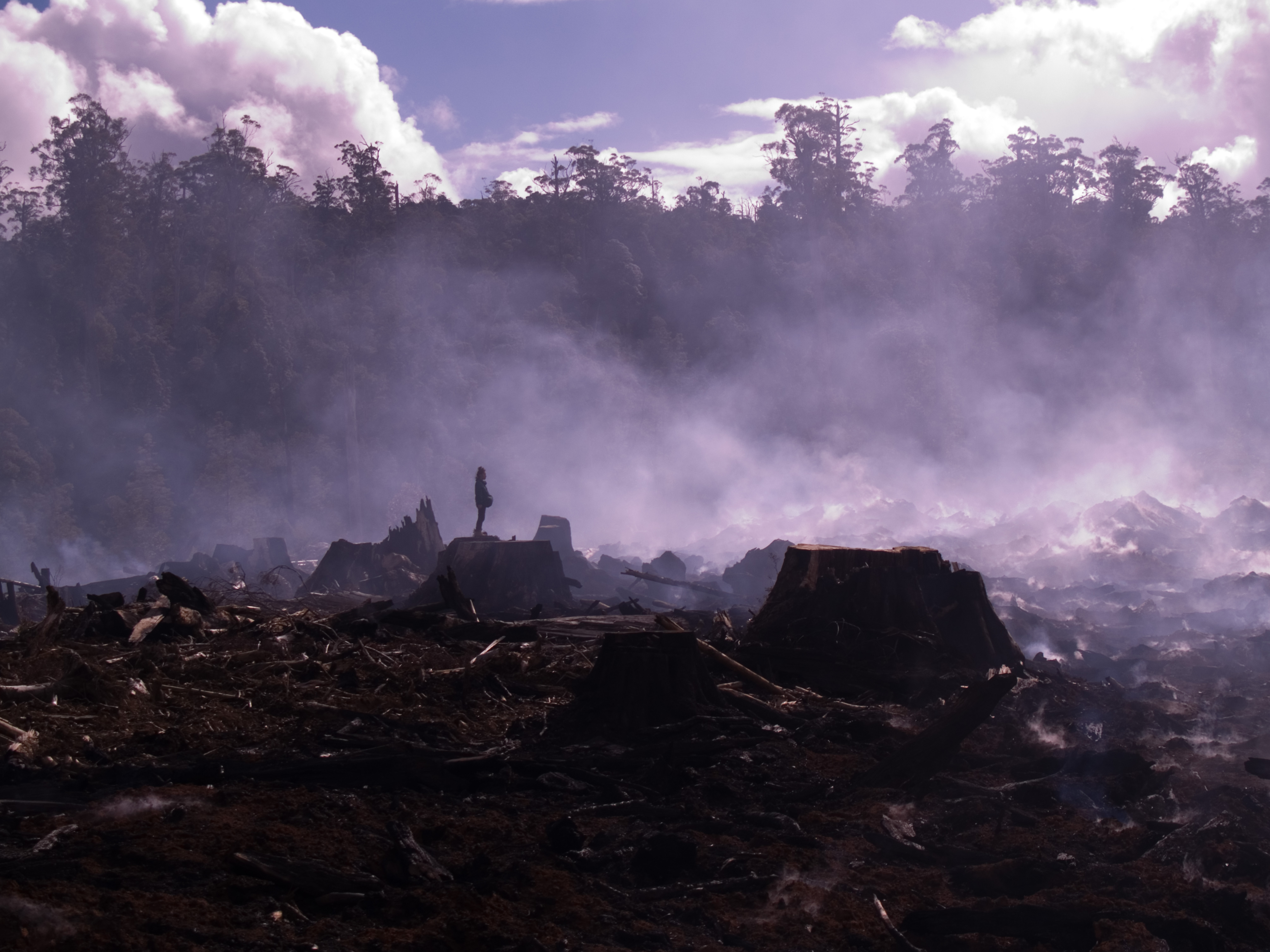 She looked at me in disbelief. “But, surely” she said “the forest will grow back?” I was talking forestry politics with a woman who was giving me a lift. She couldn’t believe what I was telling her about the destruction of old growth forest here in Tasmania. She desperately wanted to believe the Forestry Tasmania propaganda, it was easier that way. But the facts, sadly, tell a different story.
I was remembering this conversation after writing Day 24’s blog, in which I talked about the cycle of life and death in the forest. I talked about how all these trees will grow old, rot and fall over eventually. But they will live on in the ecosystem. I wanted to address this question of ‘regrowth’ in relation to that idea.
There is a big difference between a tree falling in the forest and the entire forest being felled and burnt. Forestry Tasmania claims that the fire regeneration regime replicates the natural processes of the forest. This is a bit of a long stretch of the imagination! The reality is that yes, fire does play a crucial role in these landscapes – but the clear-fell, burn and sow routine can hardly be compared to the usual processes of this forest.
Firstly industrial forestry operations come into these forests – it is not one tree that falls, it is every single tree, plant, fungi, bryophyte, animal, animal dens, waterway and even the soil itself that is killed. Then to top it all off, napalm like substance is dropped from helicopters and whatever managed to survive the machines and chainsaws in obliterated in a high intensity burn.
When trees fall naturally in the forest, they are left behind to form important roles in the ecosystem as they decompose. Providing shelter for animals and insects, storing carbon and giving nutrients to the soil for future generations of trees. When an area is clear-felled all those trees are removed from the area to be taken to mills, made into veneer and furniture and shipped around the world. Instead of providing a home for a spot-tail quoll, they become somebody’s Harvey Norman coffee table.
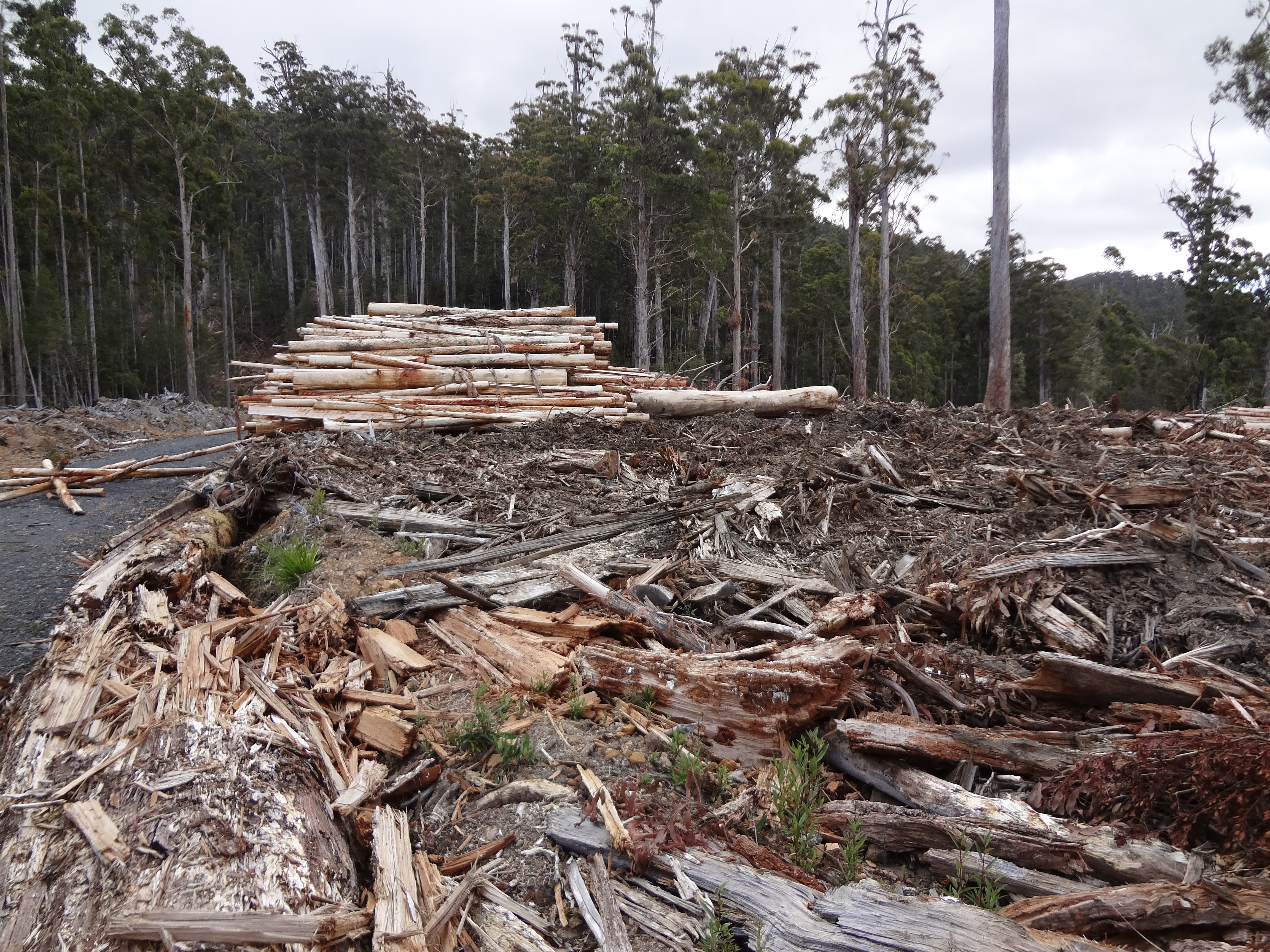
This is what is so disturbing about standing in a smoldering clear fell. Something is greatly out of balance. There is nothing natural about it. The cycle of life and death has been obscured and perverted. The living forest is converted into a machine, churning out furniture and flooring. Leaving behind an apocalyptic dead landscape.
When the smoke fades and the ash settles, the forest starts its slow process of regrowing. But things have changed. The diversity of the forest has been manipulated into a virtual monoculture forest. This is particularly true for these types of forests here. The forest I am in is called ‘mixed forest’ – a unique interplay between eucalypts and rainforest. When they are felled and burnt they are changed forever. Rainforest species generally don’t like fire. That is what makes rainforests the way they are. Eucalypts on the other hand love to regenerate after fire. This is why fire is such a tool used by the forest industry to create eucalypt dominated regrowth that suits their logging desires. Meanwhile, the rainforest species such as sassafras, myrtle, leatherwood, celery top pine…. they are few and far between in these new regrowth forests. Once areas of rainforest are burnt, they may take hundreds of years to recover (Kirkpatrick & Dickson 1984).
When fires go through these forests naturally they are very different from the high intensity burn offs of industrial forestry. There is interplay between fire and the landscape in which some vegetation types rely on fire to regenerate and they also provide the right environment to encourage fire. Fire is likely to stop along the boundaries of rainforest areas, because these species provide less flammable material. In this way the vegetation ensures its own survival through maintaining the correct fire regime. Button grass regenerates well if it burns every 5-10 years. Dry eucalypt forest generally have a higher fire frequency than wet forests and rainforest species are not that keen on fire. And if an area like this with eucalypts and rainforest has no future fire disturbance then eventually it will transition to pure rainforest.
This area of forest here is the perfect example of this complex balance. There has been a fire go through this area in the past. Possibly a very long time ago. Evidence of it remains in the landscape like a map of the past. You can see the big old Eucy’s scared black. Some hollow on the inside, the fire burning up through their guts. But they lived on. Around them young eucalypts grow, their seeds given a chance at life from the fire. This is what a natural fire disturbance looks like in the forest. Old trees that survived the fire grow beside the young ones. The gullies of pure rainforest that escaped the impact of the fire and the areas of young rainforest that has begun to grow since the young eucalypts enclosed the canopy creating the right conditions.
Go from here and walk down the logging road there, take a walk through the regrowth forest. It doesn’t take a scientist to see the difference. It is blatantly obvious. The trees grow together densely; they are all the same age. They compete for space and suck up water from the ground as they all struggle to consume the limited resource at once. They are all the same species. Or at best a few different types of eucalypt might grow together. Some tree ferns may have survived. But there is not much else. Invasive weed species are likely to have taken the opportunity to spread into the open area that was previously impenetrable.
So, when they say the forest regrows, I guess in a way they are right. But what they don’t tell you is that it regrows as a different forest, an anthropogenically changed forest that is incomparable to the ecosystem which it has replaced. The loss of our forests as they are naturally is a real injustice. It is the loss of life itself and an abrupt end to the cycle of life and death that has existed here since the beginning of time.
This is not to say that logged areas can never be regenerated. They can if we do it right, with conservation in mind not future logging operations. And with enough time. Given 500 years those clear-fells I can see down there in the valley may begin to look the way they used to a year ago before the chainsaws moved in. Forestry doesn’t really want to give them 500 years of course, they prefer 80 year rotations, and it’s more profitable I guess! That is why this area so desperately needs protection. So that these areas that are left can remain intact and those that have been disturbed can be given the chance to slowly regain a sense of what they once were.
(Photo of TN048A, a logged coupe at the base of Mount Mueller, just over the ridge behind me. Photographer: Peter Maarseveen).


 T h e O b s e r v e r T r e e