Author Archives: lilia

A forest a day … when will the logging of our spectacular forests actually cease?
A cloud of concern hangs over 563 000ha of forests that have been independently verified as world heritage and national heritage value. If a deal is reached between the forestry industry and some environmental groups in Tasmania, the question remains; when will the logging of forests that are ear-marked for protection actually cease?

Logging coupe CO003A.Image by Rob Blakers
In the past two years the State and Federal Governments have failed to deliver on their promises of protection for Tasmania’s high conservation value forests. This inadequacy has been due to the influence of the forestry industry, with a major player being Ta Ann. In addition Forestry Tasmania (FT) has failed to perform forward rescheduling out of the forests nominated for protection. Deputy Premier Bryan Green, who is the minister responsible for overseeing FT, has played a weak role in directing the agency to reschedule. All of this had led to the ongoing destruction of forests that should have been provided the protection of a moratorium over a year ago.
It is a pressing concern for environmentalists, especially when Bryan Green only this morning stated on ABC radio, that securing wood supply is the priority for any agreement on forests, knowing that this argument has been used to justify continued logging of areas previously promised protection. What Tasmania needs is a strong conservation outcome, in order to adequately protect our unique environment and endangered species for the future. The independent verification group, endorsed by the government, made it clear through their research that protection of these forests is critical. Conservation science needs to be a driving force behind the forest agreement, not sidelined while industry demands are given precedence.

Endangered Tasmanian devil in the threatened Tarkine forest.
Right now there are forests being logged that have been proven to be core habitat for a range of endangered and threatened species. These are the species that we risk losing if these forests are excluded from protection.
And so our blog over the past month in July has been a unique opportunity for people around the globe to bear witness to the ongoing logging of Tasmania’s world heritage value, globally and nationally significant forests. Never before has there been an intensive account of the areas being logged or those areas that remain threatened in Tasmania’s forests. Throughout July we have documented 29 logging coupes in forests that were due for protection under the moratorium but are on logging plans instead. Of these, 15 have already been impacted by logging. This is just one small sample of significant forests around the state that are on the logging schedule right now.

BT-13A, Butlers Gorge
The end of our Forest A Day project occurs at a time when the future of 563 000ha of independently verified forests is uncertain. There are great concerns about whether adequate protection will be provided for these areas. In particular, there is no certainty that Forestry Tasmania has done the forward planning required to reschedule out of the proposed protected areas. If not, will Tasmania’s high conservation value forests be facing another 9 – 12 months business as usual onslaught of industrial scale logging? And what impact will this have on these areas that have been recommended to be our future national parks and world heritage areas?
Protection for these forests is long overdue. Not only are there concerns as to whether Forestry Tasmania have begun the rescheduling work needed to cease logging in the verified high conservation value forests, but in addition, there are uncertainties regarding wood supply modelling as Forestry Tasmania are the designated architects of modelling future wood supply to industry. Currently they are entrusted with providing a solution for wood supply that will enable the protection of the 563,000 hectares of forests, despite their interest in the continued control of as much forest as possible for logging. At the end of all of this, will verified high conservation value forests inside the 563,000 hectares continue to be decimated by logging in order to meet wood supply demands?
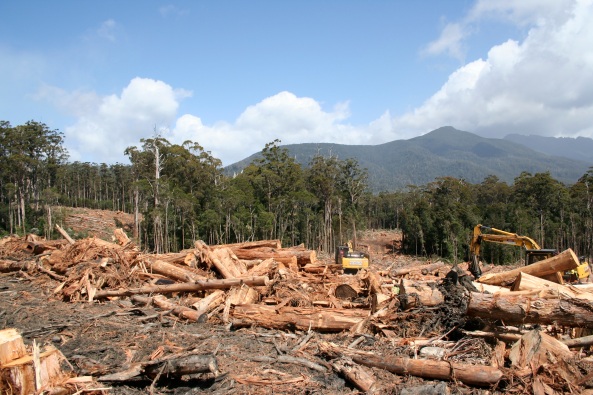
Logging in the Catamaran forests. Image by Emma Capp
Moreover, it is Ta Ann who have played a key role in driving the ongoing destruction of those forests nominated for protection. Our question then is this: will Ta Ann continue to source wood from forests that have been verified as world heritage and national heritage value? And will Ta Ann’s wood supply continue to be a key driver in the destruction of Tasmania’s forests, resulting in significant high conservation value forests being excluded from the recommended protection?
Tasmania has seen promises of forest protection made and those promises broken throughout this process. Will we see another repeat of the so-called “conservation agreement”; an agreement that actually allows further logging of areas due to be protected?
Tasmania’s high conservation value forests have been compromised enough over the past decades. Now it is time for real protection.
CLICK HERE to take action now for Tasmania’s magnificent forests.
For more information about the ‘A forest a day’ project, which has been a collaboration between Huon Valley Environment Centre, Still Wild Still Threatened, The Last Stand, Markets for Change and Code Green, please click HERE.
Written by Miranda Gibson and Jenny Weber
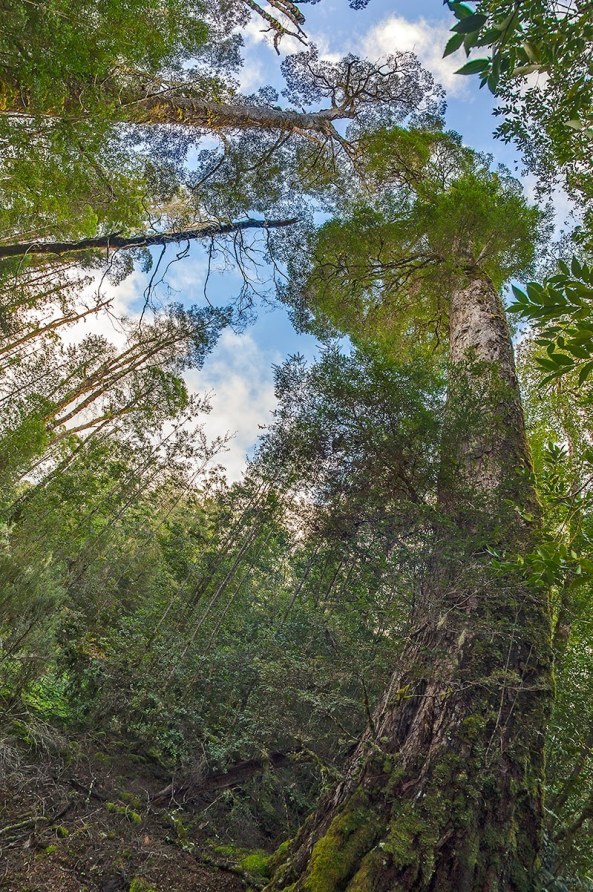
Miranda’s Daily Blog: Day 230
“I’m sorry” a voice crackled through the walkie-talkie radio. ” I tried to dry your slippers by the fire, but part of them melted.” This carefully chosen birthday present from my Mum had only arrived two weeks ago. When I pulled them up on the rope and looked at those crinkled up slippers, I felt like crying. “This is ridiculous!“ I thought to myself… “am I really crying about a pair of slippers?” But I knew in reality it wasn’t about that, it was the accumulation of eight months worth of loneliness, frustration, isolation. Of missing my family and friends. Of the monotony of every day confined to a small platform. And most of all, of looking out across this valley not knowing if tomorrow I will hear the sound of chainsaws and lose this forest forever. As I sat there in the rain, my usual optimism began to wane, as I thought to myself, “Can I really keep doing this?”
How do I go from this moment of feeling like I just can’t cope… to finding the strength it will take to continue this vital action on behalf of these forests? Well, my courage came in the form of a youtube clip. I know that might sound as bizarre as crying over a pair of burnt slippers! But, it’s true. Because watching an interview online with an Indigenous man from Sarawak put everything into perspective for me.
The Sarawak man being interviewed by Canadian news program “16×9” remained anonymous, for fear of the repercussions of speaking out. He had been involved in peaceful community protest against the logging of the forests that his people depend on for their very survivali. And so, if I am ever missing home comforts… I will remember what people in Sarawak will go without if logging continues to decimate their lands.
And if I ever feel lonely here… I will remember what many people around the world may face for taking a stand. Here I may be alone, but I have my phone and computer to connect to the world, support crew on the ground and a beautiful forest. Compare this to solitary confinement in a Malaysian prison. This is what the anonymous interviewee had suffered as a result of trying to stop logging.
Logging has been going on for a long time in Sarawak by a range of different logging companies. And so has the community resistance to it.
In recent times our attention in Tasmania has turned to the role that Ta Ann have in the industry, since the Sarawak-based company branched out to establish Ta Ann Tasmania, setting up two veneer mills here.
A recent statement was released by the Indigenous Penan people, fingerprinted by the chiefs of six villages in north Sarawak that are impacted by Ta Ann’s activities. The statement named Ta Ann and raised concerns about destruction of their lands, done without prior consent or knowledge and in contravention to the legal rights of the Indigenous people.
“this area should not be re-logged as it was being logged in the past which have made our livelihood difficult especially our food resources” the statement said.
“As a result of the previous logging activities our river are now muddy where as our traditional food are depleting and it is difficult to revived/rehabilitate.”
“Because of that, our present here are to inform all the stakeholders that we with one voice that we don’t accept any type of logging to take place within our Native Customary Rights Land.”
Sometimes people criticise my action by saying “Why don’t you go to Borneo instead?” But the fact is that destruction in Tasmania’s forests and the loss of Sarawak’s forests are both devastating and intricately linked.
It is clear that Ta Ann came to Tasmania in order to give environmental credibility t0 their company on an international level. After interviewing CEO Wong, it was reported in the Malaysian media “Due to Japan’s adoption of an eco-friendly lifestyle this will benefit resource-based group Ta Ann Holdings Bhd. Ta Ann stands to benefit as it has a 20-year log purchase agreement with Forestry Tasmania.”ii The misrepresentation of Tasmanian timber as “eco” friendly has implications both in Tasmania and Sarawak.
Right now Ta Ann’s “eco-ply” contains wood from forests that have been verified as world heritage and national heritage value by government-endorsed independent teams of scientific experts, and recommended for protection. In fact, it has been officially documented that this company is one of the key drivers of destruction in those forests. The timber produced from Ta Ann Tasmania does not comply with the guidelines for sustainable forestry that overseas customers expect” iii. You just have to scroll down the page on my website to see some of the amazing forests that have been or are due to be logged for Ta Ann.iv
There is no doubt that what happens here in Tasmania will have repercussions in Sarawak. Ta Ann can use their so-called Tasmanian “eco” wood to present themselves on the international market as good corporate citizens. Thereby glossing over the destruction of forests and disregard for indigenous rights elsewhere. Tasmania and the globally community must stand in solidarity with the people of Sarawak, by exposing the truth about Ta Ann’s activities in both places.
Please help by clicking HERE to send a message to the corporate customers of Ta Ann.
Take a look at this short film about Ta Ann:
Ta Ann Film from Dylan Grimwood on Vimeo.

A forest a day! July 30: RS117C, Roses Tier
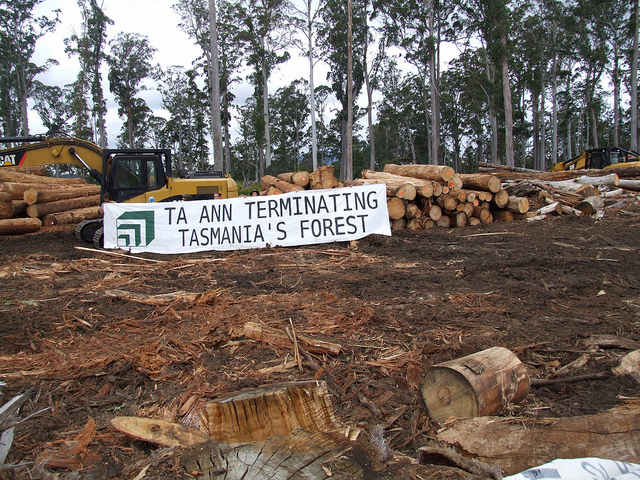
This 69 hectare logging coupe in Roses Tier was due for protection under the Intergovernmental Agreement. Like so many other high conservation value forests in Tasmania, it has been lost due to the failure of the government and industry to deliver on the promised moratoriums. Ta Ann’s wood supply was one of the key reasons that this coupe was subject to logging.1

This coupe was a forest of tall Eucalyptus delegatensis. It featured potential habitat for Tasmanian devils and spotted tail quolls.2 This includes areas of fallen logs, dense understorey and old wombat hollows, which may have provided shelter for these animals. This region has been listed as core range for the spotted tail quoll by the Independent Verification Report.3
There are four creeks within, or bordering the coupe. The coupe is also potential habitat zones for the north-east forest snail.4 This species is listed in the Regional Forest Agreement as a ‘Priority Species Requiring Consideration’. This is due to “slow recovery time from logging operations and perceived restricted habitat and environmental sensitivity.”5 This species is found living in leaf litter and the underside of fallen logs, feeding on fungi and detritus from the rotting logs. According to the Forest Practices Authority “The species is likely to be eliminated by clearfelling and associated hot regeneration burns” particularly because “may take at least 90 years following clearfelling and burning for the species to fully recover in regenerated forests.”6
The region that this logging coupe is situated in has also been identified as significant for priority flora. The verification reports indicated specific species within this region that would benefit from the formal reservation of this area. One of those species is Acacia pataczekii. This endemic Tasmanian shrub is listed as rare in the Tasmanian Threatened Species Act. Its population is restricted to eucalypt forest, mostly in north east Tasmania.7Protecting the proposed reserves would improve the reservation of this species by 52%.8
Another identified significant species is Barbarea australis. This herb is endemic to Tasmania and listed as endangered under the Tasmanian Threatened Species Act and as critically endangered under the federal Environment Protection and Biodiversity Conservation Act. Barbarea australis is known to occur in approximately 10 river systems extending from northern Tasmania to rivers flowing south from the Central Highlands.9
In addition the region that includes this coupe has been recommended for protection due to its diversity of eucalypt species.10 Protection would increase the bioregional reservation of E. rubida and E. pauciflora, reserve geographical and ecologically marginal populations of endemic species E. archeria and increase the representation of E. viminalis.11

Although this coupe has sadly been logged, it is vital that the area is regenerated and included with the surrounding forests as part of Tasmania’s proposed formal reserves. The regeneration of this coupe will help to maintain regional connectivity and help protect the endangered, rare and threatened flora and fauna found in this area of north east Tasmania.
Click HERE to help protect Tasmania’s forests.
For more information about the ‘A forest a day’ project, which is a collaboration between Huon Valley Environment Centre, Still Wild Still Threatened, The Last Stand, Markets for Change and Code Green, please click HERE.
A forest a day! July 29: PC072B, Picton Valley

While conservationists were visiting the Picton forests, this mother wombat and her baby walked out of the threatened forests of PC072B. Image by Laura Minnebo
Logging coupe PC072B is situated in an old growth forest adjacent to the Tasmanian Wilderness World Heritage Area (TWWHA) that runs down slope to the Picton River. The area of forest is potential habitat for the masked owl, Tasmanian devil, Tasmanian wedge tailed eagle and grey goshawk.[i]
Sadly the history of coupe PC072B, located on the East Picton Rd, where a long history of protests to protect the globally significant values of these forests, have failed to stop the destruction of these ecosystems. PC072B is located in a region of 2150ha of forest that were once protected as a national park.[ii]
The Hartz mountains, proclaimed as a scenic reserve in 1939, were protected within a National Park in 1952. At the time, the seemingly endless supply of timber in the southern forests enabled the logging industry to graciously concede the magnificent forest stretching up the flanks of the Picton River. However, by the mid-1970s, logging roads had extended further and further up the Huon and Picton River valleys and by 1977 the road along the east bank of the Picton River was at the Park Boundary.[iii]
In 1976, after a long court battle, during which conservationists fought the mining industry from accessing the wilderness area at Precipitous Bluff, a final decision was granted that the inclusion of Precipitous Bluff in the Southwest National Park was made conditional on the revocation of forested land in the Hartz Mountains National Park.[iv] PC072B and the large tracts of forests on East Picton Rd were the victims of this decision, where wilderness areas and ancient ecosystems are compromised in the interests of environmentally destructive interests.
These forests now have the opportunity to be granted secure legislated protection, and the protection of the forests of PC072B and the other areas in the Picton Valley, which you have read about over the past month, may be protected as an extension to the Tasmanian Wilderness World Heritage Area.
The Picton, being a shorter valley than the Weld and Huon Valleys, is almost a ‘blind valley’ hemmed in by alpine and rainforest communities on three sides so the pattern of eucalypt and rainforest communities and their interactions are different to the Huon and especially the Weld. These characteristics are illustrative of the substantial ecological diversity evident in the tall eucalypt and rainforest communities in the ‘Three Valleys’.[v]
The Picton Valley has experienced various episodes and scales of glaciation with evidence of glaciation extending almost to the confluences of the valley.[vi]
The Picton Valley, along with the Huon and the Weld Valleys, is one of the few areas in Tasmania where there is a major concentration of tall eucalypt–rainforest ecosystems and where the forests are mostly intact with potential for ongoing natural processes to operate. Notwithstanding that some parts of the forests have been subject to industrial-scale logging operations, the combination of the intact forests and the option of being able to naturally rehabilitate the logged areas, means the ‘Three Valleys’ forests still offer outstanding potential for conservation, including maintaining natural processes.[vii]
Importantly, all of the ENGO-proposed additions for protection in these valleys back onto the TWWHA. Parts of the ENGO-proposed reserves in the Picton, Huon and Weld are an integral part of that major tract of wilderness. That is, parts of these areas have wilderness values, which would clearly enhance or contribute to the integrity of the TWWHA’s wilderness values. Rehabilitation of some areas would enhance the wilderness aspect of the TWWHA.[viii]
CLICK HERE to take action now for the spectacular forests of the Picton Valley, and for high conservation value forests right across Tasmania.
For more information about the ‘A forest a day’ project, which is a collaboration between Huon Valley Environment Centre, Still Wild Still Threatened, The Last Stand, Markets for Change and Code Green, please click HERE.

A forest a day! July 28: PC070B, Picton Valley

Adjacent to the Picton River is a Eucalyptus obliqua forest that is a proposed 54 ha logging coupe.[i] Logging operations in this coupe were not rescheduled, as was promised by the State and Federal Governments. The primary reason given by the logging industry was that these forests needed to be logged to supply Ta Ann.[ii]
These magnificent forests remain unlogged to date, and they still have a chance to be protected. These forests, along with other large tracts of the Picton Valley, have been verified “to possess important natural and cultural heritage values that relate particularly to World Heritage values of the adjoining Tasmanian Wilderness World Heritage Area. In particular, the Weld-Huon-Picton valleys contribute a new complementary ‘lowland’ or lower valley manifestation of attributes already within the TWWHA, for example glacial, karst, tall eucalypt forest and rainforest.”[iii]
Forests adjacent to PC070B have been destroyed over the past two years. A 67ha area of old growth forest in logging coupe PC017C was logged to supply Ta Ann.[iv]
This forest region is potential habitat for the masked owl, spotted-tailed quolls, and nesting habitat for the swift parrot.[v] The ongoing logging of these magnificent native forests adjacent to the Picton River, and contiguous with the World Heritage listed Hartz Mountains National Park, marks a significant loss of spectacular eucalypt forests and crucial threatened species habitat.

View of the intact forest of PC070B (to the right of clearfell) with Hartz Mountain National Park on the horizon.
CLICK HERE to take action now for the spectacular forests of the Picton Valley, and for high conservation value forests right across Tasmania.
For more information about the ‘A forest a day’ project, which is a collaboration between Huon Valley Environment Centre, Still Wild Still Threatened, The Last Stand, Markets for Change and Code Green, please click HERE.

A forest a day! July 27: PC024B, Picton Valley
In the Picton Valley, logging operations were recently completed in forests that were rich with habitat for the Tasmanian devil, swift parrot, masked owl, spotted tailed and eastern quolls.[i] This forest was formerly populated with tall Eucalyptus regnans and tall Eucalyptus obliqua, along with mature stands of leatherwood and thamnic rainforest.[ii] A cultural heritage site has been identified by Forestry Tasmania in this coupe.[iii]
This 90 hectare coupe was logged over the past seven months, while talks have been occurring between industry and some conservation groups. The State and Federal Government gave the go ahead to log in parts of the 430,000ha area that was supposed to be under moratorium. The Prime Minister promised these old growth and high conservation value (HCV) areas should be protected but because of pressure from Ta Ann and Forestry Tasmania, some of these forests have been lost, PC024B being one such tragic loss.
The company driving the logging of this coupe is Ta Ann.[iv]

Giant Pinocchio visits PC024B. February 2012
In February, Huon Valley Environment Centre released a sample of a celery top pine from PC024B which is believed to be more than 250 years old. This sample of celery top pine clearly demonstrated that the forests being logged in the PC024B were part of an old growth ecosystem. Ta Ann has made public claims that this forest is regrowth, as a result of a wildfire In 1934.[v] However, sections of this coupe were mapped as old growth forest during the Tasmanian Regional Forest Agreement process.

Celery top pine sample from PC024B. February 2012
Ta Ann Tasmania public relations material emphasises that they mill regrowth logs. This implies incorrectly that there are no adverse environmental impacts associated with their operations. It is not true that regrowth logs will always originate from regrowth forests – old growth forests can contain regrowth elements as a result of the dynamic ecology of these forest ecosystems.
PC204B in the Picton Valley is within 2km of a karst system that has indigenous and environmental values of international significance.[vi] This karst system contains evidence of the human societies living in this region, which were the most southerly known peoples on earth during the last ice age.[vii] This karst system is located in the World Heritage value forests of the Middle Huon Valley. PC024B is located at the entrance to the Middle Huon Valley.
The globally significant and unique natural and cultural heritage values of the karst systems in the Middle Huon and Picton Valleys have not received the urgent protection that they need. Hitchcock states; “The likely direct physical and hydrological contact between the Blake’s Opening and Riveaux karsts suggests that a common tenure and management regime, or sympathetic cross-tenure management regime, would be the appropriate means of managing these adjacent karsts. Irrespective of this potential link, however, the undisturbed nature, significant extent and contents of the Riveaux karst and catchment, and its proximity to the recommended Blake’s Opening TWWHA extension means that the karst contributes significantly to karst World Heritage themes of the adjacent TWWHA.”[viii]
The forests in the Huon and Picton Valleys are adjacent to the boundary of the Tasmanian Wilderness World Heritage Area (TWWHA).[ix] The tall eucalypt forests in the lower sections of the Weld and Picton Valleys, together with the closely associated middle Huon Valley, are collectively part of the largest single tract of tall eucalypt forest ecosystem extant in Tasmania.[x]
Now that this area of forest has been logged it will need to be added to the area of disturbed forests in the Picton Valley that require restoration. As Peter Hitchcock stated, “a holistic long-term view was taken in establishing the contribution that the areas can make to conserving tall eucalypt forest and associated ongoing natural processes. Some rehabilitation will be necessary to restore the ecology of the area in the longer-term”.[xi] Sadly, there are areas in the Picton Valley that could have been protected as intact tall eucalypt and rainforest ecosystems instead, if logging operations in these magnificent areas had been halted over the past few months.
CLICK HERE to take action now for the spectacular forests of the Picton Valley, and for high conservation value forests right across Tasmania.
For more information about the ‘A forest a day’ project, which is a collaboration between Huon Valley Environment Centre, Still Wild Still Threatened, The Last Stand, Markets for Change and Code Green, please click HERE.

Miranda’s Daily Blog: Day 225
As well as having a visit from Bob Brown this week, I also had a visit from ten young people from the Australian Youth Climate Coalition. Check out the video blog:
Thanks to everyone who came out to visit me. It was inspiring to hear about all the work being done by young people around this country to ensure a safe climate for our future! I hope you found the day as inspiring as I did.
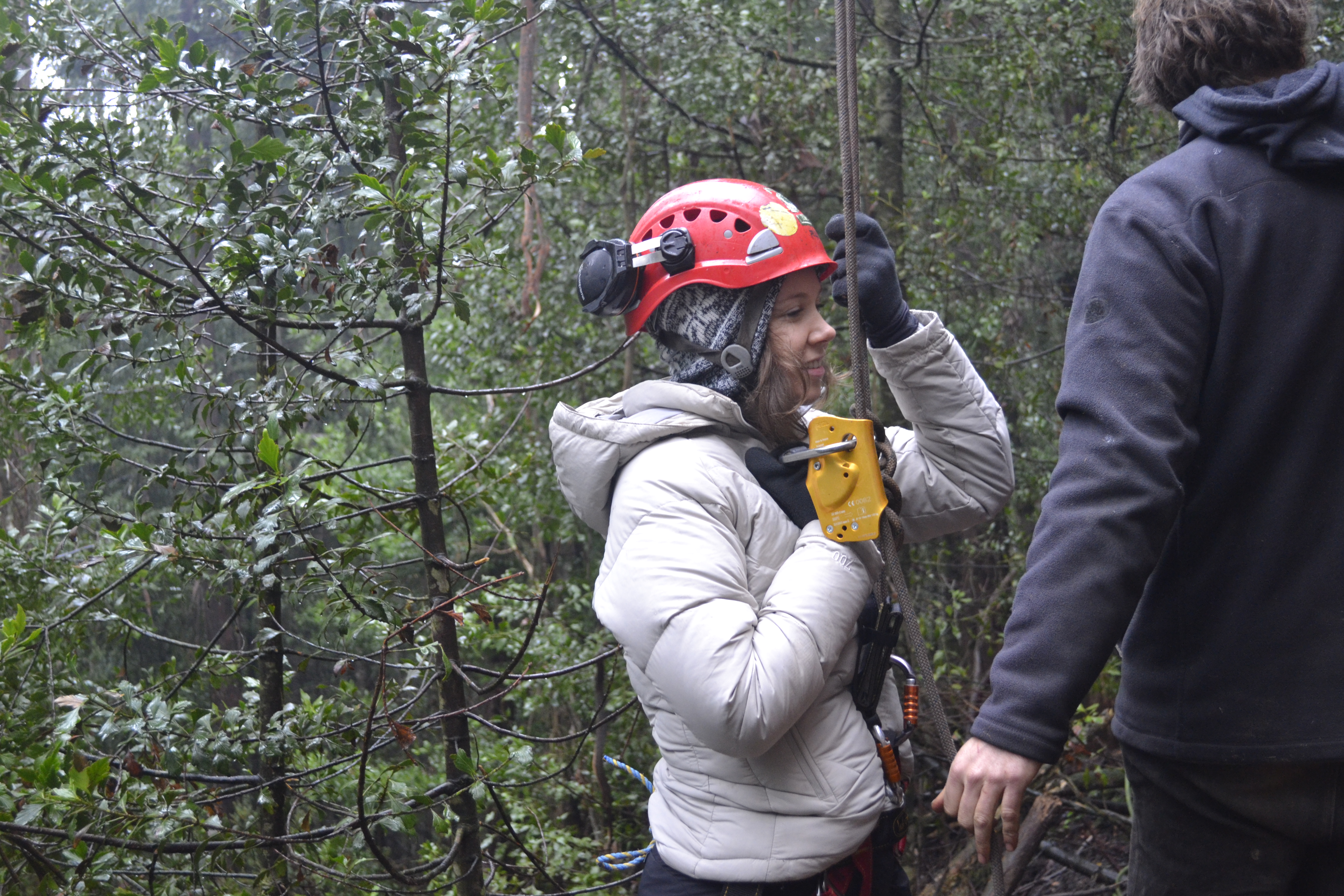 Visit Anna Rose’s blog HERE and find out more about their visit.
Click HERE to take online action now to protect Tasmania’s forests for the sake of our climate!
A forest a day! July 26: MD102B, Tarkine
Endangered Tasmanian devil in MD102B. Image captured by fauna cameras
This logging coupe is located in the Pieman area of north-west Tasmania. This magnificent forest is part of the core area of 430,000 hectares that was promised protection as part of the Intergovernmental Agreement. A section of this 48 hectare coupe has been logged, with an additional area scheduled for this year. This area also falls within Venture Minerals’ proposed strip mine site.
Volunteers from Code Green have conducted fauna surveys using remote sensor cameras. These produced evidence of healthy Tasmanian devils in this coupe. It was also identified by the Independent Verification Group (IVG) that conservation of this particular area would make a “high contribution across a large range of fauna species” (i). The area is important habitat for grey goshawk and azure kingfisher (ii). Its waterways are home to freshwater hydrobiid snails (iii) and giant freshwater crayfish (iv).

The IVG reports also assessed priority flora and found that the “proposed reserves substantially improve the protection of a range of priority flora species (62 vascular flora species, 2 lichens)”. The area in which this coupe is located was one of seven areas that were listed as “very high” priority for flora conservation. These areas “would make an outstanding contribution to the CAR Reserve system and the National Reserve System of Australia and will help to address deficiencies in the representation of threatened flora in the reserve system” (v).
Two species identified in this forest that are of high priority are Epacris glabella and Micrantheum serpentinum. Epacris glabella is an endemic Tasmanian shrub listed as endangered under both the Tasmanian Threatened Species Act and the federal Environment Protection and Biodiversity Conservation Act. This species occurs in the north west of the state, with 6 known locations across a geographic range of 150kms (vi).
Micrantheumn serpentinum is another endemic Tasmanian shrub that is listed as rare in the Tasmanian Threatened Species Act. The IVG report stated that there were many observations of this species in this area. The species is estimated to have only 8-9 populations, in an area of 245km2 (vii).
This spectacular forest has been recommended for protection in the proposed Tarkine World Heritage Area (viii).
CLICK HERE to take action now for high conservation value forests across Tasmania.
For more information about the ‘A forest a day’ project, which is a collaboration between Huon Valley Environment Centre, Still Wild Still Threatened, The Last Stand, Markets for Change and Code Green, please click HERE.
A forest a day! July 25: NH010A

This proposed 33 hectare logging coupe is located in the Rabalga Track area of north-west Tasmania. This forest is part of the core area of 430,000 hectares that was promised protection as part of the Intergovernmental Agreement. Logging and roading operations are scheduled in this spectacular tract of high conservation value forest for this year.
This mixed forest features tall eucalyptus, rainforest species and amazing stands of old growth celery top pine. The area is listed by the independent verification reports as being significant tall eucalypt forest ecosystems (i).
The protection of this area has been recommended for protection as it would make a significant contribution to potential habitat for many fauna species. The area that this coupe is situated in is important threatened species habitat (ii). For example, it is habitat for the azure kingfisher (Ceyx azureus diemenensis) (iii). This species is listed as endangered in both the federal Environment Protection and Biodiversity Conservation Act and the Tasmanian Threatened Species Act: “the total number of mature individuals is low and its geographic distribution is precarious for its survival given the nature of ongoing threats” (iv). Habitat clearing is considered to be one of the key threats (v). The distribution of the azure kingfisher mostly occurs in the north-west of the state, a reflection of the higher rainfall in this area and the greater density of river systems (vi).
CLICK HERE to take action now for high conservation value forests across Tasmania.
For more information about the ‘A forest a day’ project, which is a collaboration between Huon Valley Environment Centre, Still Wild Still Threatened, The Last Stand, Markets for Change and Code Green, please click HERE.

Miranda’s Daily Blog: Day 223
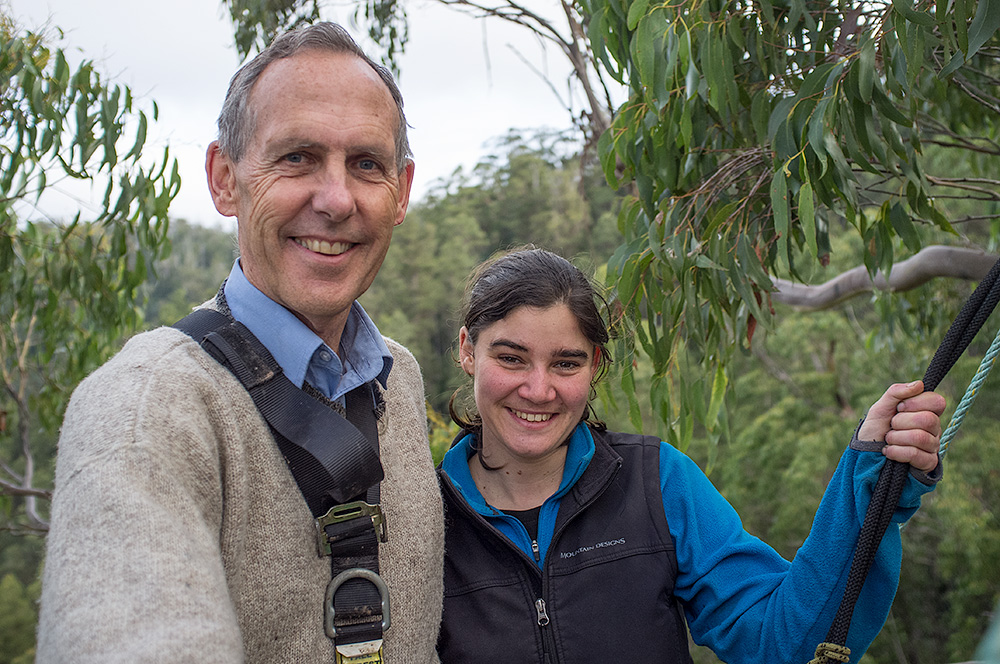
What an inspirational day I had yesterday with Bob Brown!
Please help to protect Tasmania’s precious forests:
CLICK HERE to take action now.


 T h e O b s e r v e r T r e e