Author Archives: lilia
Miranda’s Daily Blog: Day 16
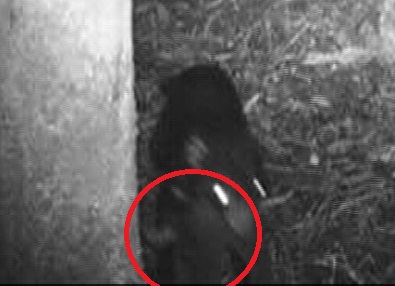
It’s late at night when I get the phone call from Lily Leahy. She is as excited as I am about the 2 seconds of footage and what it shows. She too has watched it over and over again, slowing it down, stopping it at the crucial moment. Taking another look. Who could have known a small dead animal hanging there limply would generate so much excitement between two conservationists. But it is the implications of the dead animal being carried in the mouth of this devil that has got us talking tonight. Why? Because never before have we seen such a thing on our cameras. Devils don’t need to carry their food around, you see. They can eat up to 40% of their body weight in 30 minutes – quiet an impressive feat! So there is no need for storing food unless….. Of course…. you have babies in the den that can’t go and collect it themselves! It looks like what we have here in Julia’s Forest is a mother devil taking food to her young in the den.
The excitement turns to worry, as I flick through footage and dates and data in a state close to panic. What was the date of on that footage? December 12th 2011. No, oh no. What camera was this seen on? 1.1? Yes, defiantly 1.1- there is no denying the reality. Six hours later, machines would be moving in as logging begins within 100 meters of this location. I hope she made it back to the den. I hope the babies are safe.
Next I call Colette Harmsen, a vetinarian whose special interest is the care of Tasmanian wildlife who has been working closely with devils for the past 5 years. She confirms the hypothesis Lily and I have discussed. “I definitely wouldn’t expect a devil to carry food anywhere except to take it to its young” she said. “At this time of year the babies are getting too big to be carried in the pouch or on their mother’s back, but they aren’t yet old enough to be fully independent. They would be waiting at home in the den while Mum goes scavenging for food for them. ”
“If devils were denning close to where logging is happening, this would cause major disturbance, including from noise and vibrations from machinery. Devils are particularly sensitive to unfamiliar noises, as their hearing is exceptional, so any loud noises are likely to disturb them” Colette said.
There is a real risk that young devils could die within dens. From her experience working with devils Colette explains that the typical behavior of a wild devil when it is threatened is to freeze, hide and stay very still almost as if immobilised with fear, rather than to run away. “We get a lot of calls from people who have a devil trapped in their shed or garage and they think that it is really sick because it isn’t moving. But usually it is just scared and that is how they tend to react.”
The real problem seems to be a lack of research. From talking to Colette and others who work with devils, there just hasn’t been enough research done to establish the full impact that forestry operations would have on den sites. For the industry to continue to decimate potential devil dens without even knowing fully the impact this will have is inconceivable, when considering the very real threat of extinction that may be facing the species.
“There is no doubt that there would be devil babies buried when machines move into new areas. Because there are currently no laws or proscriptions requiring Forestry to meticulously check areas for devil dens” said Colette.
We talked about what might happen to the devil seen on our camera, and to her babies. Even if she realised something wasn’t right and managed to get the babies out of the den it may be very difficult for them to survive. Relocating them at that age is problematic because they are too big for her to carry. And if they are in a state of fear due to un-known noise disturbances they may react unpredictably. There is also the very real problem of finding a new home. Devils seem to be picky when it comes to finding the right den, because there are specific conditions that need to be meet in order to keep the babies safe. For example an ideal den has small side-chambers for the pups to hide in to keep them out of reach of danger. Devils rely on old wombat burrows, caves, or other ready-made homes and these can be in short supply, and can be especially hard to find in areas where borrowable soil is limited. “Unless the mother already knows of another possible denning site, it would be very difficult for her to relocate the babies quickly” Colette said.
According to David Owen and David Pemperton: “Habitat interference affects animals by altering the refuges where they breed, raise young and rest. For the devil this could be critical. Maternity dens are carefully selected to provide a safe haven from the elements and from scavengers. Young devils get cold easily and need the warmth from their nests and the sun. Favored dens are strongly protected and may have existed for centuries. Destroying them through, for example, land clearance, disrupts population stability” (Owen and Pemberton 2005:76).
Due to the impact of DFTD (devil facial tumor disease) the death of one healthy devil can have a major impact on population stability in an area. Because so many devils are dying at a young age, sometimes not even old enough to breed successfully, the birth of new devil pups is significant. “The loss of any healthy individual devil is a significant loss for the genetics of the population in that area” said Colette. “Devil babies represent the potential new healthy generations. DFTD is having a drastic impact on devil populations and we need to be doing all we can to protect this species. More research is urgently needed as to the impact of logging and other disturbances.”
Despite these concerns, Forestry Tasmania is taking no action to ensure the safe survival of the devil seen here on our camera, or her babies. We have not seen any devils on film since the logging started and we can only hope that she has managed to relocate them to safety. It is hard to tell from the brief glimpse of her on this footage if the mother devil is Davina or a different devil, though it seems like it could be a different one. We will keep putting out the remote sensor cameras and see if we see her again. In the meantime, I guess it’s time to really put the pressure on the government, Forestry Tasmania and Ta Ann to stop the destruction of devil habitat before Tasmania loses another iconic species forever.
Reference:
Owen D and Pemberton D (2005) Tasmanian Devil: A unique and threatened animal. Allen and Unwin Publishing: Melbourne.
Miranda’s Daily Blog: Day 15
Following on from my Day 14 Blog, I made this little film for you, to show the process of checking up and monitoring the fauna cameras. My apologies for the late post, I had some power problems last night, but I’ve got the computer going again this morning. Make sure you check the website again this evening, because I am working on a very exciting blog for today… about something very interesting captured on film from one of our fauna cameras! So stay tuned!
Till Then, hope you enjoy the film.
Miranda
Miranda’s Daily Blog: Day 14
“In May 2009, the Federal Government uplisted the Tasmanian devil to the Endangered category under the Commonwealth’s Environment Protection and Biodiversity Conservation Act 1999.
The Tasmanian devil’s status was formally upgraded to Endangered under Tasmania’s Threatened Species Protection Act 1995, in May 2008.
In late 2008, the Tasmanian devil was also uplisted to Endangered on the Red List of the International Union for the Conservation of Nature and Natural Resources (IUCN) – widely considered the most authoritative system for classifying species in terms of their risk of extinction.
Populations in which DFTD has been observed for several years have declined by up to 95% (approximate, due to low sample size in recent years), with no evidence to date of either of the decline stopping or the prevalence of the disease decreasing.
The Tasmanian devil is now wholly protected.”
(Save the Tasmanian Devil Program: 2011)
On the night of December 12th 2011 a Tasmanian devil was filmed in this forest. The next day logging began within 100 meters from the very place where that devil was seen. Is this what it means to be “wholly protected?”
The question is: How can the State and Federal governments allow logging of habitat areas for Tasmania’s most iconic species, which is now under serious threat and is supposedly “wholly protected?” Don’t you think it’s a bit strange how we have all this environmental legislation but Forestry doesn’t have to worry themselves about it? These amazing forests that provide habitat for endangered and threatened species can be logged with no regard for any regulations of the EPBC Act, because the Regional Forest Agreement exempts forestry operations from such legislation.
I spent the afternoon today sorting through footage captured on our remote sensor cameras. It is always one of my favourite moments… plugging the camera into the computer, waiting in anticipation to see what animals we have on film! I sifted through all the devil footage we have captured in this coupe so far to identify the devils. Almost all the footage is of the one devil. I thought since we are getting to know this little devil so well now, that it deserved a name. I have named it Davina the Devil. Named after my sister (whose middle name is Davina) because she has been such an amazing support and inspiration for me throughout this project. Davina the Devil has been captured on film earlier this year when we first began surveying this forest, right below me at the base of this tree
Then again Davina was seen in another location in this coupe in September. December 12, the night before logging started is the last time Davina was seen. The logging is within 100 meters of that location. I hope that sometime soon we will get more footage of Davina so that we know nothing terrible has happened.
Check out the footage of Davina and the other animals we have filmed on the “Fauna TV” page of this website. I’ll keep updating this page as more footage comes in. People will be moving and checking the cameras every few weeks, and sending the footage up to me in the tree so I can upload it for you to see.
It is with mixed emotions that I watch this footage. It brings so much joy to see these animals that live in these forests. Particularly the devils because they are quiet shy, so it is rare to see them. The remote sensor cameras give us a chance to get a glimpse into their world without imposing on them. However, it also saddens me to see them; going about their business, not knowing what is to become of their forest over the next few months. It is an international disgrace that Tasmania continues to allow the destruction of habitat of endangered species. It makes a complete mockery of any endangered species legislation if listed species receive no protection from the loss of habitat. This is why it is even more critical that these forests receive protection. Julia’s’ broken promise is not only a threat to the giant eucalypts; it is a threat to the survival of the precious wildlife that call these forests home. Please take action today to help protect Davina the Devil.
Miranda’s Daily Blog: Day 13
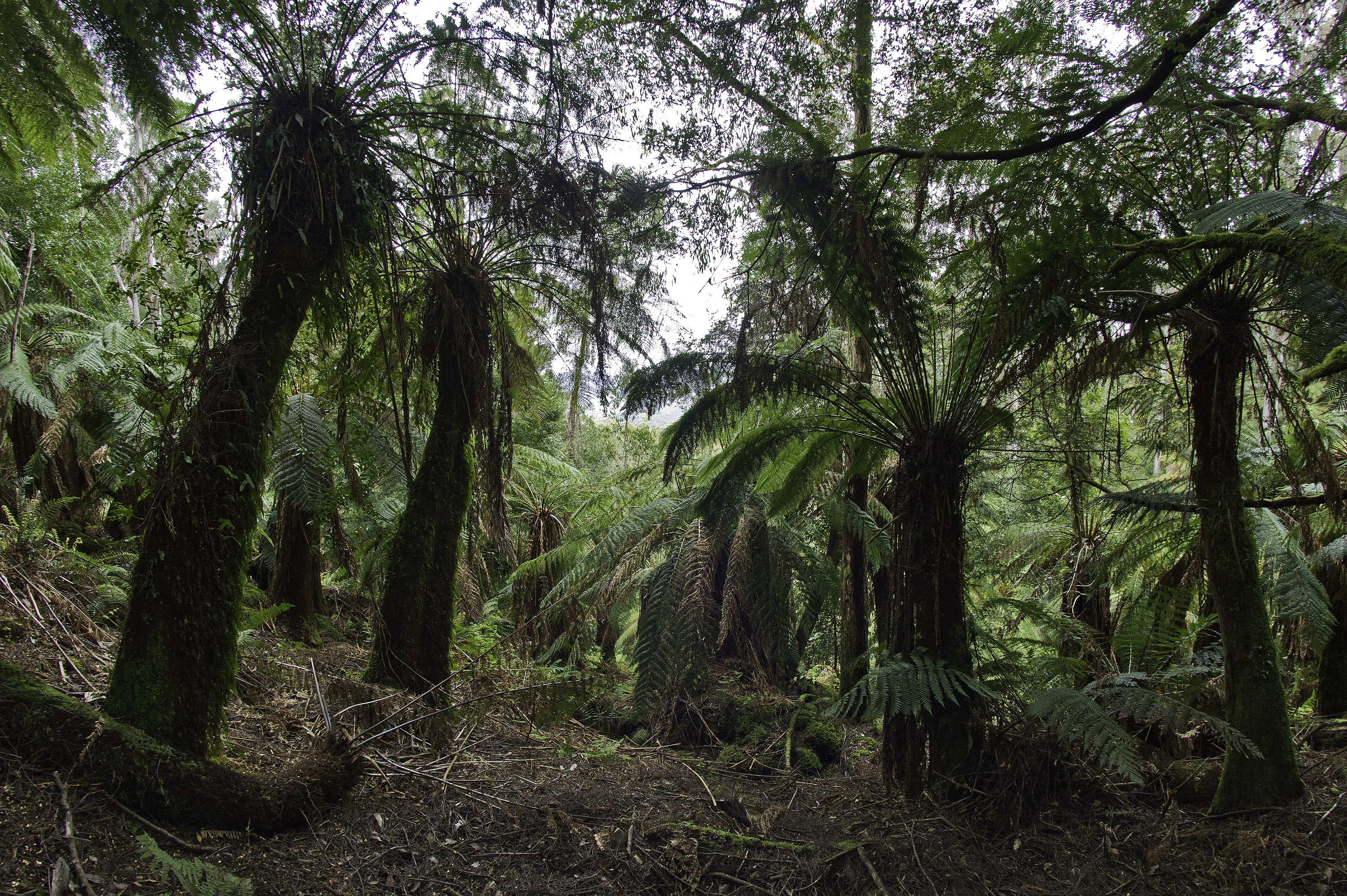 I want to tell you something. And maybe it’s something I shouldn’t tell you. Maybe it’s something I should keep to myself, because it’s not the right image I want to portray for the campaign. But I’m going to tell you anyway. Because I just want to write honestly. I had a plan for you – I wanted to share this forest with you in order to make you fall in love with it. But the trick was I wanted to do that without loving it myself. I don’t know how I expected to convey a sense of wonder about this place without feeling it too. But you know what, I felt scared. I felt afraid to love this forest. I didn’t want to become connected to it and then have to sit here and watch it get torn apart limb by limb, tree by tree. I’ve already done that in my life and I didn’t think I could manage another round.
I’ve briefly mentioned the Floz a few times in my blog so far. It is the place that I found something people search their whole lives for. I found home, belonging, a sense of place. I spent the best part of a few years in the Upper Florentine Valley. Almost every day I went for walks. I visited my favorite grove of sassafras trees. The ones that twisted up around each other, and seem to almost droop, laden with moss. I liked to climb up into their branches and I liked the distinct smell of sassafras and moss that lingered in my clothes long after I’d gotten down.
I liked to visit that patch of bauera and boronia that seemed to appear out of nowhere. You’d walk through tall eucalypt and suddenly be in an area open, but bursting with flowers. I loved the smell of the lemon scented boronia, and the joy of seeing the little flower buds appearing in spring.
At night time I’d climb up to the top branches of Front Sit. Every night’s climb was unique. There were the clear dark nights, when I’d dangle from the rope suspended in the darkness, looking up into the stars. There were the nights when the moon was so bright you didn’t need a light. It would throw shadows of tall trees across the forest. And you’d climb out of the darkness into the brilliant light of the moon and back into shadow again. I loved the moment in each climb when I’d pop above the surrounding sassafras trees and get my first glimpse of The Needles mountain range. And Mount Mueller.
Then there were of course the rainy nights. When I’d be sitting cozy by the fire and thinking…. hmmm…. do I really have to climb tonight?? But off I’d go – climbing up into the rain, the water running down the inside of my sleeves, and pooling around the bottom of my pants. My fingers painfully cold, gripping the rope. I’d never regret it when I got to the top and look out across the snow-capped peaks of Mount Field, the needles and Mt Mueller. And then settle down in my swag, drifting off to sleep with the sound of rain on the tarp.
And those who know me will know well the story of my first time seeing snow. I like to retell it often because I have absolutely come to love the snow since moving to Tasmania. Being from Brisbane originally I’d never seen snow till I came here. And it was one cold winter night when I’d just made it to the platform in Front Sit that I noticed the small specks of light reflecting in my head torch. And then more and more of them. Glistening white. I sat out in the snow for hours that night, perched on a branch, watching it gather on the tarp, the platform, the branches around me. Watching in wonder as it gathered on my pants and my jumper, my shoes, my rope. Finally I went to sleep. And woke in the morning to a wonderland of white beneath me. Looking down over the forest, the sassafras, myrtle and celery top pines bending under the weight of clumps of white snow, clinging to their tiny leaves. The tree ferns making amazing patterns as you look down on them from above. And I never got sick of the snow. Every winter (and sometimes even in summer!) I am overjoyed when the snow comes to the forest.
I could almost talk forever about the Floz. Just now I am thinking of a million stories, about the double circular rainbow I saw from Front Sit, the echidna I’d always meet along Timbs Track, the sugar glider that would visit the tree sit, the pair of Wedge Tailed Eagles that soured above me…. so many stories to tell.
But I guess the point I wanted to make was this – falling in love with the Florentine was the hardest thing I ever did. But I guess love is like that right? I will never forget the day that Front Sit was felled. It’s funny because I had a feeling, a sense that morning that it would happen. And when I heard that the police had been checking to make sure no one was walking along Timbs Track I knew straight away what it meant – they were going to fall Front Sit. It is a strange feeling to stand there and let it happen. After all those years of trying to defend it, of sitting in that tree and feeling like we were a team together, like I’d be there for Front Sit when it came down to it, that I was here to protect this forest. I really felt like we could. And then to stand there and do nothing, as the chainsaws started. I wanted to run, right through the police line, right in front of the chainsaw. I wanted to be one of those irrational and hysterical people you see on TV, screaming and flailing their arms. But maybe I’m too rational and I knew that it wouldn’t help. That running towards the tree would only have me arrested, that I’d never get through that solid line of cops. So I stood there. I just stood there and watched. I kept thinking – if your friend was being killed would you just stand there and watch? Or would you try to save them, even if there wasn’t much chance that you could, wouldn’t you at least try? I kept thinking that. But I didn’t try. I just stood there with the video camera and filmed it. I don’t know how I stayed steady enough to keep filming. Through the sound of the chainsaw. Through the cracking of wood. Through the earth-shaking thud as the tree hit the forest floor, bringing a few sassys down with it. At the end I turned the camera off and sat down on the ground, on the side of Gordon River Road and cried.
I didn’t feel crushed, like I thought I might. I didn’t feel broken. I felt strangely strong. I felt undefeatable. The whole time I had lived at the Floz, I’d always thought: “I don’t know how I’ll cope if they cut down Front Sit, I just couldn’t cope.” But I did. I felt like they had taken from me the tree I loved the most in all these forests, and if I could survive that loss, then I could survive anything. That they could never break me, no matter what they did.
The stump of Front Sit remains right by Camp Floz. When no one is watching I go and sit with it. I will always feel a sense of loss there. But it reminds me to be strong. And it reminds me that I will never give up. I know that one day this forest will get the protection it deserves. I know that it has to, because otherwise we will be losing something that we can never replace.
But in order to continue to fight this battle for the forests, I thought that I could never let myself feel that connection again. I walked through the forest with different eyes since then. I walk through the forest with campaign eyes – looking for places that would make a good photo to really get people noticing. Walking through clear-fells semi-detached – look at that massive stump smoldering in a bed of ash – that’ll make a great photo that will really get people paying attention! Well, I mean, not completely that detached, but you know what I mean. When I thought about The Observer Tree project I really wanted people to find a connection to this forest, I really wanted people to fall in love with it so that they would be inspired to take action and help to save it. But I felt in my own heart a need to be guarded. To protect myself if the time came that I would have to sit here and watch it be destroyed in front of my eyes.
It seems almost crazy, doesn’t it? For someone who loves trees to willingly sit and watch an area of spectacular ancient forest be clear-felled? But if I don’t watch it, then who will? This amazing area of irreplaceable forest would be lost forever and nobody would know. It would be done out of sight, hidden behind locked gates. Just a few kilometers away tourists would drive past on Styx Road, on their way to see the few trees protected in the Big Tree Reserve, none the wiser that right that minute an ancient ecosystem is being wiped off the earth as the bulldozers move in. That to me seems the greater loss, for it to just disappear without any body even knowing it was here. The only ones to see it, the people with chainsaws in their hands. And so, even though I know it will be hard to watch, I want to be here, so that I can bring this out of the secrecy of hidden broken promises, into your lounge rooms and offices. And maybe when the world sees this, they will step in and stop this devastation from continuing.
This brings me back to the point that I started with. It has been a long winded explanation, but I guess you needed some context of my forest experiences to know what I meant. And so I was sitting here tonight. Having a break from the phone and computer. Perched on the edge of the sit looking out across the gully to the ridge on the other side. And I realized that no matter how hard I try….I can’t keep it out…. it just creeps in on you. It is impossible to live up here in the canopy of this tree and remain disconnected from the forest.
Bit by bit, without meaning to, I start to know this forest. The little hollow in the tree next to mine, where I was so certain the other day I could see an owl staring out at me, but after it didn’t move for a whole day I realized it was the shape of the rotting wood inside the hole. The distinct shadows of the tall eucalypts across the ridge. The glimpses of tree ferns and celery top I can see below me. The feeling of sitting on the edge of this platform, with nothing beneath my feet, like I could almost soar off across the valley, joining the yellow tailed black cockatoos as they effortlessly pass over the forest.
I wish I could show you. Not through the computer screen or the video camera. But really show you. I wish I could bring you up here to see for yourself. Because the video can never do it justice, can never capture the way it really is. I wish you could see the way the afternoon light dances across the trees, turning them slightly golden. Or the way the mist subtly reveals silhouettes of trees in the distance. I wish you could feel the wind penetrating through your jumper to bite at your skin, as it softly rustles the branches and the tree sways slightly beneath you. I wish you could hear the silence, interrupted only by the boo-boo of an owl. If only you could see it the way I can, if you could sit up here day after day and let it take hold of you the way it is doing for me……
Better to have loved and lost than to never have loved at all. They say. And I think maybe they are right. I would never trade my experiences in the Floz for anything. No matter how much sadness I have felt from watching my home smashed there. The joy of coming to know the forest and what that brought into my life – I will always be thankful for. And so here I am again. And yes, I guess I am willing to take the risk, willing to let myself fall in love with this forest. I think I just have to be, because it seems to be giving me no other choice. Maybe this time, we will gather enough support and enough momentum in this campaign so that I don’t’ have to lose it. Maybe we will save it for long enough that you will be able to come and see it for yourself. Maybe we’ll even save it long enough for your great-great-grandkids to see it for themselves too? I can only hope so.
The Mercury article: Santa lands in tree-tops
 “SANTA made an early visit to a tree-sit protest in Tasmania’s remote wilderness yesterday.
Still Wild Still Threatened’s Miranda Gibson has been living 60m above a logging coupe near Maydena in the Central Highlands for the past 10 days.
After living off cold tinned and dried food for the entire time, Ms Gibson said she was overwhelmed by the visit.
“Santa came up the tree and we had a little picnic and he delivered a lot of messages of support from the community and all sorts of nice treats to save up for Christmas Day,” she said…”
Read more of the article at The Mercury website.

Miranda’s Daily Blog: Day 10 & 11
Well, it’s Christmas eve and I’m sitting here under my solar powered fairy lights, surrounded by a cloud of mist. This afternoon provided a spectacular view as the mist gathered on the mountains and then rolled down into the valley, creeping closer and closer until it eventually encompassed my tree.
My apologies for not posting a blog yesterday. I had some power problems and wasn’t able to get the computer going. All fixed now. So I’m writing a composite blog tonight to incorporate yesterday and today. Though, I won’t go into too much detail about yesterday, because I’ve just finished making a little video that tells the story much better! I think you’ll really like it 🙂
This morning I went live (via Skype) to the Salamanca markets in Hobart. What a great way to bring this forest to the community! I had some great chats and it was wonderful to get lots of support as well as answer questions about what life is like up here. Anyone reading this who has ideas or opportunities for similar set ups in your area or at an event – let me know. I’ll also be online live at the Wilderness Society stall at the Tasmanian Falls Festival – so come say g’day if you’re around.
The other wonderful thing about today is the first guest blog for the website. My beautiful family put together a lovely supportive video blog about what they think about my tree top campaign and also to send their love for Christmas. Make sure you take a look.
Christmas eve… I remember the feeling as a kid of being unable to get to sleep, full of excitement for Christmas and wanting to stay awake to catch a glimpse of Santa. But never quiet managing to! And then the 5am wake up! Perhaps to the dismay of my parents! I never would have imagined then that one day I would spend Christmas eve at the top of an old growth tree in the middle of Tasmania’s south west wilderness, sitting beneath a string of fairy lights and typing on a computer!
No need for me to put a stocking out for Santa tonight, as he has already paid me an early visit to personally deliver his message of support for this campaign. Unfortunately he was unable to bring me my one true Christmas wish – the protection of these world-class forests. Santa is pretty talented, but he can’t do everything on his own- I think he needs a little help from you in order to make that Christmas wish come true!
Good night and sweet dreams. I hope Santa pays you a visit tonight.
Merry Christmas. Miranda


Guest Blog: Miranda’s family offer their support and Christmas wishes
In the first of The ObserverTree’s guest blogs Miranda’s family talk about their support for her campaign to protect Tasmania’s ancient forests. Glenys, Dave, Rhiannon and Simone all wish Miranda a happy Christmas and send their love. They encourage everyone to get behind The ObserverTree.


 T h e O b s e r v e r T r e e