Category Archives: Daily Blog
Miranda’s Daily Blog: Day 230
“I’m sorry” a voice crackled through the walkie-talkie radio. ” I tried to dry your slippers by the fire, but part of them melted.” This carefully chosen birthday present from my Mum had only arrived two weeks ago. When I pulled them up on the rope and looked at those crinkled up slippers, I felt like crying. “This is ridiculous!“ I thought to myself… “am I really crying about a pair of slippers?” But I knew in reality it wasn’t about that, it was the accumulation of eight months worth of loneliness, frustration, isolation. Of missing my family and friends. Of the monotony of every day confined to a small platform. And most of all, of looking out across this valley not knowing if tomorrow I will hear the sound of chainsaws and lose this forest forever. As I sat there in the rain, my usual optimism began to wane, as I thought to myself, “Can I really keep doing this?”
How do I go from this moment of feeling like I just can’t cope… to finding the strength it will take to continue this vital action on behalf of these forests? Well, my courage came in the form of a youtube clip. I know that might sound as bizarre as crying over a pair of burnt slippers! But, it’s true. Because watching an interview online with an Indigenous man from Sarawak put everything into perspective for me.
The Sarawak man being interviewed by Canadian news program “16×9” remained anonymous, for fear of the repercussions of speaking out. He had been involved in peaceful community protest against the logging of the forests that his people depend on for their very survivali. And so, if I am ever missing home comforts… I will remember what people in Sarawak will go without if logging continues to decimate their lands.
And if I ever feel lonely here… I will remember what many people around the world may face for taking a stand. Here I may be alone, but I have my phone and computer to connect to the world, support crew on the ground and a beautiful forest. Compare this to solitary confinement in a Malaysian prison. This is what the anonymous interviewee had suffered as a result of trying to stop logging.
Logging has been going on for a long time in Sarawak by a range of different logging companies. And so has the community resistance to it.
In recent times our attention in Tasmania has turned to the role that Ta Ann have in the industry, since the Sarawak-based company branched out to establish Ta Ann Tasmania, setting up two veneer mills here.
A recent statement was released by the Indigenous Penan people, fingerprinted by the chiefs of six villages in north Sarawak that are impacted by Ta Ann’s activities. The statement named Ta Ann and raised concerns about destruction of their lands, done without prior consent or knowledge and in contravention to the legal rights of the Indigenous people.
“this area should not be re-logged as it was being logged in the past which have made our livelihood difficult especially our food resources” the statement said.
“As a result of the previous logging activities our river are now muddy where as our traditional food are depleting and it is difficult to revived/rehabilitate.”
“Because of that, our present here are to inform all the stakeholders that we with one voice that we don’t accept any type of logging to take place within our Native Customary Rights Land.”
Sometimes people criticise my action by saying “Why don’t you go to Borneo instead?” But the fact is that destruction in Tasmania’s forests and the loss of Sarawak’s forests are both devastating and intricately linked.
It is clear that Ta Ann came to Tasmania in order to give environmental credibility t0 their company on an international level. After interviewing CEO Wong, it was reported in the Malaysian media “Due to Japan’s adoption of an eco-friendly lifestyle this will benefit resource-based group Ta Ann Holdings Bhd. Ta Ann stands to benefit as it has a 20-year log purchase agreement with Forestry Tasmania.”ii The misrepresentation of Tasmanian timber as “eco” friendly has implications both in Tasmania and Sarawak.
Right now Ta Ann’s “eco-ply” contains wood from forests that have been verified as world heritage and national heritage value by government-endorsed independent teams of scientific experts, and recommended for protection. In fact, it has been officially documented that this company is one of the key drivers of destruction in those forests. The timber produced from Ta Ann Tasmania does not comply with the guidelines for sustainable forestry that overseas customers expect” iii. You just have to scroll down the page on my website to see some of the amazing forests that have been or are due to be logged for Ta Ann.iv
There is no doubt that what happens here in Tasmania will have repercussions in Sarawak. Ta Ann can use their so-called Tasmanian “eco” wood to present themselves on the international market as good corporate citizens. Thereby glossing over the destruction of forests and disregard for indigenous rights elsewhere. Tasmania and the globally community must stand in solidarity with the people of Sarawak, by exposing the truth about Ta Ann’s activities in both places.
Please help by clicking HERE to send a message to the corporate customers of Ta Ann.
Take a look at this short film about Ta Ann:
Ta Ann Film from Dylan Grimwood on Vimeo.

Miranda’s Daily Blog: Day 225
As well as having a visit from Bob Brown this week, I also had a visit from ten young people from the Australian Youth Climate Coalition. Check out the video blog:
Thanks to everyone who came out to visit me. It was inspiring to hear about all the work being done by young people around this country to ensure a safe climate for our future! I hope you found the day as inspiring as I did.
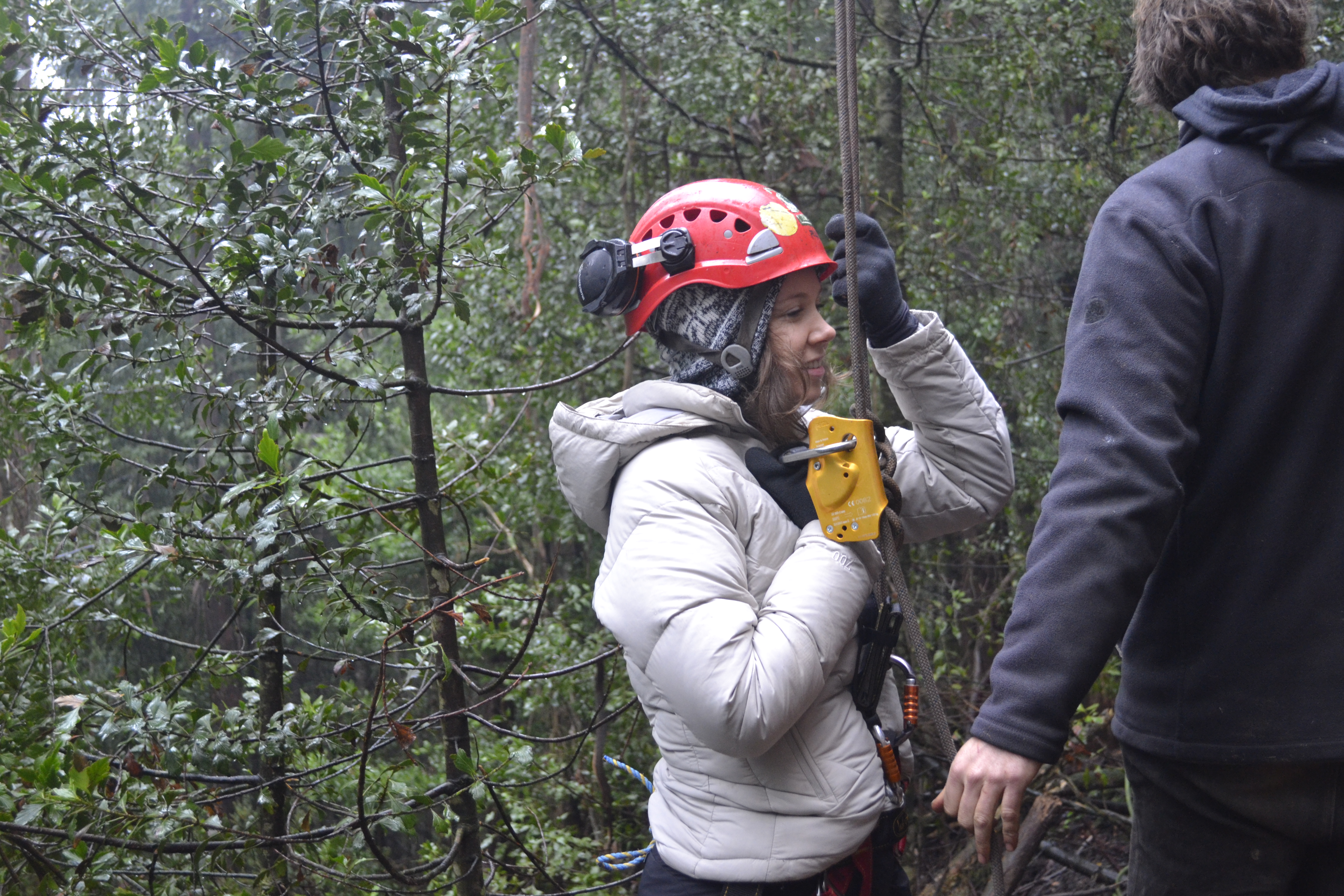 Visit Anna Rose’s blog HERE and find out more about their visit.
Click HERE to take online action now to protect Tasmania’s forests for the sake of our climate!

Miranda’s Daily Blog: Day 223
What an inspirational day I had yesterday with Bob Brown!
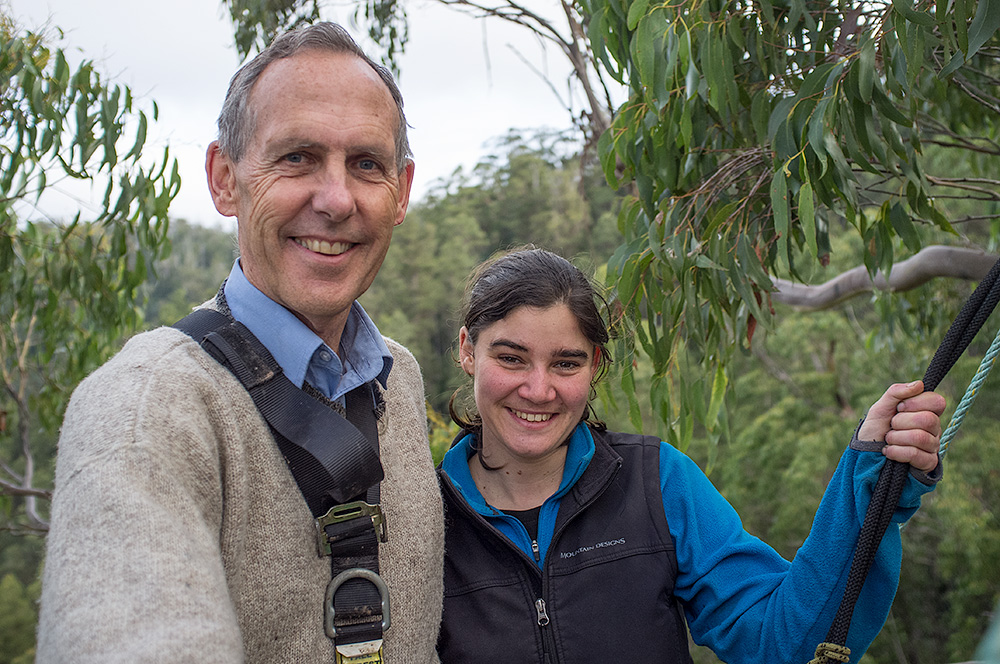
Please help to protect Tasmania’s precious forests:
CLICK HERE to take action now.

Miranda’s Daily Blog: Day 221
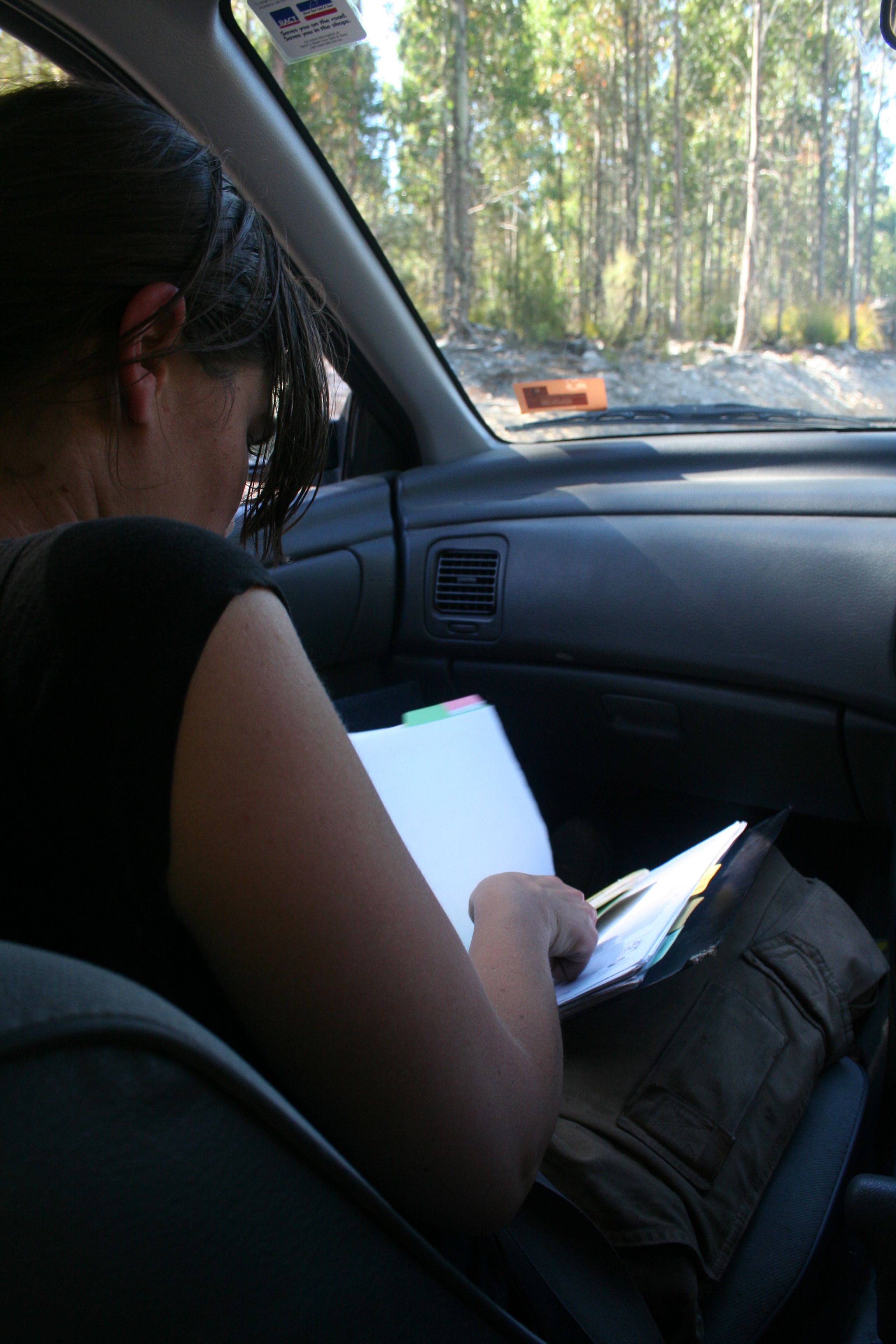

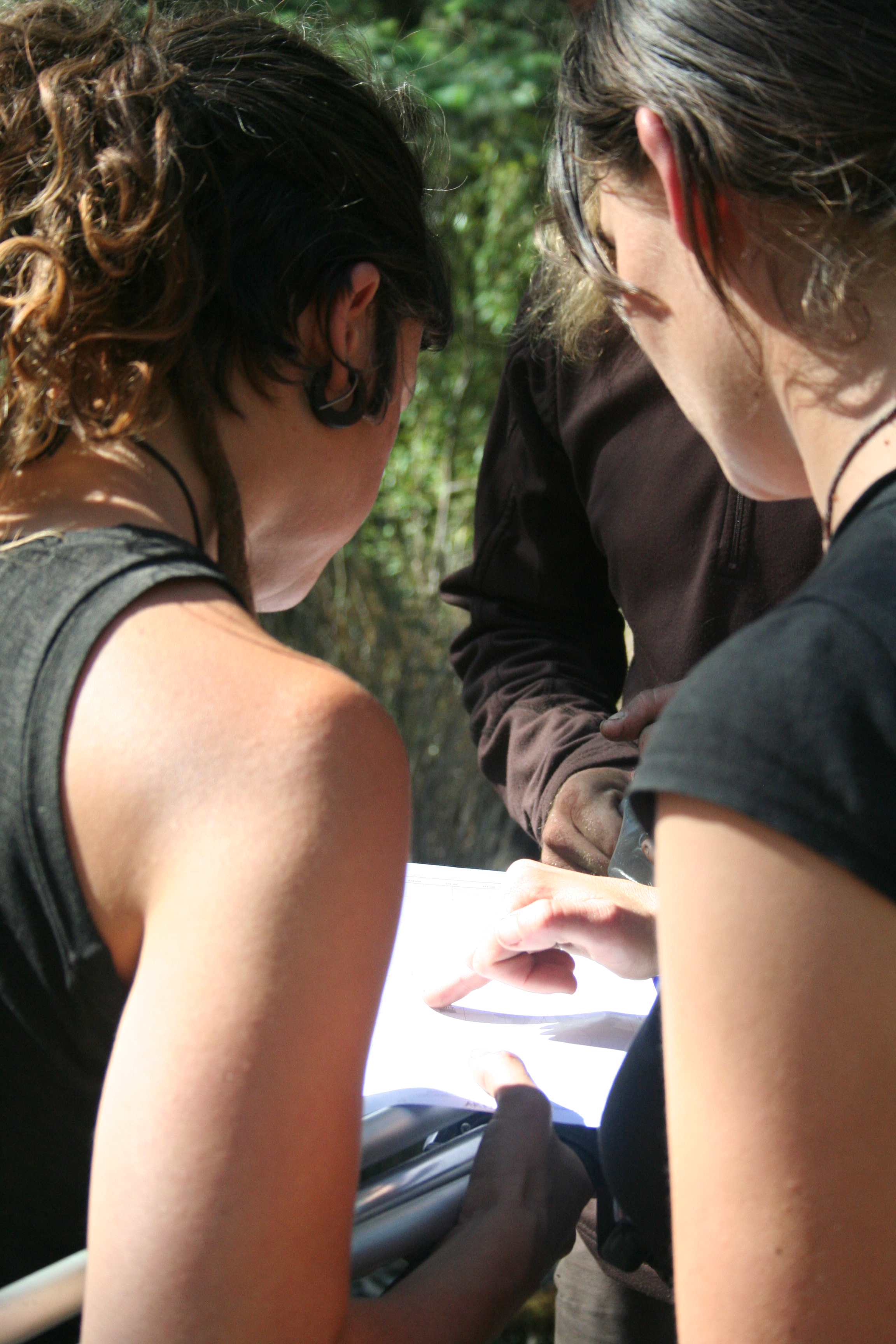
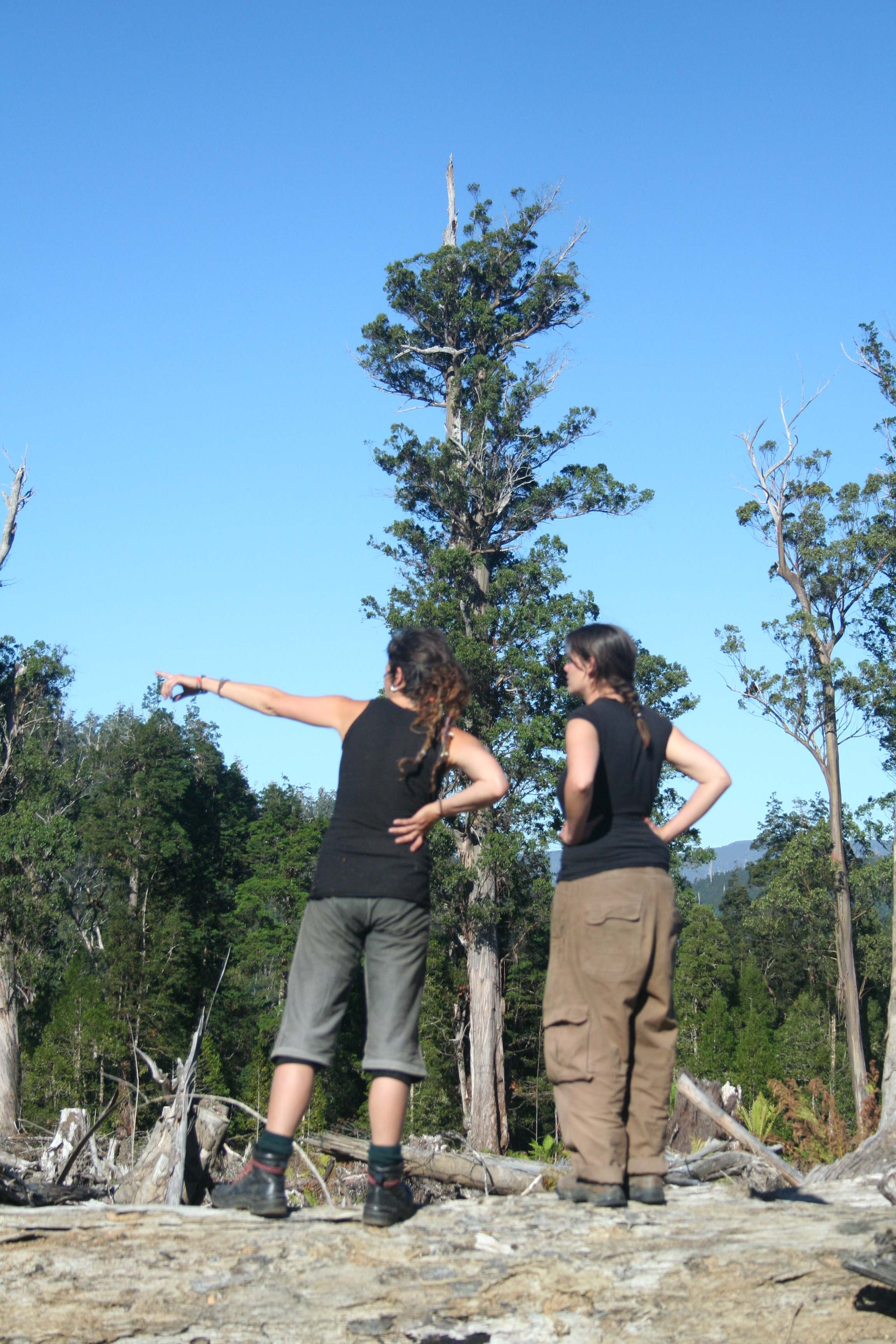
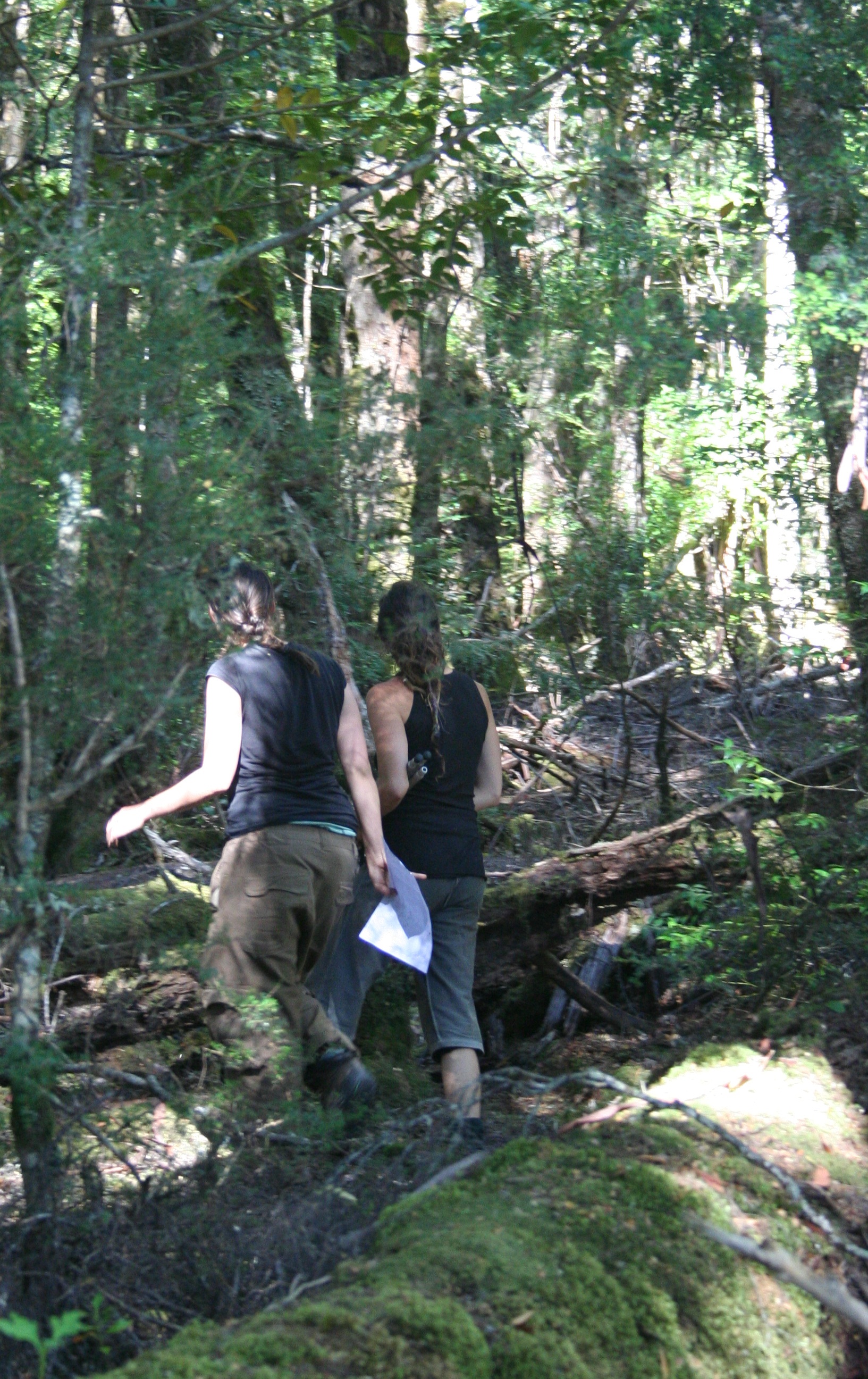
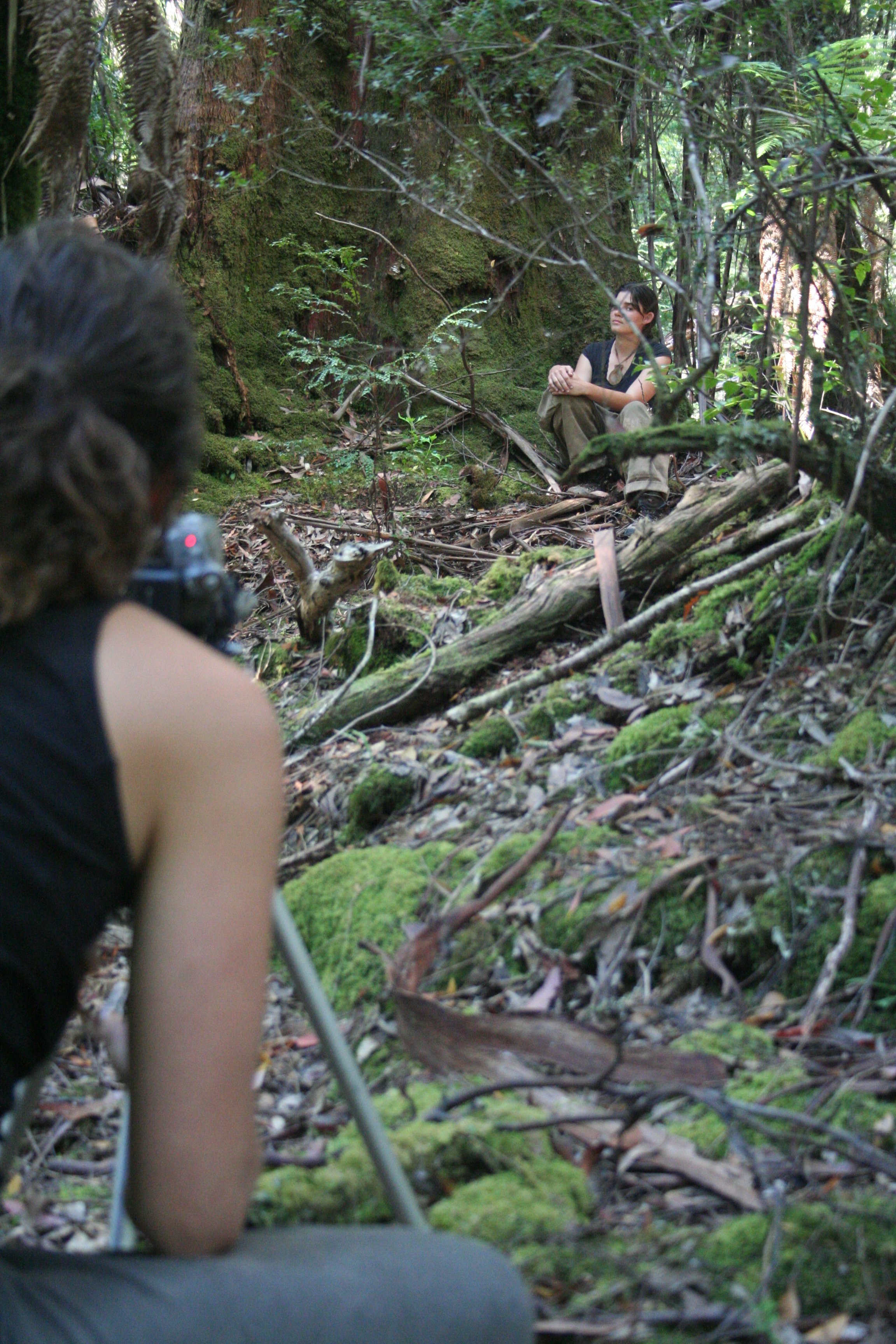
(Images: Forest monitoring and documentation, Still Wild Still Threatened 2010).
I have come to love and hate maps.
Over the past five or so years they have become a constant companion. Helping me to navigate my way through amazing tracts of forest, to find spectacular caves hidden deep in the Upper Florentine Valley, or giant trees in the Styx. They have guided me through the forest on dark nights, by head torch, to take action. They have helped me find the perfect spot to place wildlife cameras and helped me find my way back again to watch the footage of Tasmanian devils and spotted- tailed quolls. But maps have led me to places I wish I didn’t have to go. They have taken me on dark and raining nights through mazes of logging roads, to coupe after coupe of clearfelled forests.
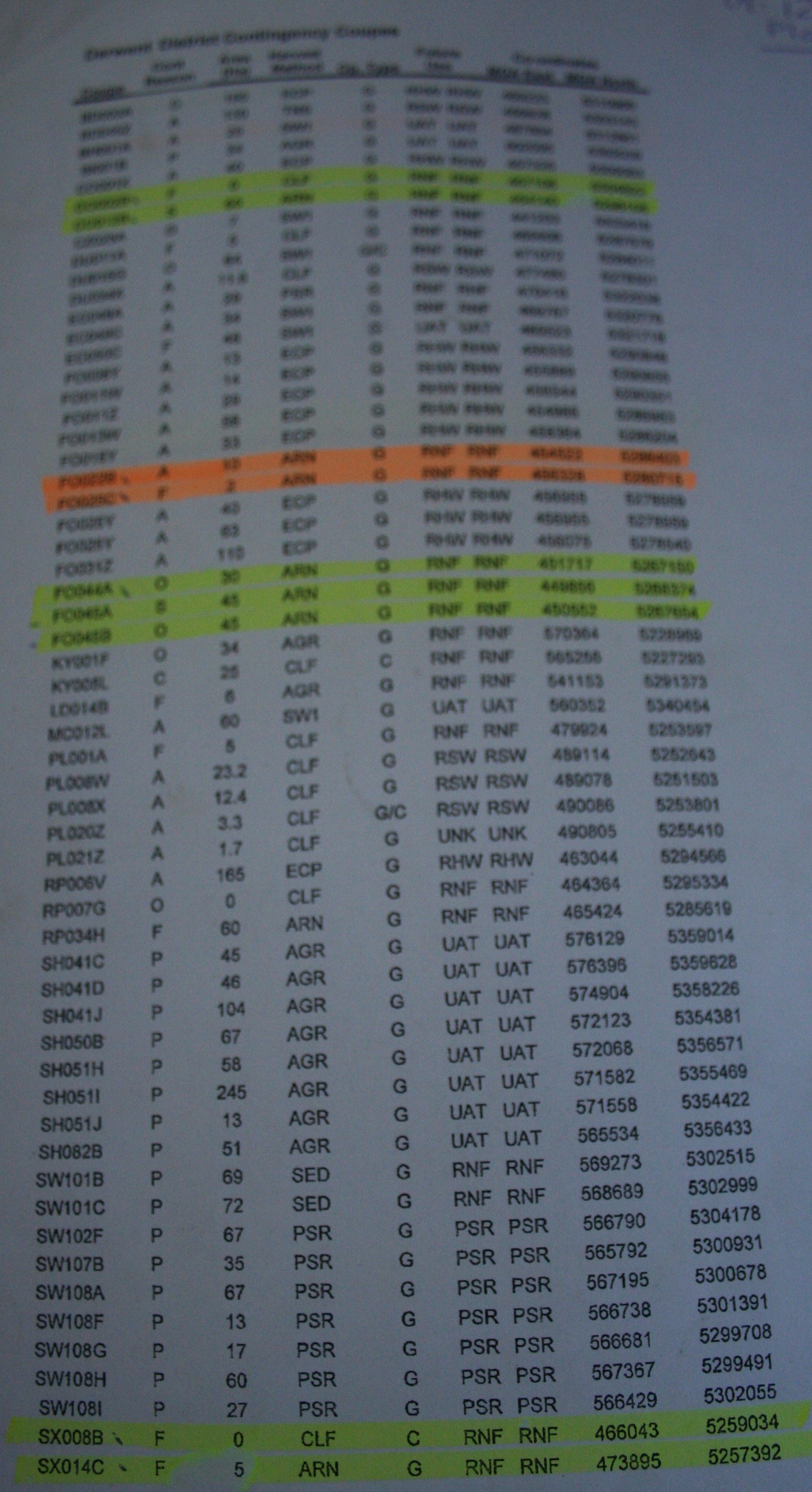 Each year Forestry Tasmania puts out a new wood production plan. It is one of my least favourite times of the year. it means trolling through list after list of coupe names. It is like a lottery draw, where if your number comes up you lose everything. As soon as it is released I am going through it with anticipation to see which of my favourite places will be taken this year. And then the sad task of drawing the lines of each coupe boundary onto my own maps. Each year our worn out 1:25,000 topographical maps are filling up more and more with the scrawl of coupe boundaries. In increasing numbers, the shaded-in ones; the ones that have already been lost, begin to take over the pages.
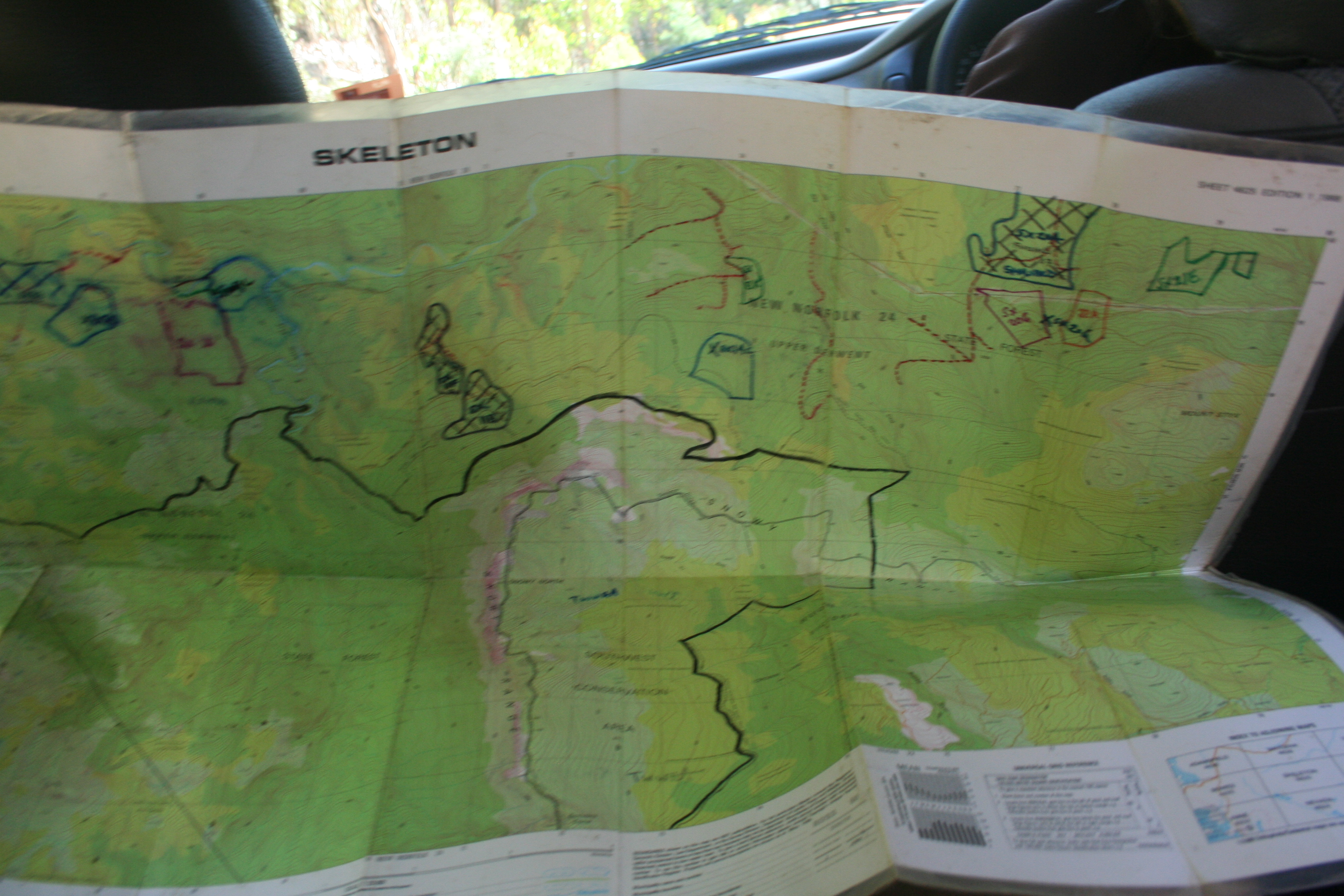
These past few weeks, as you will have noticed, I have been doing a daily post, with the help of crew from HVEC, Code Green, The Last Stand and Markets for Change, profiling a different forest everyday. Sadly many of these areas are clearfells. These are forests that should have been protected by a moratorium announced well over a year ago now. And then by the conservation agreement announced last August.
Tonight I feel a sense of loss for places I have known and loved and lost. And for other places that I will never have the chance to know. Tonight the maps tell a story, and it is one of devastation. The other day I wrote a coupe profile about what had been one of my favourite patches of forest. It’s called the Counsel forest. And it has the most spectacularly giant trees. I remember the first time I ever went there. I was amazed. There are some forests that have had such a high profile, like the Florentine and the Styx. And these are incredible forests that deserve to be known! But then it is interesting to stumble across areas that not many people know about or hear about. And to discover a whole new, equally amazing world in there!
What amazed me was the diversity of flora. When I first visited this area many years ago now, it was early on in my career as a “plant nerd.” I had been enthusiastically learning every single plant I could find in the Upper Florentine Valley. And I thought I had a good handle on this plant ID thing. Then I walked through the Counsel, and discovered I had no idea! There were so many new species for me to discover and learn, that were not commonly seen in the neighbouring valleys. The other thing I loved about the counsel when I first went there is its rocky disposition. The rocky outcrops, that look out over the valleys below. And of course, the tall trees!
I have found some amazing trees in that forest. One of my favourite trees in the Counsel was discovered in logging coupe CO002B. Every year SWST conduct a report for the IUCN and World Heritage Committee, to asses the level of damage done to the forests bordering the world heritage area. One of those areas was CO002B, the boundary of which runs right up to the world heritage border. On the day we went to document it for the 2009 report, we arrived to the devastating scene of logging machinery and fallen trees. I went for a walk and just up the hill, on the very edge of where the logging had gotten to that day, was a giant tree. It had a huge girth of 17.5 meters. It was a beautiful tree and I thought maybe we would have a chance to save it. Given that the Forest Practices Code says that trees above 14 meters girth would receive a buffer zone and remain standing until they were assessed for status as “giants.”
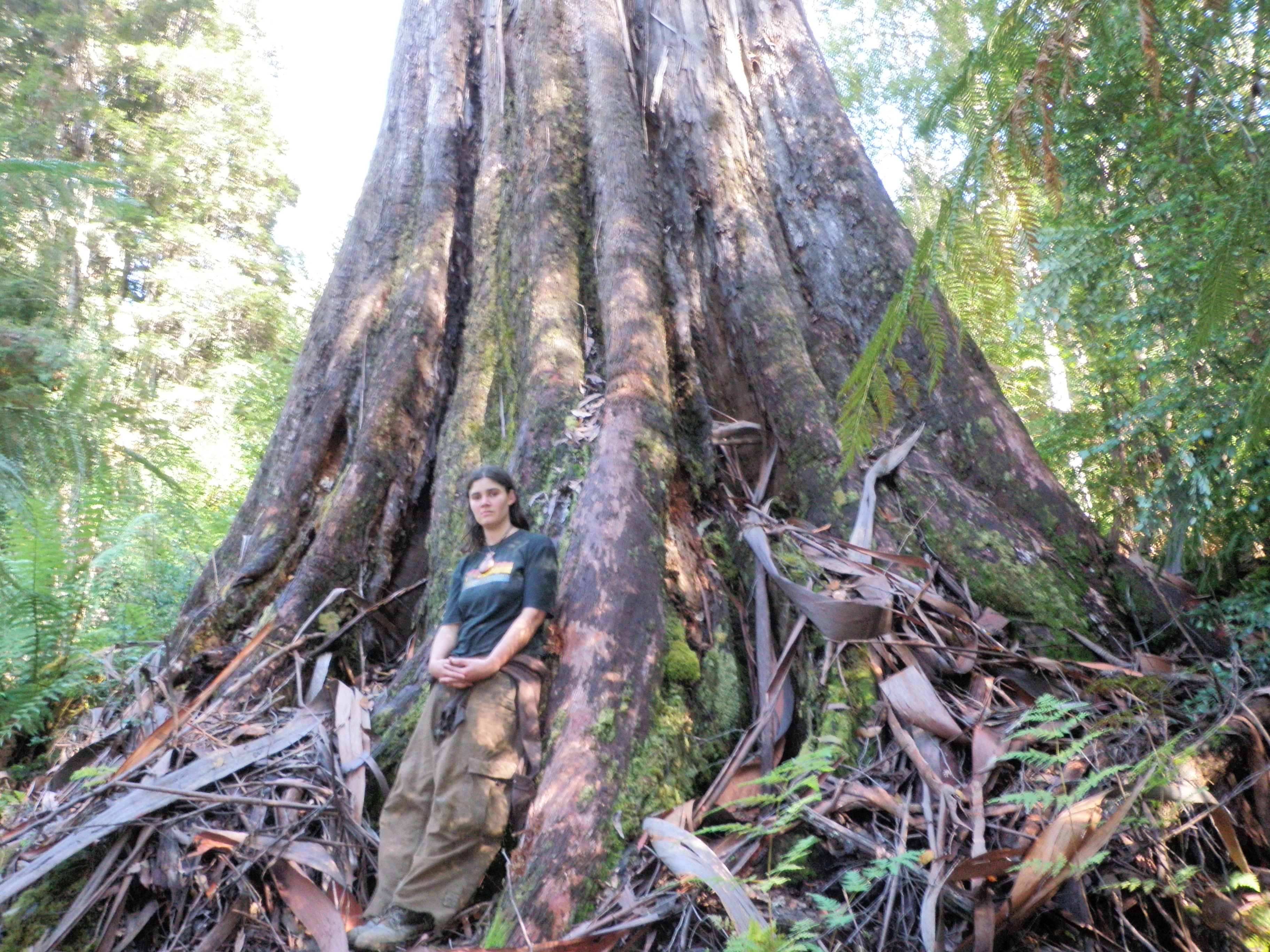
The following day we were standing amongst a very different “forest”, a garden of planted tree ferns in the atrium of Forestry Tasmania’s building. Handing in our paperwork to report the discovery of this amazingly wide tree. The next time I returned to the coupe, our tree was still standing but they had logged right up to it. Something I thought they were not supposed to do. We found out it had failed to be classified as a giant. The reason for this is that while tall trees are given giant status, if they are above 85 meters in height. But there is no protection for trees that are exceptionally wide. They have to meet a criteria based on volume. And so those old trees that have lost their crowns as they have aged, often fail to be classified. And unfortunately this one fell short. The next time I returned all that remained was a 17.5m round stump.
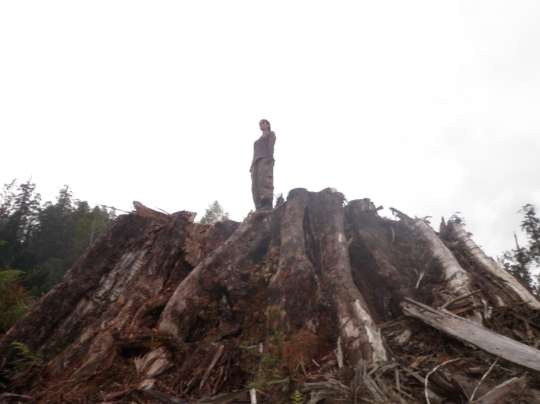
After the felling on CO002B came the felling of CO010B. This was particularly distressing, because it is right in the middle of a significant tract of intact old growth. This tract is bordered by the TWWHA on one side and an informal reserve running along a river on the other side. There were not even any roads encroaching into the forest. That was until CO010B. A road was pushed right through the informal reserve. And then logging started. This was at a time when Forestry Tasmania were meant to be rescheduling coupes in line with the Statement of Principles and the declared moratorium. This was the moment for me when warning bells started ringing about the whole process. Why was logging allowed to go ahead in a tract of intact old growth forest, bordering the Tasmanian Wilderness World Heritage Area, when it was meant to be on its way to be included into the reserve? It just didn’t make sense. There was already an argument out there being used to justify areas not being included in protected areas, based on the fact that they were fragmented by logging. Yet, here they were going ahead and fragmenting another area of forest, right before it was to be reserved. Now there is a scar in the landscape of the counsel forest. A sad reminder of the failure of the moratorium to do what it should have done, and that is to ensure that the areas on the table for new reserves did not suffer any further degradation or fragmentation.
CO0010B and C0002B should be restored and included into the TWWHA along with the surrounding forest, to ensure connectivity. The trees that once stood here have been forever lost. But it is not too late to protect the rest of the Counsel. And other high conservation value forests in Tasmania.
The maps hold a story, and it is part of my story. Because the scars that mark the maps have left their mark on me too. Places in the Styx, Tyenna, Wedge, Florentine, Plenty, Wentworth Hills. The places that I have visited, monitored, documented, photographed, set up fauna cameras in, climbed trees in, taken action in, written reports about, talked to the media about, and eventually bore witness to them being felled and burnt.
As much as the maps hold a story of devastation, they hold a story of hope. Because there are places on the map with little scribbley outlines of coupes that are not yet shaded in. These are the places we have not lost yet. Some of these are the coupes that we have been able to defend from logging. The Upper Florentine Valley is full of these. Proposed logging coupes, numbering 15, scatter across the 2000 hectare valley. The majority of these remain untouched, because the community has prevented logging in the valley since the logging schedule for the area was announced about five and a half years ago. The Upper Florentine could survive forever, if it is given the legislative protection that is needed, as part of 563,000 hectares of forest that is on the table for proposed reserves.
The map that outlines those 563,000 hectares tells a story of core habitat areas for Tasmanian devils, spotted tailed quolls, masked owls. A story of wedge–tailed eagle nesting sites and waterways that are home to hydrobiid snails and Galaxias johnstoni. Of sink holes, caves and karsts systems, of important Indigenous heritage sites. Of remnant rainforest patches, glacial lakes, giant eucalypts. Of a landscape that is unique to Tasmania. That map tells a story of a long battle to protect Tasmania’s forests, and the possibility that some of our most significant areas may finally be able to be safely guarded by the protection they should have had a long time ago. But this is a story that has not finished, an open ended story, and we are waiting to hear what the next page will hold.
And as I sit here on the eve of the day that the “deal” is due to be announced, I am looking at that map and holding onto the hope that sense and science prevail, that our unique fauna and flora is protected, Indigenous heritage sites are not lost any further and that we become a beacon of sustainable evolution instead of ecological devastation. And that those scars of clearfells in high conservation value forests will be the last of their kind.
The hope that tomorrow I will be erasing the lines of logging coupes from my maps, not adding them.
Miranda’s Daily Blog: Day 220
It was four in the afternoon when I got a call from the media asking what was happening out here. “Nothing unusual,” I said. “Are you sure? Take a look around.” I started to feel anxious, as I stepped out from under my tarp and peered over the edge, not knowing what I would find. All I could see was a bright red bag on the ground.
“People are putting up on Twitter that there are pro-logging demonstrators at the base of your tree. They are saying you’re not even in the tree.” Well, they hadn’t even called out to me, I thought. Or if they had tried I hadn’t heard it above the roar of the wind in the trees.
By now I was feeling a bit stressed, as I couldn’t even see anyone down there, but the Twitter reports sounded like it was going to be bad. My phone started ringing non-stop.
I took a moment to assess the situation.
“Co-eee” I called out. A man called back. I asked him what he was doing. He told me he had come to spend some time at the base of my tree. I then asked if he had been the one putting messages on Twitter about being at the bottom of my tree. Apparently not. “Do you know who has then?” He said no.
My phone was still running hot. People were calling me from everywhere; the media, concerned supporters, my family, as the rumors had began to spread that I was being surrounded by pro-logging demonstrators. I was still feeling very anxious. The media reports and Twitter messages seemed to contradict what I was observing. But I didn’t know what to believe. Was the tree suddenly about to be ambushed by a big mob?
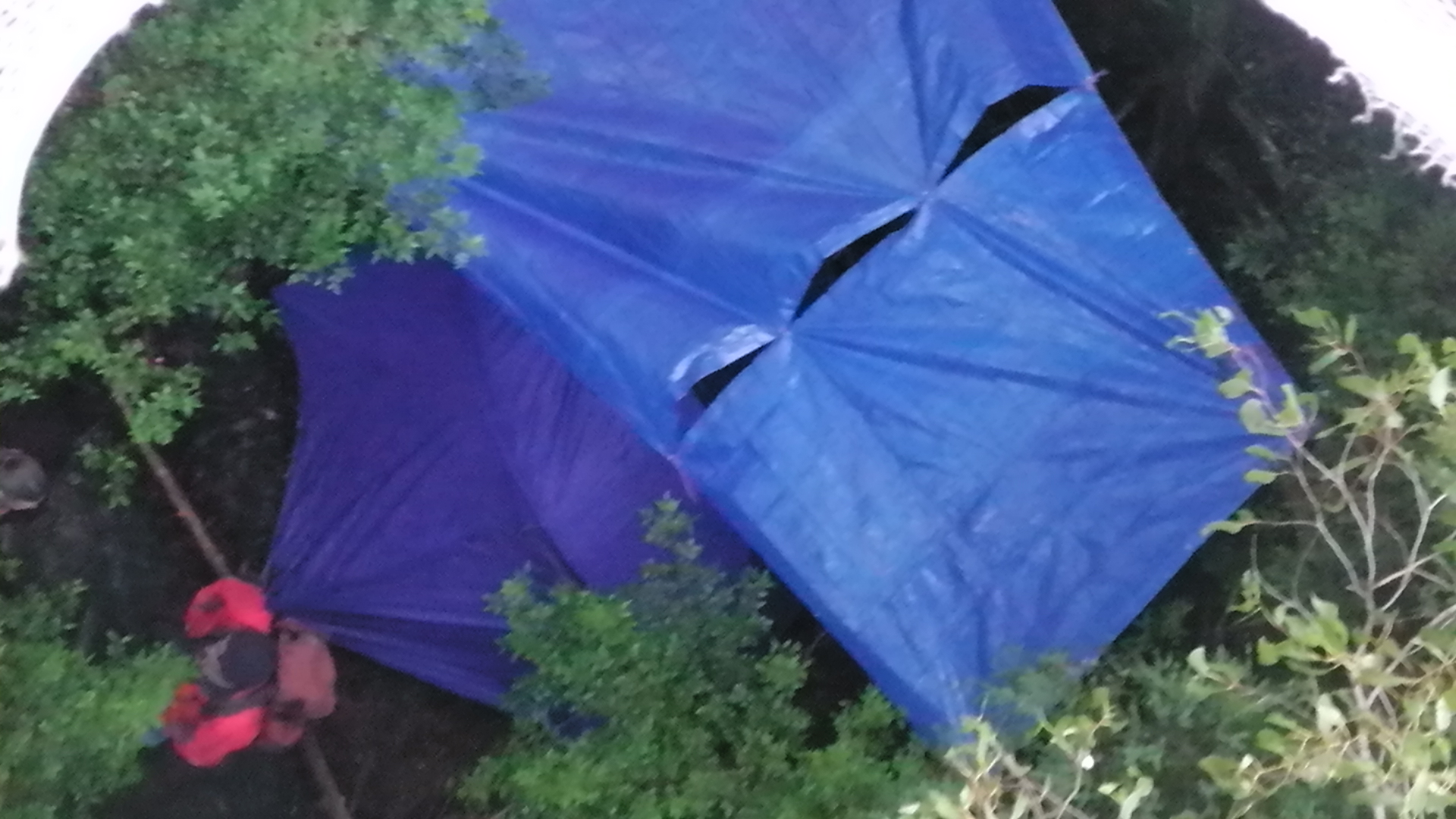 My one new neighbour made himself at home, setting up a tent near the base of the tree. I called out and asked him how long he was staying for. “A few days,” he replied. We had a short chat, trying to yell out above the sound of the wind whipping through the trees. I discovered that he intended to stay until Saturday and then be replaced by another person. Their intention was to raise their concerns about the IGA process.
This is an interesting situation. The media asked me, “How does it feel to be a protester and now have someone protesting you?”. But it doesn’t really seem like that. Because he isn’t really here to protest against me. In some ways you could even say that he is here to protest with me. We both have concerns about the direction of the forest industry, albeit from very different perspectives. And we both have concerns about what the IGA may or may not deliver. And so it seems, in a very unlikely situation, that in my struggle to protect Tasmania I have been joined by a pro-logging farmer!
Once I had reassured family, friends, supporters and the media that I was okay and it was just one person having a cup of tea at the bottom of the tree, the frenzy began to die down. However, one thing that those few hours really showed me was how much support and concern there is out there for me. The amount of messages I instantly received via facebook, email and phone was overwhelming. It really showed me that the whole world is watching and that so many people care about me and support what I am doing. Thank you to everyone who contacted me.
That night rain beat down on my tarp and I thought about my new ground dweller. I wondered how he was feeling about his first night in this forest. I wondered if it was as cold and wet and windy down there in the tent as it was up here. How would the experience of this few days beneath my tree might influence his perspective of me and of this forest?
And so it has been two days now that I have had a new neighbouring protestor. He has left today and been replaced by someone else. I’m not sure how long they intend to stay for, but it seems like they are not going to be here quiet as long as me! My support team on the ground have been engaged in friendly discussions with them, listening to their points of view and sharing their own.
A few journalists asked me if I felt angry or worried about the situation. The truth is that it doesn’t bother me that he was there. I think he has every right to have his point of view, to make a stand for what he believes in, just as I do. This is a critical time for Tasmania and many people have concerns about the state of the forestry industry. And I think that we might even find that we have things in common. Because I have concerns about the future of communities and workers too.
And this is why I believe that change is critical in the forestry industry. The deeper the industry entrenches itself in the controversial destruction of high conservation value forests, then the greater the problems, not only for the environment but for the industry itself. There is no economic stability in the global market place for an industry that is built on the lies of Ta Ann and the destruction of forests. I truly believe that there is a solution to the current crisis, a solution that will protect Tasmania’s environment and provide support for communities and workers in a sustainable industry. This is not only possible, but absolutely necessary. As the industry cannot continue as it is today.
There cannot be a solution to the crisis that doesn’t involve forest protection because the destruction of forests and the resulting controversial wood supply is at the heart of the issue.
I am more than willing to discuss ideas about the future of the forest industry and consider a range of opinions from different sides. I think it is so important to be open to a diversity of ideas, to take time to listen and consider all points of view. I have always taken this very seriously. After all the discussions I have ever had about this issue, however, one thing always remains, the fact that these forests are critically important for the future of endangered species, water quality, air quality, climate and ecological diversity and hence our quality of life. These forests need protection.
And I am staying up here until that happens.
Miranda’s Daily Blog: Day 215
This time last week I celebrated my birthday in the tree sit. It was an amazing day with visits from people in the local community and from Hobart. Today I made this little film about the day. Hope you enjoy!
Miranda

Miranda’s Daily Blog: Day: 213
“Do you ever get sick of the view?” people often asked me. I wonder, how on earth could I get sick of this? No, it’s quiet the opposite. It’s been amazing to see the landscape change over the seasons and even change from moment to moment on a single day. Today was one of those days. I was sitting inside my tarp, listening to the sound of the rain while I typed. When the rain fell silent, I looked out through the gap in the tarp and was filled with a sense of awe. “Wow” I thought to myself, “I can’t believe I live up here! I must be the luckiest person in the world.” I got up and stepped ‘outside.’ The sun was shining softly through a layer of mist, giving the trees in the distance a spectacular green and golden shine. The next moment mist was making it’s way through the valley, creeping it’s long silvery fingers up along the ridges. After a moment of forest watching I went back to my computer work. Soon even the air inside my tarp began to fog up with mist and it was almost getting hard to see my computer screen! I looked out to the landscape once again. I couldn’t see a single thing beyond my tree, just thick white fog. And now the fog is lifting, revealing the forests beneath once more. The colours of the forest are rich and deep, still moist from the rain. And the branches of my tree seem to sparkle with jewels, as the last droplets of rain cling to their underbellies, glistening in the setting sun.
With the seasons changing I have noticed the way it has effected the birds and insects up here. In summer I was busy entertaining a variety of insects, especially an abundant population of spiders. But with the cold weather they just don’t’ seem to be around any more. I saw one spider the other day and was reminded of how much I had struggled to overcome my fear of spiders. I finally got used to the little critters and then they decided to leave me alone!
The birds that visit me are doing their rounds so much earlier now that winter has set in, making use of the minimal amount of sun while it’s still up. In the cold and windy weather they are never quiet as lively. Then as soon as the sun breaks through the clouds that hover above Mount Field, the birds take the opportunity to enjoy the temporary relief from the cold and dark conditions. As do I. So I find myself out on the platform amongst a cacophony of birds.
So maybe you can understand now that some times it’s hard to get work done up here! I just settled back into my typing earlier today and then I heard them come… “bird time!” I thought to myself. The groups of strong billed and black headed honey eaters and the one yellow throat were here. They chatter and chirp their way around the branches of the tree, pecking under strips of bark. I stand on the platform and they are all around me, darting above and below. For a moment this tree is buzzing with activity and then swoop, swoop, swoop… they fly off to continue their rounds in the other trees.
It’s funny how you can just be going about your day and almost stop paying attention to where you are. That is what I was doing as I was getting my dinner ready last night. I had lots on my mind and was just busy thinking about what I needed to do after dinner. When I glanced up and for a moment my mind went blank. And I sat for a minute in silence just looking out at the landscape. At the place frame by two tree branches, where in the distance two mountain ranges meet in a deep valley. The mist was settling into the crevise between the mountains and slowly shifting colours pale pink and golden organge as the sun set on the other side of the sky, sinking behind Mount Mueller. It’s incredible and so hard to describe, those moments when you stop thinking about anything and just let the silence wrap around you. I guess it’s the kind of state that people try to achieve though mediation. Up here it’s easy to have those moments, because the forest lends itself to feeling a sense of peaceful quiet.
And so, how can I get bored up here? Every moment the forest is changing!
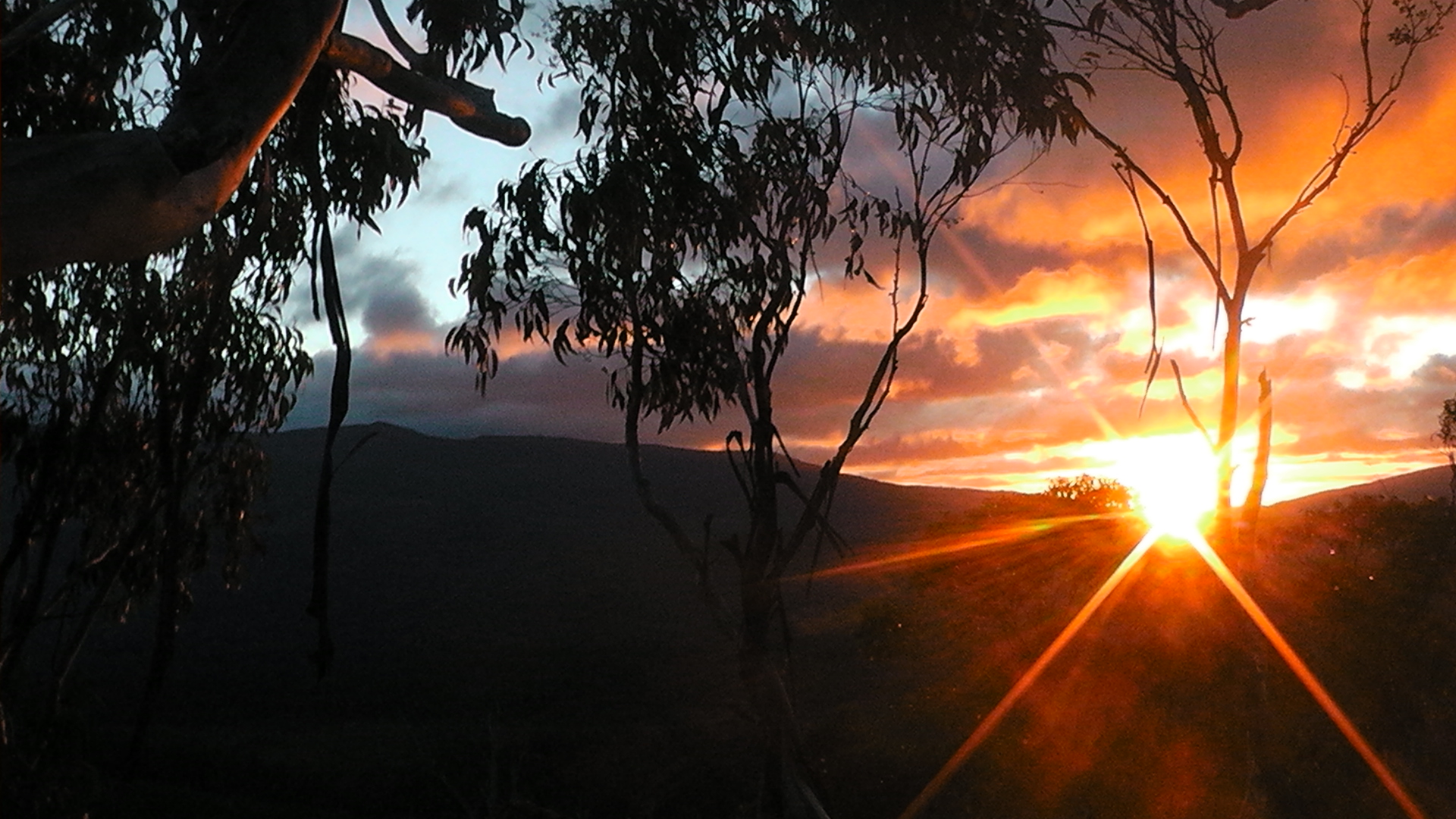

Miranda’s Daily Blog: Day 211
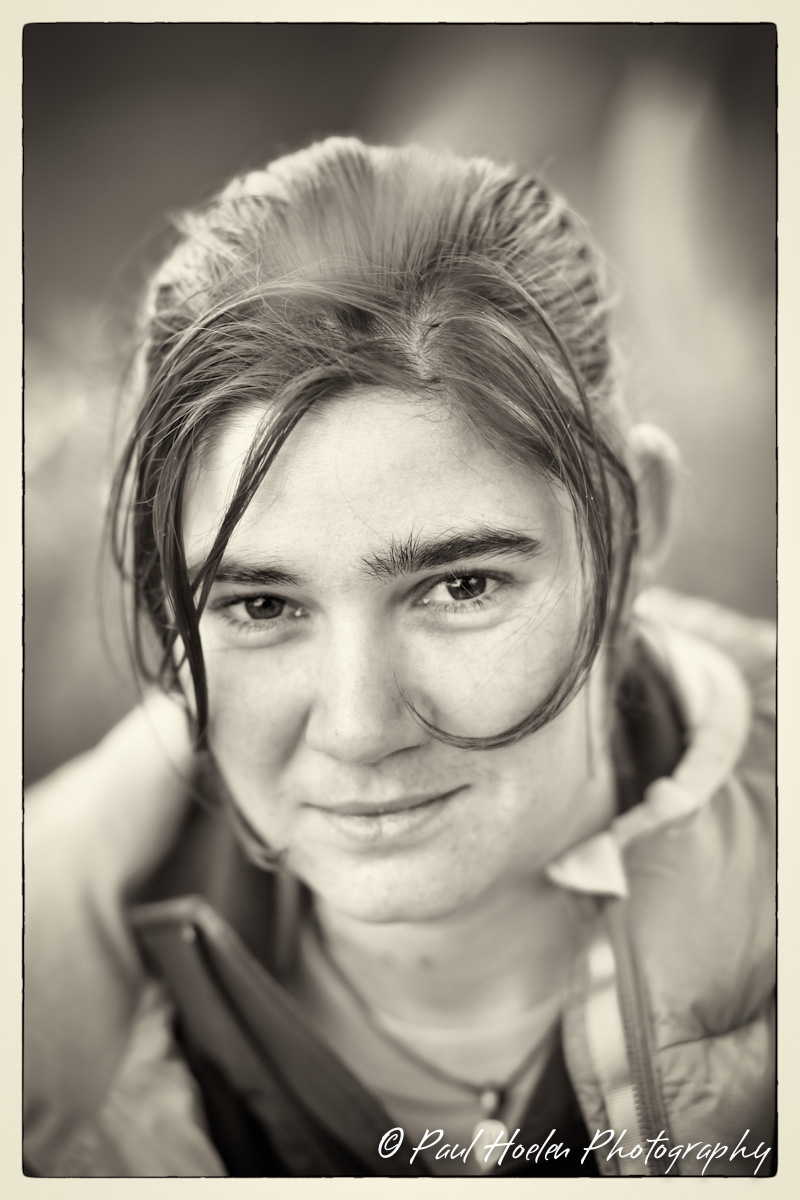
Photo by Paul Hoelen
How does it feel to be an Australian record holder? That is the question everyone is asking me since Tuesday, when I broke the National record for the longest time spent in a tree, after 209 days up here.
Well, to be honest, I wish I wasn’t a record holder. I wish more than anything that this forest had been protected a long time ago. I wish that the State and Federal government had honoured the promise they made back in August last year, and placed this forest under a conservation agreement as they said they would.
I wish that the forest negotiations had concluded and provided secure legislated protection for Tasmania’s high conservation value forest. And I could have got down and got on with my teaching career, knowing that Tasmania’s unique environment would still be in tact for my students to enjoy when they are grandparents! Because I’m not up here to break any records, I am here because I want to see the next generation of Tasmanian’s be able to experience the unique beauty of these world-class forests that we have on our doorstep. I’m here because I don’t want to be in a class-room one day teaching about how the Tasmania devil became extinct. We already have to tell the sad story of the last Tasmanian tiger, that was in fact caught not too far from where I am now. I think we have lost enough species in Tasmania and in fact in the world, and now it is time to prioritise conservation.
Over 560,000 hectares of forest in Tasmania has now been identified by a government-endorsed independent team of scientific experts to be of world heritage and national heritage value. Over half of the area is important habitat for devils, with the remainder also being significant in providing corridors between core habitat. Aside from devils, these forests also provide habitat for a range of other threatened and endangered species, including goshawks, wedge tail eagles, quolls, masked owls, hyrdrobiid snails… the list goes on.
And what’s more, protecting the forests is not only critical right now for species of the animal kind, it is vitally important for the people of Tasmania, including those people working in the forestry industry. The industry is in a state of crisis. It has been admitted by industry bodies and unions, and has lead to the involvement of these groups in the forest negotiations. The industry as it currently exists is not economically viable and is instead propped up by tax payer money. And it seems that if native forest logging is entrenched the industry is looking down the barrel of a collapse. The best way to secure jobs for the future is to transition the industry into a sustainable industry. And right now that is what Tasmania is holding it’s breath for, waiting to see what comes out of these negotiations, due to wrap up in a few weeks time.
It is time for Ta Ann to stop the destruction of these forests. This Malaysian logging company has already done enough damage in Tasmania. Not only have they been identified by official documentation to be the key driver behind the ongoing destruction of high conservation value forests, they are also misleading their customers. They are responsible for selling wood from these forests on the international market as environmentally friendly “eco-ply.” The company has made claims that their wood is sourced from plantations or managed regrowth. Yet, it is their demand for wood that is the reason my tree and the forest around me are under threat. This is not a plantation forest, and the tree I’m sitting in is hundreds of years old.
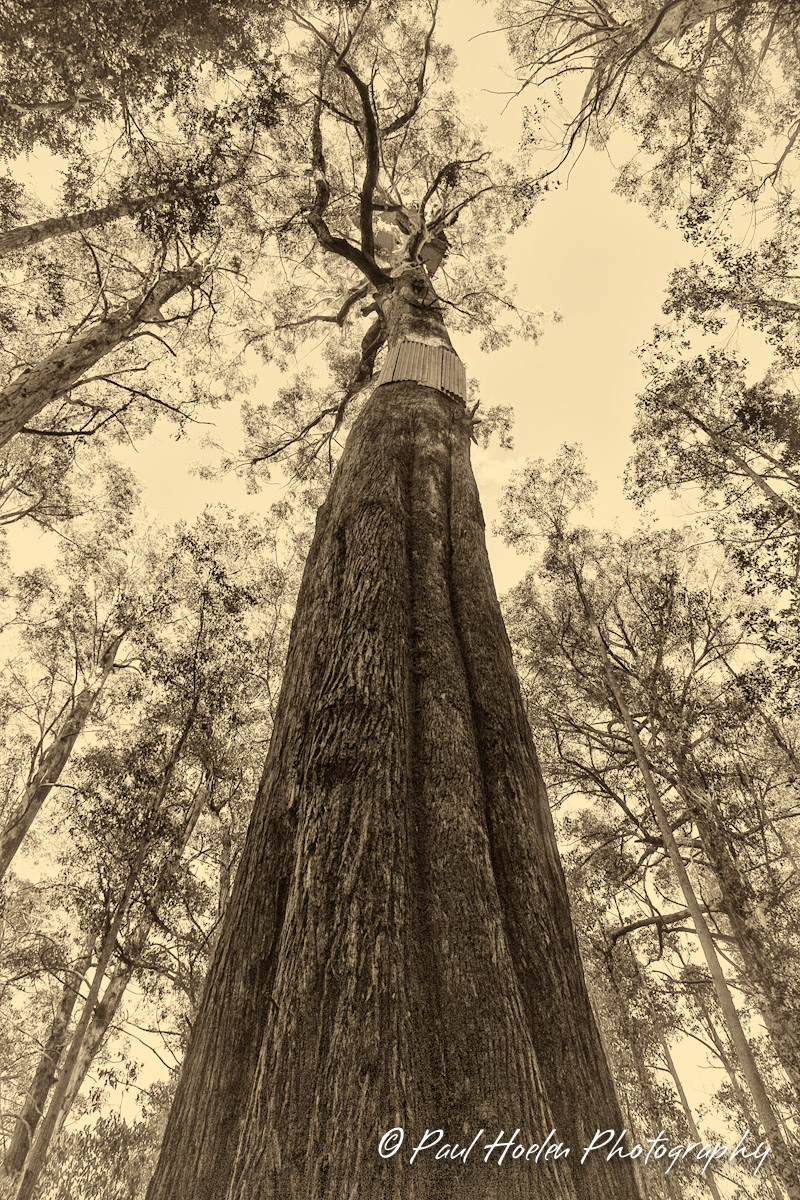
The Observer Tree. Photo by Paul Hoelen
And so, I guess if I think about it, I am proud that I now have the Australian record for the longest tree sit. Because even though I wish I didn’t have to be up here, the reality is that I do. Every day that I have sat in this tree is another day that world heritage value forests are lost. And for that reason I am proud to be here, speaking up for these forests and for the future of Tasmania. Being up here I have been able to remind people here and around the world of the critical importance of securing forest protection. And through reading this blog so many people have come on board in helping to take action for these forests. Please, if you haven’t already, take a moment now to sign the cyber action (click here).
Miranda’s Daily Blog: Day 203
Who can complain about a day in the office with a view like this? What an amazing place to spend time writing about the forests, while looking out across snow-covered mountains! I must admit, I did get a little distracted taking all these photos instead of doing work on the computer! I hope you enjoy the slide show:
Miranda’s Daily Blog: Day 202
Sometimes life up here feels full of good-byes. Maybe that is how life goes, hey?
I stood looking down through the trapdoor in my platform. I watch as one of my best friends disappeared down the rope, getting and smaller and smaller. I step away and when I look back the rope dangles lifelessly towards an empty patch of mud beneath the tree. He is gone. Another good-bye.
I guess if I wasn’t in this tree I’d still have to say goodbye. I’d still have friends that decide to move away from this island. But some how it seems harder up here, because every good-bye is followed by isolation. It’s just the forest and me, quietly contemplating solitude.
It’s interesting how the solitude of this experience has at times been one of the hardest things and at other times one of the most incredible aspects of life up here. I have had more time to myself then I ever have and probably ever will. It’s been plenty of time to reflect on life. There is something special about the feeling of it just being me and the forest here. No one else in sight for kilometers. To be here in the peacefulness of the forest, listening to the birds, and coming to understand the forest in away that can only be done quietly and over time. The Observer Tree has turned out to be a personal journey for me as much as a public campaign.
On the flip side is the challenge of loneliness. I miss being around people, laughing with old friends and making new ones, being part of a community. I have learnt to enjoy my own company, but as you can imagine, it’s not always enough. And I guess the hard thing is that visits from friends (and recently my Mum!) always feel too brief. They are here and then they are gone. It feels strange to watch them go and know I can’t leave.
The friends that have supported me over these past six months have meant so much to me. It sure would have been a lot harder to do this without their visits, phone calls and letters. Although there have been many incredible things about being up here, it isn’t always easy. And I want to take this opportunity to say thank you to the people in my life who have been there to listen or cheer me up when I have felt a bit overwhelmed by it all. Although I maintain hope and inspiration that we are going to protect this forests, it is still hard not to feel a bit scared sometimes, overwhelmed by the possibility that the industry may continue to destroy these forests into the future. It’s even more overwhelming when I am here looking out over this forest and wanting to do everything possible to ensure its survival, but not always knowing how or if I even can. And on those days it’s good to have someone to chat to who knows that feeling – the delicate balance between hope for the future of the forest and the sadness of witnessing their destruction.
To my friends who share the same histories, the same stories… who share my love for these trees, these places that I hold to dear to my heart. My friends who have fought alongside me in this seemingly never-ending battle to end the destruction. Those who have seen what I have seen, who’ve stood beside me and watched our favourite trees taken down by chain-saws. Who have stood with me in peaceful protest while we have faced violence against us. My friends who help carry the burden that comes with knowing the devastating reality of forest destruction. My friends who constantly inspire me. All of the crew whose determination and committment is constantly put to the test by the challenges of trying to protect Tasmania’s’ unique environment. To my friends who inspire me because of their love for the forest: Thank you! And I have felt so honoured when friends have said I am an inspiration to them too.
I hope that we can continue to inspire each other. Just as I hope that I can inspire all those who read my blog. Just as I am constantly inspired by all the people out there who have come on board, have read my blog and written comments, who have taken action and who have come to love this forest even though they may never see it.
Thank you.


 T h e O b s e r v e r T r e e